
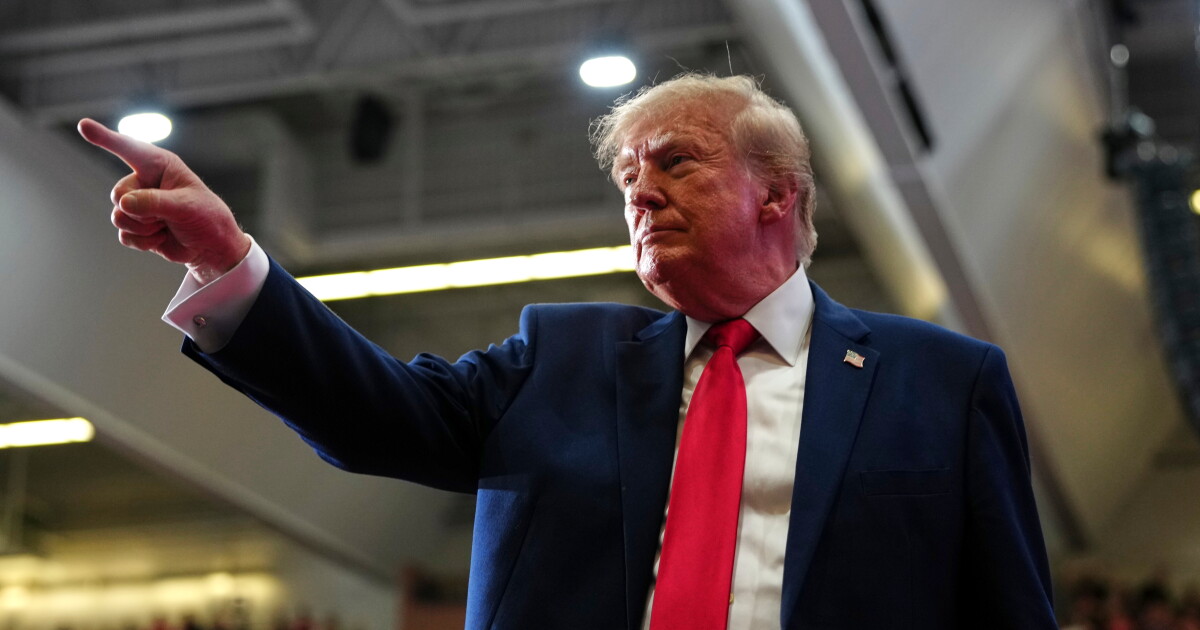
For Michigan families already stretched thin by inflation, soaring gas prices, and an ongoing trade war with Canada, the final stretch of the state’s U.S. Senate race is delivering something other than economic relief — a campaign fueled by inflammatory religious attacks that have drawn condemnation from within President Donald Trump‘s own coalition.
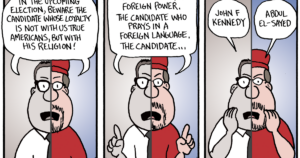
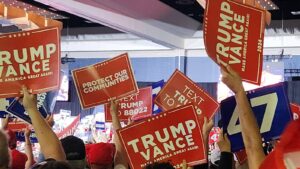
At a Sunday rally in Port Huron — a Canadian border city about an hour north of Detroit — Trump escalated his attacks against Democratic Senate candidate Abdul El-Sayed, a former Detroit public health official who would become the nation’s first Muslim senator if elected. Rather than announcing new economic investments for a state that runs on the auto industry, Trump focused his energy on portraying El-Sayed as a national security threat, calling him a “jihadist” who was “on the side of the terrorists” and claiming he would
“have to go through a metal detector before he’s allowed to go into the Senate.”
Trump also repeatedly invoked the September 11 attacks, comparing efforts to keep El-Sayed out of the Senate to the passengers who fought back against hijackers on United Flight 93.
The remarks crossed a line even for some of Trump’s staunchest Arab American supporters — people whose votes helped him carry Michigan in 2024. Bishara Bahbah, a founder of Arab Americans for Trump — an organization that played a central role in mobilizing Arab American voters behind Trump in 2024 — was direct in his condemnation.
“The president’s statements are out of line,”
Bahbah said in a phone interview.
“They are crossing a red line. They are racist.”
Bahbah’s organization has since rebranded as Arab Americans for Peace. He made clear that Trump’s words carry real political consequences, especially in communities like Dearborn — home to one of the nation’s largest Arab American populations — which swung toward Trump in 2024 largely because of frustration with the Biden administration’s handling of the war in Gaza.
“The president of the United States saying that about a person because of his religion, that is just not acceptable,”
Bahbah said.
“And people are going to remember that on Nov. 3.”
A Campaign Defined by Allegations, Not Economic Answers
Michigan voters have real concerns on their minds heading into Election Day: gas prices, grocery bills, and what the Trump administration‘s expanding trade war with Canada means for the auto industry that employs so many of their neighbors. But with Republicans on the defensive over inflation, fuel costs, and the Iran war, Trump has leaned into portraying El-Sayed and other Democrats as existential threats rather than addressing the economic concerns driving voters’ kitchen-table conversations. The 2026 Midterm Election race between El-Sayed and Republican Mike Rogers is one of a handful of Senate contests that could determine control of the chamber.
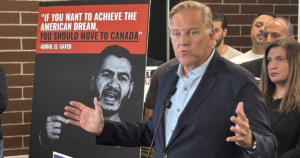
Central to the Republican strategy against El-Sayed in the campaign’s final weeks has been an effort to link him to the Muslim Brotherhood, an Islamic movement whose branches the U.S. government has designated as terrorist organizations. But there is no evidence that El-Sayed himself has any affiliation with the Muslim Brotherhood. Republicans have pointed to a 2012 social media post by his half-sister, Eman Abdelhadi, who wrote that “my family has long been MB” and described a conversation with her mother about involvement in the Muslim Brotherhood in the early 1970s — a distant and indirect family reference that El-Sayed was not part of. El-Sayed was born in the United States to Egyptian immigrant parents who divorced when he was young; he was raised by his father, not his biological mother. A fact check found that Rogers’ claims about El-Sayed’s mother don’t match the evidence.
For working families trying to make sense of this race, the focus on religious smears instead of substantive policy debates represents a missed opportunity. Michigan’s auto sector — already vulnerable to the trade war with Canada, an essential partner in U.S. automotive manufacturing — needs clear answers about tariffs and jobs, not rhetorical fuel thrown on a culture war fire. Trump did not announce any new economic investments for Michigan at Sunday’s rally, instead repeating commitments already made by domestic automakers — automakers whose financial outlook could worsen if the president expands trade restrictions with Canada.
El-Sayed’s campaign team pushed back on the attacks without engaging the inflammatory framing. Spokesperson Cole Wozniak said in a statement:
“While they lie and resort to desperate, bad faith attacks, Abdul remains laser focused on his plans to bring down costs and stand up to the chaos and corruption in Washington.”
El-Sayed himself has called attacks on his loyalty to the country “shameful” and denied any connection to extremist groups. During their second and final general election campaign debate, Rogers pressed El-Sayed directly: “Are you for America, or are you for these terrorist groups overseas?” El-Sayed called the question “shameful,” adding:
“I’m proud of our Constitution that guarantees all of us the right to pray as we choose to pray.”
Rogers, speaking before Trump’s appearance Sunday, continued pressing the Muslim Brotherhood line on stage:
“The Muslim Brotherhood celebrated exactly one victory in the United States in the primary this year. Abdul El-Sayed’s.”
El-Sayed’s Own Record Has Faced Scrutiny
El-Sayed’s campaign has not been without its own controversies. He has repeatedly declined to answer whether Iran or Israel poses a bigger threat to the United States. Earlier this year, after an attack on a synagogue in the Detroit area, he said “hurt people hurt people” — a remark that drew criticism. The attacker had lost four relatives in an Israeli airstrike on Lebanon the week before. El-Sayed later apologized for the comment.
“To anyone who feels like my comments might have been hurtful, I’m really sorry,”
he said.
“That was not my intention.”
Republicans have also targeted El-Sayed’s ties to popular online streamer Hasan Piker, who appeared alongside the Democrat multiple times during the primary, including at his election night event. Piker has previously made statements saying that “Hamas is a thousand times better” than Israel, describing some Orthodox Jews as “inbred,” and that “America deserved 9/11.”
Trump’s Broader Pattern of Anti-Muslim Rhetoric
Sunday’s rally was not an isolated moment. Trump, who imposed a travel ban targeting several predominantly Muslim countries during his first term, has increasingly deployed anti-Muslim attacks as Election Day draws near. At Sunday’s rally, he also targeted Democratic Rep. Ilhan Omar of Minnesota, declaring he had come to Michigan
“to keep a jihadist Muslim Brotherhood member from becoming a United States senator.”
Critics have noted that this pattern of anti-Muslim rhetoric from Republican officials has intensified in recent election cycles, raising concerns in Muslim and Arab American communities across the country about their place in public life — concerns that carry real economic and social weight for families whose community ties shape where they live, work, and invest.
Trump won Dearborn in 2024 — the first Republican presidential candidate to do so since 2000 — partly because Arab American voters in the city were outraged by the Biden administration’s handling of the war in Gaza. Whether those same voters will stand by the president after Sunday’s remarks is a question that could shape the outcome of Michigan’s Senate race and, with it, control of the chamber.
Bahbah, whose condemnation of Trump was unusually pointed for a former ally, framed the stakes plainly:
“The remarks are out of line and crazy. I mean, no sane individual would say these things.”
The rally did include one notable moment unrelated to policy: rapper Nicki Minaj appeared on stage and urged attendees to vote for the state’s Republican ticket. Her appearance followed an uncomfortable moment when Trump, who has increasingly fixated on commenting about people’s bodies, praised the physique of Ohio Sen. Jon Husted before turning his attention toward Minaj and commenting on her posterior. Trump then signaled for Minaj to stand before the crowd and afterward said,
“I hope Nicki wasn’t insulted, but we love Nicki. She’s been with us for a long time.”
For Michigan families weighing who will fight for their financial stability — lower gas prices, protection for auto industry jobs, and relief from a punishing cost of living — the question is whether the Senate race they are watching will deliver those answers before November 3, or whether the campaign’s final days will continue to be consumed by controversy rather than the economic conversation so many Michigan households are waiting to have. The early voting period in Michigan is already underway, and the decisions being made right now will help determine who fills the Senate seat being vacated by retiring Democratic Sen. Gary Peters — and what that means for the legislative battles over trade, inflation, and economic policy that will define the next two years for American workers and families.
Comments are closed.