
The battlefield in Ukraine has become an unexpected classroom for military strategists around the world — and what’s being taught there is both striking and sobering. Drones and unmanned systems are not the weapons of tomorrow; they are dominating today’s war, and America’s military may not be ready for what that means.
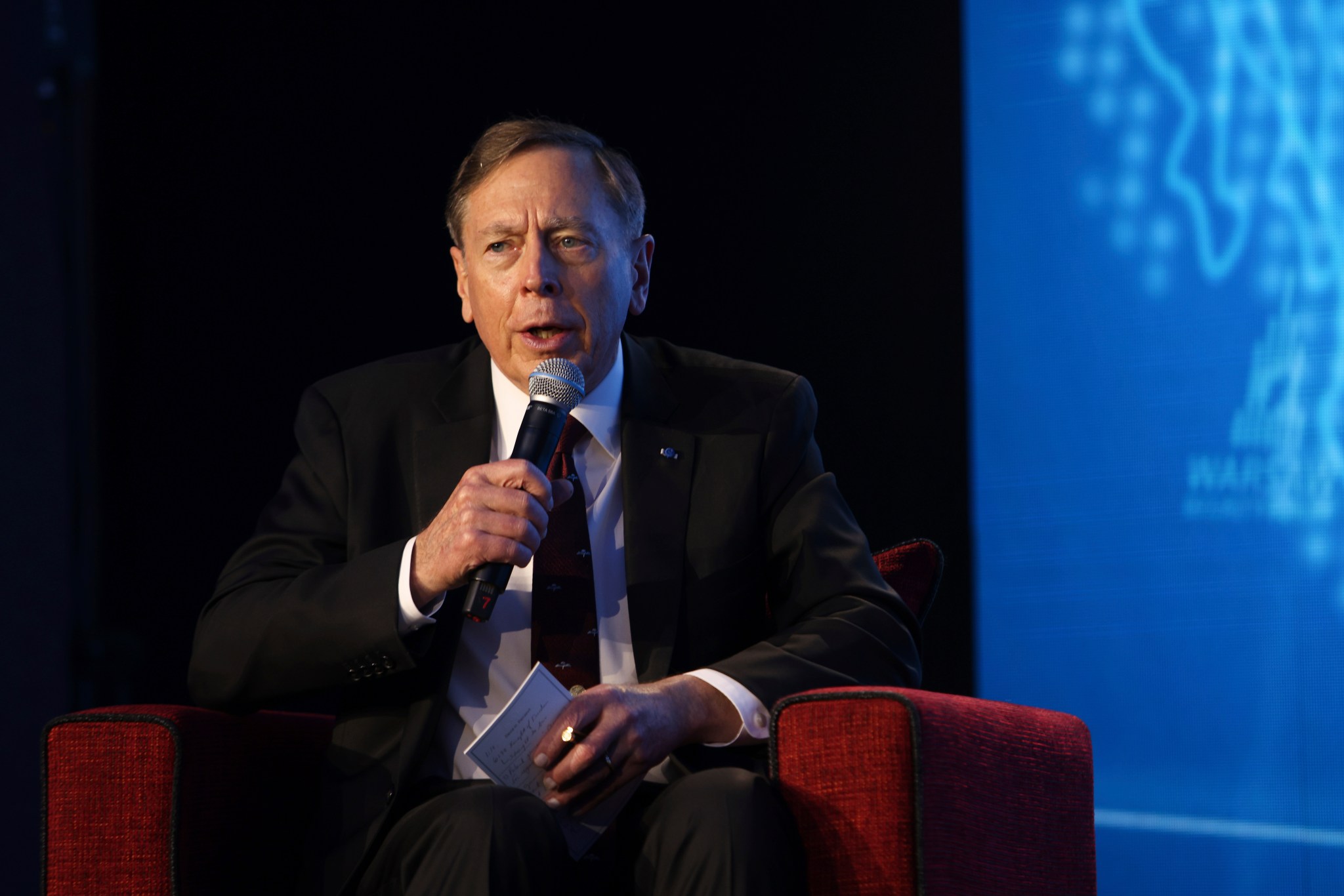
Retired Army General David Petraeus, the former director of the CIA and onetime commander of U.S. Central Command, delivered a stark assessment on October 16 at an American Primary Aluminum Association event in Washington. Unmanned systems now account for more than 90% of Russian casualties on the front lines in Ukraine, he said — yet no NATO ally, including the United States, has made the sweeping institutional changes that reality demands.
“This is an unmanned systems war. Tanks aren’t survivable there anymore.”
The scale of drone warfare in Ukraine is larger than most Americans realize. Both Ukraine and Russia are each deploying approximately 10,000 drones per day on the battlefield. Ukraine has leveraged a smaller, outgunned force against a far larger and better-funded adversary for nearly five years — and unmanned weapons have been central to how it has managed to do so.
In 2024, Ukrainian President Volodymyr Zelenskyy signed an order creating a dedicated Unmanned Systems Forces military branch. The country’s Defense Ministry has repeatedly identified autonomous weapons development as a top national priority. In a July speech, Zelenskyy said Ukraine aims to produce as many as 20 million unmanned systems in a single year — though shortages of trained operators and key components like optics, gimbals, brushless motors, and fiber-optic cable remain significant bottlenecks.
A Warning for the West
Petraeus framed the fighting in Ukraine as a window into the future of armed conflict — and a warning about what nations risk if they fail to adapt.
“Really, no NATO country and not even the United States is undertaking yet the urgent revolutionary institutional change that should be taken based on what we see in Ukraine, which is the future of war.”
According to Petraeus, the U.S. needs a fundamentally new concept of warfare — one that reshapes force structure, training, procurement, personnel policy, and base operations. Much of the legacy, heavily manned equipment, he argued, should be replaced with cheaper, more numerous unmanned systems.
“What’s going to happen is we’ll see the introduction of autonomous systems really for the first time in warfare.”
Steps Forward — But Not Enough
Washington has taken some meaningful steps in this direction. The Pentagon recently established a new Autonomous Warfare Command, which requires each branch of the military to stand up its own component command. Petraeus called these “commendable steps” but urged policymakers to go further.
“But my hope is that they will not just create an unmanned systems force in terms of force structure, but that they will also spur the initiation of true institutional change.”
Part of that change must involve how the U.S. buys and updates weapons. Petraeus called for substantial manufacturing capacity that is nimble enough to evolve rapidly — much like Ukraine’s defense industry has had to do under wartime pressure.
“You want it to be able to make software changes every week, hardware changes every few weeks, which is what’s going on in Ukraine because the enemy continues to evolve and Russia’s been innovating very substantially as well.”
The Iran War’s Impact on U.S. Readiness
Petraeus also addressed concerns that the ongoing U.S. conflict with Iran has strained America’s capacity to support Ukraine. While he rejected the idea that it has fundamentally limited Washington’s ability to assist Kyiv, he acknowledged real costs. The U.S. has used “a fair number of missile interceptors,” he said, which “makes it more difficult to share those with others around the world.”
A September Congressional Budget Office estimate found that the Iran war has consumed between one-half and two-thirds of the U.S. inventory of certain missile-defense interceptors.
Still, Petraeus maintained that decisions about supporting Ukraine ultimately come down to political will, not military capacity.
“We can help the Ukrainians in any way in which we decide to assist them. These are policy decisions.”
For those tracking broader Pentagon & Congress developments, the debate over drone warfare, autonomous systems, and military readiness is just one front in a wider set of defense challenges. Separate issues before lawmakers include a Pentagon, Lockheed agree to 10-year deal for 850 F-35 jets, a Military takeover of New Mexico borderlands challenged in court, Errors in disability cases for ‘painful scars’ resulted in overpayment: VA watchdog, and No money for Camp Lejeune toxic water victims unless GOP wins midterms, Trump says. Meanwhile, the Pentagon is also exploring the scale of investment needed: Defense Secretary Hegseth has said the Pentagon looks for $50B for mass drone production, and Lockheed Martin unveiled a new PAC-3 Edge interceptor for Patriot systems. On the personnel side, Hegseth recently appointed Medal of Honor recipient Dakota Meyer to a Barracks Task Force, while Medal of Honor Recipient and Retired Maj. Nicholas Dockery has spoken publicly about his mission beyond military service.






Comments are closed.