
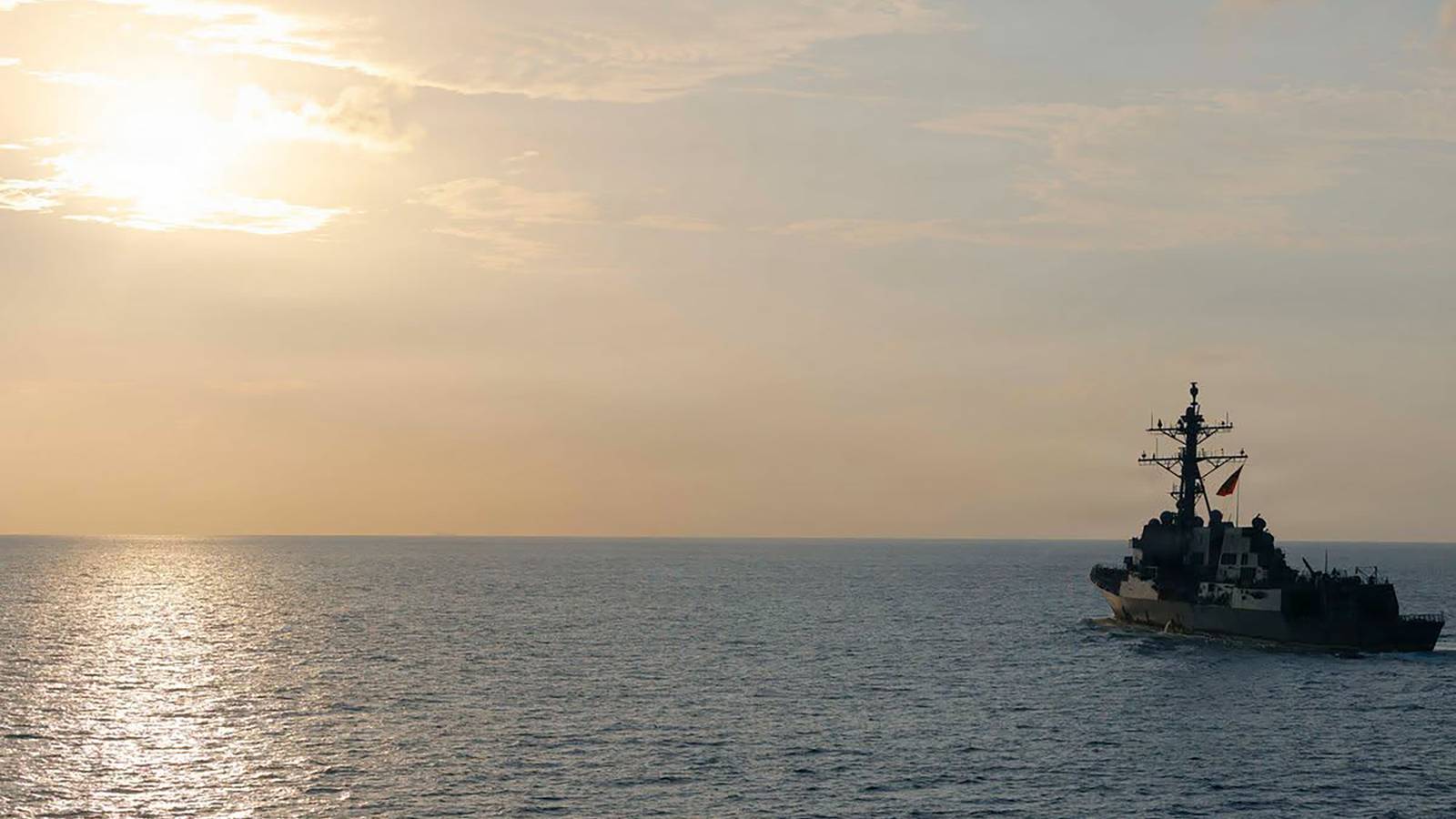
When war disrupts the world’s most critical oil shipping lane, the pain doesn’t stay in the Middle East — it travels straight to the gas pump, the grocery store, and the doctor’s office. The ongoing standoff between the United States and Iran over the Strait of Hormuz is doing exactly that, and American families are beginning to feel it in their wallets and in their access to the care they need.
Brent crude oil climbed above $110 per barrel this week as Iranian-linked attacks on shipping continued to disrupt traffic through the Strait of Hormuz — one of the most important energy chokepoints on the planet. That price surge ripples outward fast: higher fuel costs mean higher prices for nearly everything transported by truck or plane, including medications, medical supplies, and the equipment hospitals depend on every day. For families already stretched thin, a spike at the gas pump can mean choosing between filling a tank and filling a prescription.
At the center of the diplomatic deadlock is Iranian Foreign Minister Abbas Araghchi, who laid out Tehran’s position in an op-ed published in the Financial Times.
“Iran is prepared to give diplomacy another chance if we see strong evidence of a sincere desire on the part of the U.S. to achieve a just and honourable solution to permanently end this conflict,”
he wrote. Iran’s condition: the U.S. must lift its naval blockade, release frozen Iranian oil funds, and remove sanctions — all terms that were part of the June Islamabad Memorandum of Understanding, a deal that collapsed almost as soon as it was signed.
In an earlier interview with Iraqi media, Araghchi pointed specifically to that failed agreement as the path back to stability. Under the June deal, Iran had agreed to reopen the Strait of Hormuz in exchange for the U.S. lifting its naval blockade and easing economic pressure.
“If they adhere to these conditions, they should know that the Strait will be fully opened, and after that, we will hold further rounds of negotiations until a final agreement is reached,”
he said. So far, Washington has shown little interest in returning to those terms.
What a Closed Strait Means for American Households
The Strait of Hormuz carries a significant share of the world’s oil supply. When it’s disrupted — whether by attacks on shipping or military posturing — global energy markets react immediately. That reaction doesn’t stop at the gas station. Hospitals, home health agencies, and pharmacy distribution networks all run on fuel. When transportation costs rise, so do the operating costs of every facility that keeps patients alive and healthy. Those added costs are eventually passed on to patients, insurers, and government health programs like Medicaid and Medicare — straining budgets that millions of American families depend on.
For low-income families, the squeeze is especially acute. A household that spends a larger share of its income on gas and heating fuel has less left over for copays, deductibles, and out-of-pocket prescription costs. Energy price shocks driven by geopolitical conflict don’t just hurt at the pump — they erode the financial cushion that separates a family from a medical crisis they can’t afford to address. You can follow the latest developments on Military Daily News and through Bloomberg‘s ongoing coverage of the conflict.
A Deep Well of Distrust on Both Sides
Behind the economic turmoil is a diplomatic relationship that has essentially broken down. Both the June 2025 war and the current conflict were launched by Israel and the U.S. during active high-level negotiations with Tehran — a pattern that Iranian leaders say has made any future talks nearly impossible to trust. Iranian President Masoud Pezeshkian made that distrust explicit during a visit to Tehran by Pakistan’s Army Chief Asim Munir, one of the primary mediators between the two countries.
“Our nation today does not trust the United States and believes that if we negotiate, they will attack us again,”
Pezeshkian told Munir. In separate remarks on Wednesday, the Iranian president said dialogue could resume only if the U.S. “recognizes the rights of the Iranian people and stops bullying and aggression.”
Araghchi echoed that frustration in his Financial Times op-ed:
“Given that the White House has shown no willingness to reach an understanding on the way forward, while also threatening more violence, there is little reason to expect progress now.”
That diplomatic stalemate keeps the Strait disrupted, energy markets on edge, and ordinary families absorbing the economic fallout.
Trump’s Threats and the Military Dimension
President Trump has repeatedly raised the possibility of resuming airstrikes against Iran, with speculation growing that military action could follow the November 3 midterm elections. Last week, in an endorsement of Israeli Prime Minister Benjamin Netanyahu ahead of upcoming Israeli elections, Trump issued a stark warning:
“Unless they change their ways, rapidly, we will soon finish the job.”
Those threats have kept oil markets volatile and talks deadlocked — a combination that prolongs exactly the kind of economic instability that hits hardest for families managing medical bills, home heating costs, and the daily math of making ends meet.
The military dimension deepened on Tuesday when U.S. Defense Secretary Pete Hegseth made an unannounced visit to Israel and met with Netanyahu. The Israeli prime minister followed that meeting with a speech calling for the complete elimination of the Iranian government.
“We must complete the elimination of the Iranian regime,”
Netanyahu said, arguing that Iran, even in a weakened state, would continue pursuing nuclear weapons. A prolonged military conflict of that scale would almost certainly send energy prices even higher — deepening the burden on American households already navigating an expensive healthcare landscape.
U.S. and Israeli strikes on Iran have already killed thousands of Iranians. Dozens of people have died in Iranian drone and missile strikes on U.S. allies in the Persian Gulf region, including two U.S. Army soldiers killed by Iranian attacks in Jordan. Meanwhile, Iranian officials have warned that further U.S. strikes would trigger retaliation against infrastructure in Arab Gulf countries — a scenario that would almost certainly send oil prices sharply higher still. For more context on Iran’s framing of the conflict, see Iran’s claim that the U.S. was ‘suckered’ into the Middle East war. You can also track the broader scope of Iran-related military developments as this situation evolves.
What’s clear is that this conflict is not confined to the diplomatic cables exchanged between Washington and Tehran. It’s a story that lands in American living rooms, at pharmacy counters, and in the decisions families make every day about how to stretch a paycheck that has to cover fuel, food, and medical care all at once.






Comments are closed.