
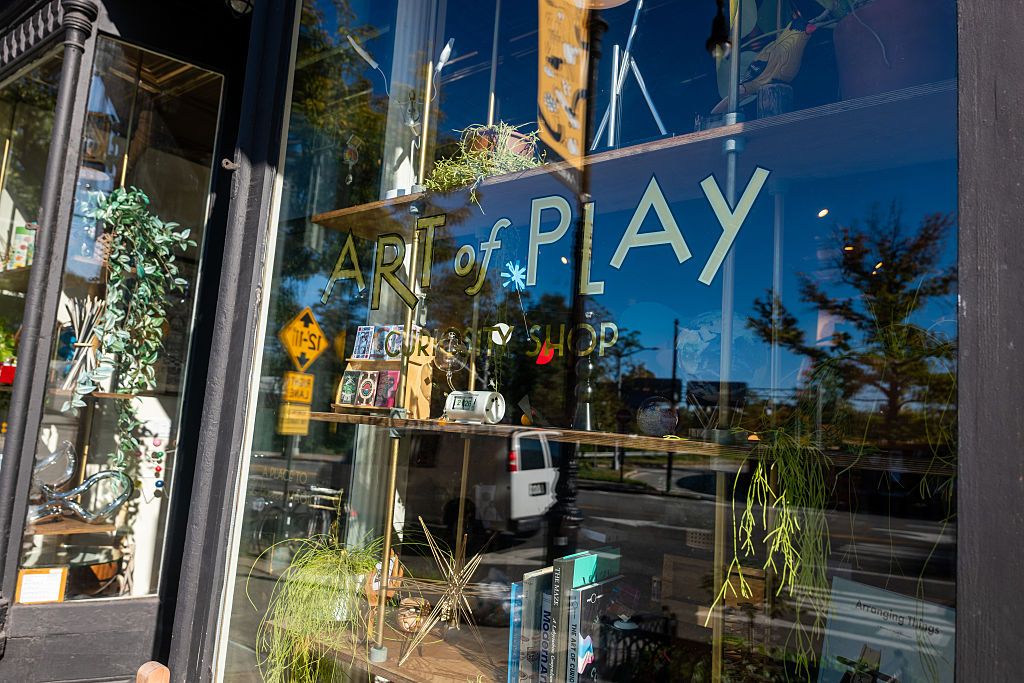
While millions of Americans are stretching every dollar at the grocery store, a viral celebrity shopping dispute over a $15,000 mechanical bird has taken over the internet — and the contrast couldn’t be more revealing about where we are as a country right now. The story of Kelly Clarkson and a Brooklyn boutique is less about customer service and more about the growing divide between everyday financial reality and the world the ultra-wealthy inhabit.
A Bird, a Boutique, and a Social Media Storm
The controversy centers on Art of Play, a luxury shop in gentrified Brooklyn that sells high-end playing cards, puzzles, and novelty items. The store is home to a decorative mechanical bird named Molly, reportedly valued at $15,000 — a price the store claims referred to a similar piece available from the artist, not to Molly herself, who was never listed for sale. Clarkson disputed the store’s version of the interaction, and the back-and-forth quickly exploded across social media.
The store released silent surveillance footage of Clarkson’s visit in an apparent attempt to set the record straight. But without audio, the grainy video couldn’t confirm what was actually said, who was dismissive, or whether anyone behaved inappropriately. It showed a woman walking into a store, speaking to employees, and leaving — nothing more. The footage raised more questions than it answered, and the internet filled in the blanks with its own assumptions.
Sports commentator Pablo Torre even dedicated a full episode of his show Pablo Torre Finds Out to the dispute, lending investigative energy to a story that, by most measures, didn’t warrant it.
The Real Story: What the Rest of America Is Dealing With
Here’s the part that matters to most American families: while this saga played out online, real people are navigating a financial environment that leaves little room for error. Groceries, housing, utilities, and insurance are consuming larger and larger shares of household budgets. Families are standing in grocery aisles comparing prices on canned beans and rice, calculating whether they have enough gas money to make it through the week, and putting off car repairs because one unexpected expense could derail everything.
As rising prices continue to squeeze American households, the idea that the internet’s attention was captured by whether a celebrity received adequate customer service while considering a $15,000 decorative purchase speaks to a striking disconnect between the concerns of the wealthy and those of ordinary working people.
There are people working two full-time jobs who have never had $15,000 available for any emergency — let alone for a shelf ornament. Families are making hard choices about which bills get paid this month. College-educated workers with full-time jobs are one unexpected car repair away from financial crisis. Questions about whether homeownership, a comfortable retirement, or simply breaking even are still realistic goals are not abstract for millions of Americans.
When Celebrity Platforms Meet Small Businesses
The situation also highlights a real tension that comes when a celebrity with a massive public following publicly criticizes a small business. Regardless of who was right or wrong in the exchange, ordinary store employees can suddenly find themselves at the center of a global online pile-on — with very little recourse.
To be fair, no customer — regardless of their income level — should be treated as though they cannot afford something based on their appearance. If Clarkson felt dismissed or poorly served, that is a legitimate concern. But the scale of the response, and the attention it commanded, stands in sharp contrast to the struggles that don’t trend online: the family quietly skipping a medical appointment to avoid a co-pay, or the worker choosing between groceries and a utility bill.
In a twist that underscores just how far removed this story is from everyday financial life, the store reportedly responded to the controversy by listing Molly’s price at $15 million — up from the disputed $15,000 figure. Fifteen million dollars. For a bird that, by the store’s own account, was never actually for sale.
Meanwhile, the broader conversation around the incident continued to grow, pulling in commentary about class, entitlement, and what it means to be a consumer in America today. The mechanical Björn-inspired novelty — a callback to Clarkson’s Grammy-winning cover of “Fast Car” — became a symbol of something much larger than one shopping trip.
What the whole episode makes clear is that perspective on money, access, and daily hardship looks very different depending on where you sit economically. For the millions of Americans who treat every purchase as a careful calculation — who know exactly what’s in the refrigerator and what’s left in the bank account — a public feud over a $15,000 decorative object feels like it belongs to a different world entirely. And in many ways, it does.

Comments are closed.