
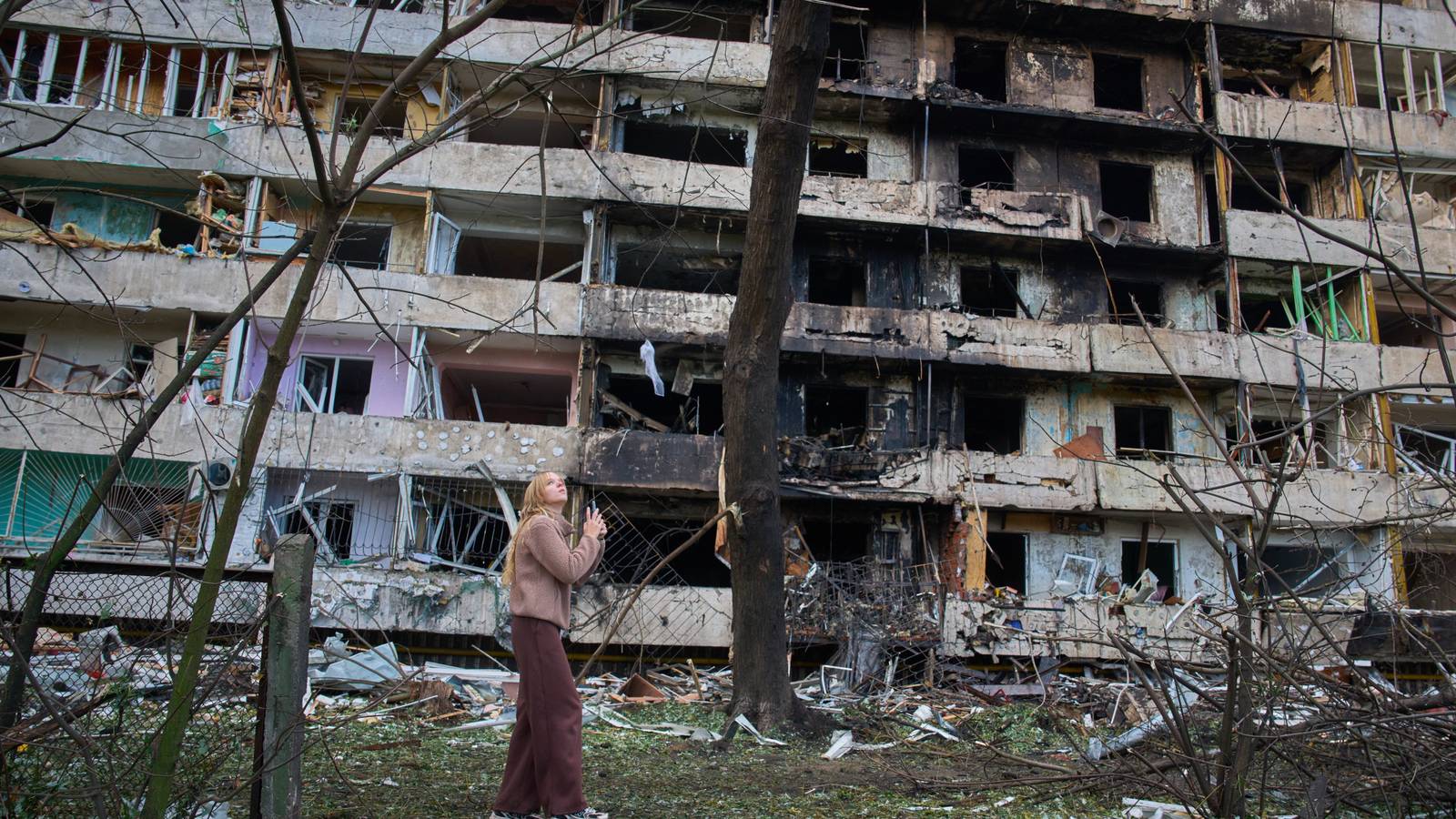
When missiles strike a city’s power grid, the first headlines count casualties and report blackouts — but the quieter crisis unfolds in hospital corridors, dialysis chairs, and homes where someone depends on a ventilator to breathe through the night. That is the reality unfolding in Ukraine right now, as Russia continues to hammer civilian energy infrastructure for the third consecutive night, leaving hundreds of thousands of people without power and pushing an already strained healthcare system toward the breaking point.
Ukrainian President Volodymyr Zelenskyy confirmed Wednesday that Russia’s aerial bombardment of Ukraine’s power grid, oil facilities, and gas infrastructure has continued unabated — even as U.S. President Donald Trump has claimed that both sides agreed to halt strikes on energy targets. For the civilians living through these attacks, the consequences are not abstract geopolitical chess moves. They are hospitals running on backup generators, emergency rooms without reliable electricity, and patients at home whose medical equipment simply stops working when the lights go out.
Hundreds of Thousands Without Power — and the Health Toll That Follows
Russian forces struck all three of Kyiv’s combined heat and power plants overnight into Wednesday, according to Ukrainian Prime Minister Serhii Koretskyi. Zelenskyy reported that at least 600,000 people were left without power after Russia fired 39 ballistic missiles and more than 120 drones at energy and critical infrastructure across Kyiv, the wider Kyiv region, and the northeastern Kharkiv region.
For healthy adults, a power outage is an inconvenience. For a kidney patient who needs dialysis three times a week, an elderly person on home oxygen, or a pregnant woman whose prenatal clinic loses electricity, it can be a medical emergency. Ukraine’s healthcare infrastructure — already under years of wartime strain since Moscow’s forces invaded — must now absorb repeated shocks to the electrical systems that keep hospitals, clinics, and medical equipment functioning.
Five people were killed and 36 others injured in the Russian attack on Kyiv that stretched from Tuesday evening into Wednesday morning, according to city police. Those numbers represent real families — people who will not come home, and survivors who may face long recoveries in a healthcare system operating under siege conditions.
Zelenskyy did not mince words about what Russia’s continued strikes mean for civilians and for any hope of de-escalation.
“We ask America and EVERYONE in the world who does not turn a blind eye to reality to respond — and to respond forcefully”
to Russia’s ongoing aerial barrages, he wrote on social media Wednesday.
“Russia has squandered the opportunity for de-escalation and has clearly chosen to continue its insane war of annihilation,”
he added.
A Ceasefire on Paper — But Not in Practice
Trump’s push for a halt to energy strikes has so far yielded little on the ground. The efforts to stop the fighting have made no measurable progress, even as the White House has described agreements being in place. Kremlin spokesman Dmitry Peskov acknowledged Wednesday that the details of any energy ceasefire are still being worked out, telling reporters,
“The work in that direction is continuing.”
For Ukrainian civilians, that ambiguity translates directly into uncertainty about whether their hospital will have power tonight, whether their child’s school clinic will be heated this winter, or whether emergency medical services can respond reliably when they call for help. Ukraine has agreed to halt its own campaign targeting Russian oil refineries — a campaign that had caused significant fuel shortages inside Russia — with Ukraine’s last reported strike on a refinery occurring the previous Friday. But the one-sided restraint has not been met in kind.
Communications Cuts and What They Mean for Emergency Response
Beyond the power grid, Ukrainian officials are watching another thread fray with serious consequences for civilian safety: potential disruptions to the communications systems that coordinate air defense warnings, emergency medical responses, and front-line logistics.
Serhii Beskrestnov, an adviser to Zelenskyy, reported on social media that Musk’s Starlink satellite communications network overnight imposed a speed limit on Ukraine’s Starlink terminals mounted on drones. Starlink is a critical tool for Ukraine’s air defense and emergency coordination — used in long-range drone missions, interceptor air defense systems, and front-line logistics. When those systems are degraded, the downstream effect reaches civilian hospitals and emergency responders who depend on timely warnings to shelter patients, move vulnerable people, and prepare trauma units before a strike arrives.
“Obviously, this action cannot be a coincidence and is connected to the current political situation,”
Beskrestnov said. SpaceX made no immediate comment.
The communications concern compounds a separate and alarming development: Ukraine did not receive its usual advance warning from partners ahead of Russian missile attacks that hit Kyiv for the second consecutive night, Zelenskyy said Tuesday. Ukraine’s air force spokesman Yurii Ihnat confirmed there was no warning of an initial Russian ballistic missile attack Tuesday night, though Kyiv was warned about three later waves. Without early alerts, hospitals cannot pre-position staff, move patients away from windows, or activate emergency protocols before the first missiles hit.
Trump has stated that the U.S. has not stopped sharing intelligence with Ukraine, and a lawmaker on Ukraine’s parliamentary Defense Committee told the Associated Press that intelligence sharing with international partners has not stopped. The lawmaker spoke on condition of anonymity because he was not authorized to give statements to the press.
The Bigger Fear: Losing the Support That Keeps Civilians Alive
Ukrainian officials are openly worried that American support — not just military, but the kind that sustains civilian infrastructure and healthcare capacity — may be eroding. A deal struck between Trump and Russian President Vladimir Putin to import Russian diesel despite international sanctions has alarmed Kyiv and European capitals alike. Ukrainian officials argue the arrangement financially enables Russia to sustain the war — and by extension, to keep striking the power plants and heating systems that Ukrainian hospitals and families depend on through the winter.
European leaders, meanwhile, have raised alarms about what they describe as a hybrid war on the continent — a combination of military attacks, energy disruption, and sabotage that targets the infrastructure underpinning civilian life. Zelenskyy traveled to London Wednesday for talks with British Prime Minister Andy Burnham, with a possible trip to Brussels for an EU summit later in the week, as Ukraine and its European partners work to shore up support for civilian and military needs heading into another winter of war.
British Prime Minister Burnham was direct about Britain’s commitment ahead of Zelenskyy’s visit:
“My message to the Ukrainian people could not be clearer: We are with you for as long as it takes, and we will go further and faster in our support to back your courageous fight for peace in Europe.”
Analysts note that the shifting U.S. posture is pushing Europe toward more decisive action.
“Ahead of a tough winter for Ukraine, Donald Trump’s swing back toward Russia bodes ill,”
wrote Rym Momtaz of Carnegie Europe on Tuesday.
“But instead of panicking, Kyiv’s European allies are focusing on action.”
For Ukrainian families bracing for winter without reliable heat or electricity, whether that action comes fast enough — and reaches far enough — is not a policy question. It is a matter of staying warm, staying healthy, and staying alive.







Comments are closed.