
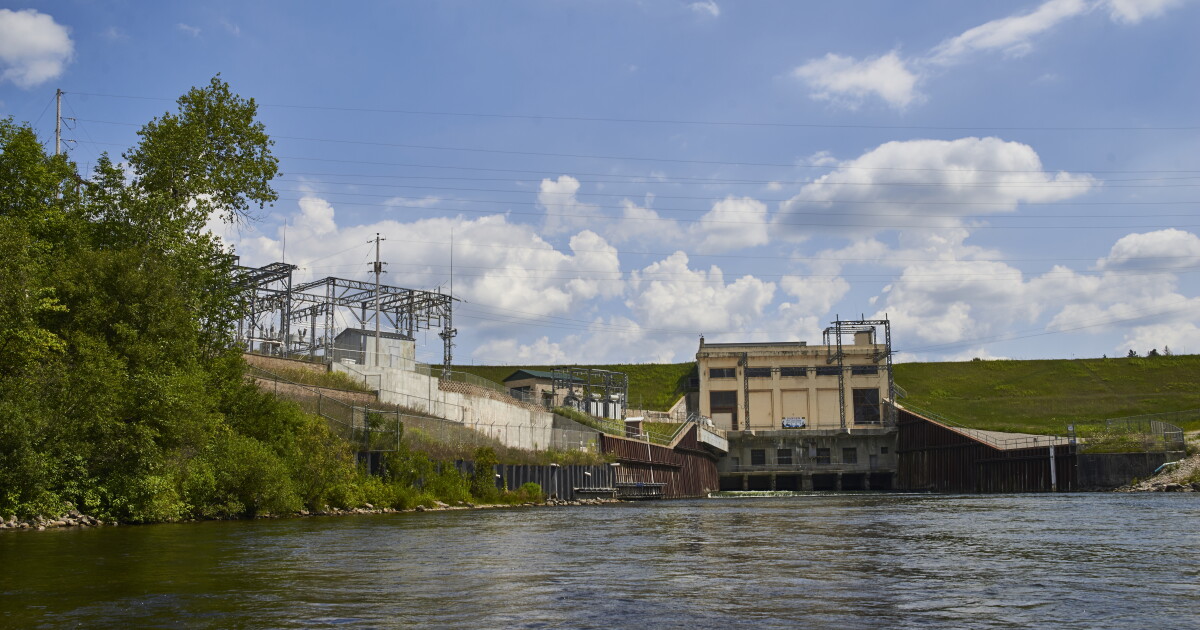
Thirteen hydroelectric dams on some of Michigan’s most iconic rivers hang in the balance as a high-stakes utility sale heads toward a hard deadline. The fate of those dams — and who ultimately bears responsibility for their safety — could soon be decided by a single state agency.
The Michigan Public Service Commission has granted Consumers Energy a second extension to negotiate a settlement with opponents of its controversial plan to sell its 13 hydroelectric dams. The move buys the utility more time, but critics say the negotiations have already stalled — and that regulators should stop delaying and make a final call.
Consumers Energy has proposed selling the aging dams, located along the Au Sable, Grand, Kalamazoo, Manistee, and Muskegon rivers, to Confluence Hydro, a private equity energy company — for just $1 each. Under the arrangement, Consumers Energy would continue buying the electricity the dams produce, while Confluence Hydro would take on financial responsibility for dam safety and maintenance.
The deal has drawn fierce opposition. In June, an administrative law judge reviewed the proposal and concluded it was too risky and not in the public interest — a finding summarized in an unusually thorough 312-page opinion built on an extensive evidentiary record.
Despite that ruling, the commission agreed it was reasonable to allow settlement talks to continue. However, regulators made clear this will be the final extension. Any settlement agreement must be filed by 5 p.m. on December 9. If no deal is reached by that deadline, the commission will issue a final order on the proposed sale on December 17.
Opposition Grows, Talks Stall
Even with the extension in place, it remains unclear who exactly Consumers Energy is negotiating with. Major stakeholders — including the state attorney general, the governor’s office, the Michigan Department of Natural Resources, conservation groups, and industrial customers — have reportedly walked away from the first round of talks still opposed to the sale.
Howard Learner, with the Environmental Law and Policy Center, which represents one of the intervenors, described the current state of negotiations bluntly.
“The attorney general, the governor’s office, the Michigan Department of Natural Resources, the conservation groups, the industrial customers, have all said the negotiations are not going anywhere,”
Learner said.
Learner argued that the commission should act on what the administrative law judge already found, rather than waiting for a settlement that may never come.
“Enough is enough. The proposed dam sale is a bad deal for ratepayers, for the rivers and for safe dams in Michigan. This is a bad deal that should be rejected by the public service commission. Let’s move forward,”
Learner said.
He also raised concerns about treating the dams as a single package, arguing that each dam is different and affects different communities.
On the question of whether the commission could override the administrative law judge’s findings, Learner acknowledged it’s possible — but said it would be extremely difficult given the depth of the judge’s analysis.
“The commission would really have to look at the same evidence, the same evidentiary record, and have a factual basis as well as a legal basis for reaching a different conclusion,”
Learner said.
“And in this particular case, I think that would just be very, very hard for the commission to do in a legally sustainable way.”
Consumers Energy Pushes for More Time
Consumers Energy, for its part, insists a workable deal is still within reach. Chris Fultz, the company’s senior vice president of electric supply, defended the extension in a statement.
“We understand the desire for communities and our coworkers for an outcome in this case. We are providing for a little more time to reach a constructive agreement that will be a win for our customers, Michigan, and the communities we care about,”
Fultz said.
“We continue to work with others to find solutions to ensure these dams will continue to operate safely and responsibly for years to come,”
he added.
The company also pushed back on the narrative that talks have broken down entirely.
“We recognize some parties have publicly opposed continuing settlement efforts. Consumers Energy respectfully disagrees and remains committed to working in good faith to achieve a constructive settlement for the benefit of customers, communities and the State of Michigan.”
For coverage of related politics and government developments in Michigan, additional reporting is available from Tracy Samilton at Michigan Public.








Comments are closed.