
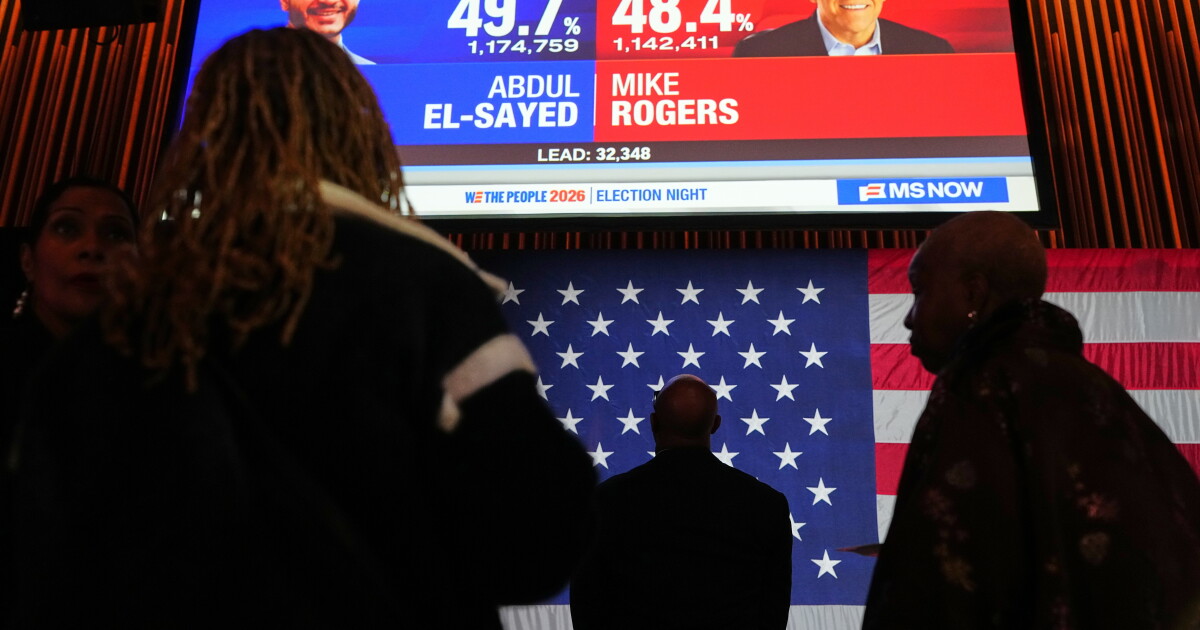
For millions of American families, the question isn’t whether the economy is growing — it’s whether that growth is showing up in their bank accounts, at the grocery store, or on their monthly health insurance bill. After a wave of Democratic victories in Tuesday’s midterm elections, one prominent economist says the real test for newly elected leaders is delivering on the pocketbook promises that got them elected.
Betsey Stevenson, a professor of public policy and economics at the University of Michigan’s Ford School and former chief economist for the U.S. Department of Labor, spoke with Stateside about what voters sent a clear message about on Election Day — and what Democratic leaders need to do next to keep that trust.
A Shift in Who Americans Trust With Their Wallets
For decades, Republicans held a consistent edge when voters were asked which party they trusted more to manage the economy. That advantage persisted even when economic outcomes didn’t necessarily back it up, Stevenson said. But something has changed.
Survey data from 2026 showed a growing number of Americans now believe Democrats are better equipped to handle economic challenges. For Stevenson, that shift didn’t come easily.
“That was a really tough nut for Democrats to crack,”
she said.
Now that Democrats have won major victories — including Jocelyn Benson as governor of Michigan and Abdul El-Sayed to the U.S. Senate, along with Democratic majorities in both chambers of the Michigan state Legislature — Stevenson says the pressure is on to prove that trust was well-placed.
What Families Need First
Stevenson is direct about what she thinks newly elected Democrats should focus on first: the costs that hit families the hardest every month. That means rolling back tariffs that have driven up prices, restoring Affordable Care Act subsidies that were cut and caused health insurance costs to spike, and addressing Medicaid cuts that have left many Americans without coverage options.
She also pointed to the ongoing war in Iran as a factor pushing oil prices — and by extension, gas prices — higher than they need to be. Getting that conflict toward a stable resolution, she argued, would bring some relief to everyday Americans at the pump.
While many Democrats are eager to pursue accountability and oversight of the Trump administration, Stevenson warned that getting too consumed by that fight could cause lawmakers to lose sight of why voters put them in office.
“The biggest risk Democrats have is they get distracted by the accountability and they go too far to trying to hold people accountable,”
she said.
“If you focus too much on that, you’re not addressing the mandate the voters sent Democrats there to address their pocketbook issues.”
The AI Boom: Good for GDP, But Not for Your Paycheck
One of the more surprising economic forces shaping family budgets right now isn’t a tax or a tariff — it’s artificial intelligence. The rapid expansion of AI and the massive data centers being built to support it has fueled strong GDP growth. But Stevenson says that headline number doesn’t tell the whole story for working Americans.
“If we look at where the job growth has been over the last year, it’s basically from healthcare. We’re not seeing this AI enthusiasm do much besides boost our GDP numbers in terms of it’s not adding a lot of jobs, it’s not raising people’s wages,”
Stevenson said.
Building a data center creates construction jobs in the short run, but once the facility is up and running, it employs relatively few people on a permanent basis. For states like Michigan, that’s a critical distinction when planning for long-term economic health.
Stevenson also noted that the surge in AI spending and data center construction has contributed to rising prices in the short term — adding yet another pressure point for families already stretched by inflation.
What Michigan Really Needs
For Michigan specifically, Stevenson says the focus should be on attracting industries and companies that will provide steady, meaningful employment for years — not just the temporary boost of a construction project.
She pointed out that the tariffs imposed by the Trump administration, which were sold in part as a way to protect Michigan’s auto industry, ended up creating complications due to the state’s deep economic integration with Canada. Simple protectionist promises, she said, often don’t hold up in a complex, interconnected economy.
Her suggestion for where Michigan should look? California’s tech sector.
“You know what some of those San Francisco companies should do? They should relocate to Detroit,”
Stevenson said, pointing to Detroit’s revitalization as a genuine selling point. Bringing Silicon Valley-style innovative jobs to Michigan, she argued, would do far more to sustain working families over the long haul than any data center ever could.
Stevenson also highlighted a notable shift in voter behavior: young men, a group that had been trending toward Republicans, swung back sharply toward Democrats in this election. She connected that shift directly to economic anxiety.
“This world we’re entering, it doesn’t seem fair. It seems like wealth is being randomly distributed based on crypto or influencers or corruption. And I don’t know what to do next. And I want someone who’s going to help give us a little bit more security and reduce some of this uncertainty,”
she said, characterizing the sentiment of that voter bloc.
For Democratic leaders in Lansing and Washington, the message from voters couldn’t be clearer: deliver real relief to real families, or risk squandering a hard-won opportunity.





Comments are closed.