
A federal appeals court has drawn a firm legal line around presidential power — one that carries significant implications not just for California, but for every American concerned about how military authority intersects with democratic institutions. With midterm elections less than two weeks away, the timing of this ruling has brought fresh scrutiny to questions about whether military forces could ever be used near polling locations.
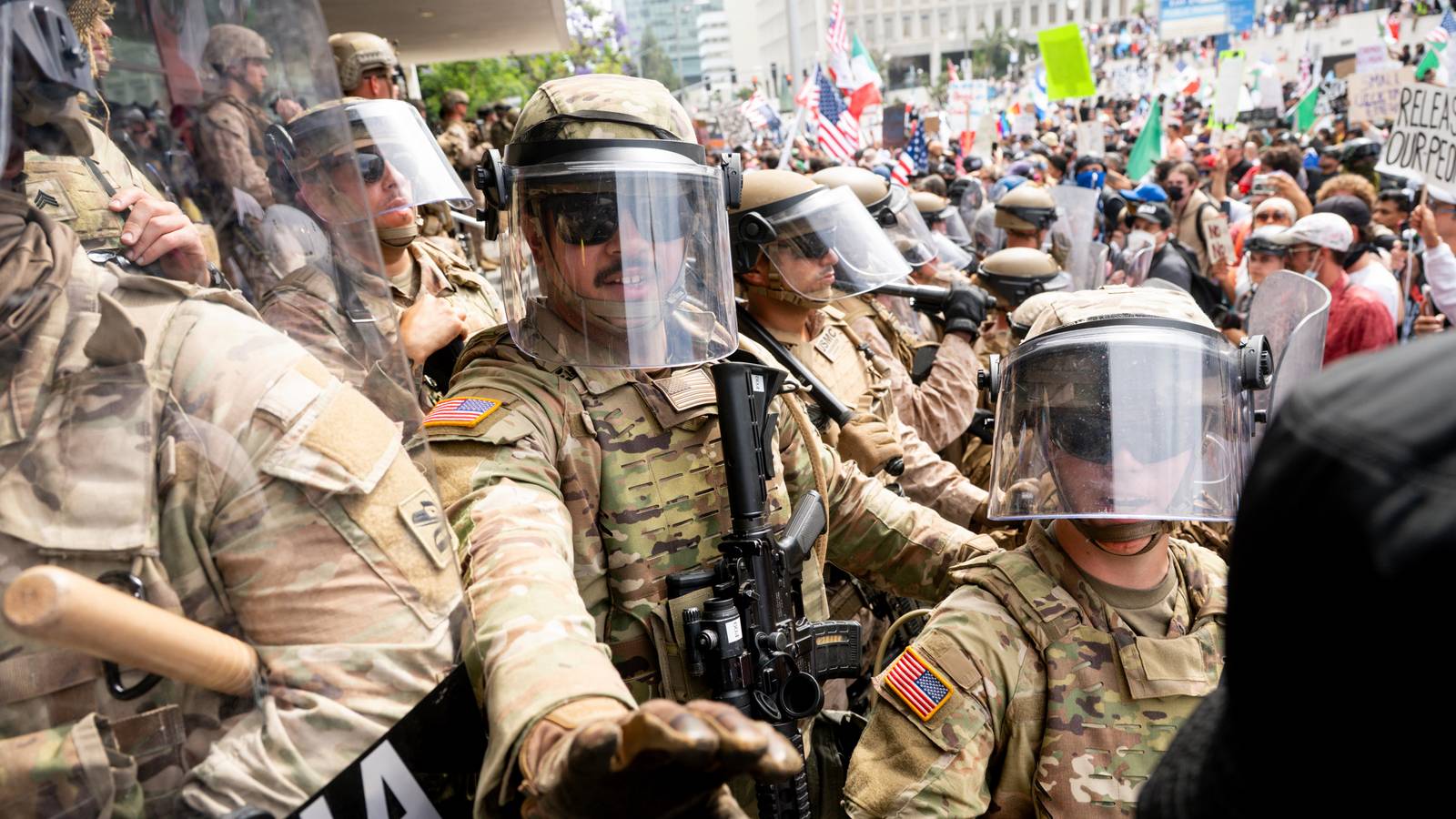
On Friday, a three-judge panel of the U.S. 9th Circuit Court of Appeals ruled 2-1 that President Trump’s decision to deploy 4,000 California National Guard troops to the Los Angeles area last year was unlawful. The court found that the president’s justification for seizing control of the state’s Guard did not fall within a “range of honest judgment.”
What the Court Decided — and Why It Matters
The ruling follows a precedent set by the U.S. Supreme Court in December, which similarly found that Trump’s federalization of the Illinois National Guard was illegal. Taken together, the two decisions establish a clear legal boundary: a president cannot simply invoke emergency authority to take control of a state’s National Guard without meeting specific legal requirements.
In the California case, the appeals court rejected the administration’s claim that protests in Los Angeles — which broke out in response to a series of immigration enforcement sweeps — constituted a “rebellion” serious enough to justify federal takeover of the Guard. Writing for the majority, Judge Jennifer Sung, a Biden appointee, was direct:
“Defendants have not made either of the required threshold showings here. Thus, they have not carried their burden.”
Trump-nominated Judge Mark Bennett was the lone dissenter on the panel.
How the Conflict Began
Confrontations broke out in June 2025 near a Home Depot in Paramount, a heavily Latino city south of Los Angeles, where federal immigration agents were staging operations nearby. Protesters clashed with federal agents, who deployed tear gas, flash-bang explosives, and pepper balls. Demonstrators threw rocks and cement at Border Patrol vehicles. The unrest followed a week of immigration enforcement sweeps across the city, including in LA’s fashion district, with the arrest tally climbing past 100. A prominent union leader was also arrested while protesting and accused of impeding law enforcement.
The White House responded by announcing a National Guard deployment to “address the lawlessness that has been allowed to fester,” triggering a legal battle that has now worked its way through multiple courts.
Initially, a lower court agreed with Trump, finding that the president had acted within the law. That court did push back on one administration argument, however — that the president’s decision to federalize the Guard should not be subject to judicial review at all. The case then moved to the appeals court, which ultimately sided against the administration.
Election-Season Context Adds Urgency
Constitutional experts have been closely watching this case, with the midterm election now less than two weeks away. A central concern is whether the president could attempt to deploy National Guard troops to polling locations. The Trump Administration has said there are no plans to do so — and the nation’s top general has confirmed the military has no plans to deploy troops to November polls. Still, Trump himself has previously stated that he regretted not ordering the National Guard to seize voting machines following the 2020 election, a comment that has kept the issue alive in public discourse.
For voters trying to understand what this legal fight means for their access to the ballot, Friday’s ruling sends a clear message: courts are willing to check presidential authority when it comes to the use of military force on American soil, and they have now done so twice in less than a year.
State Officials Respond
California Governor Gavin Newsom, a Democrat who had resisted the Guard deployment from the start, issued a statement celebrating the decision.
“Today is a crucial day for the rule of law, upholding the Constitution and defending democracy,”
Newsom said.
“Yet another court has issued a complete rejection of Donald Trump’s illegal, authoritarian takeover of our state’s National Guard. California fought back against this potential power grab and, in doing so, created essential legal precedent that not only protects Californians but all Americans. California continues to stand as a first line of defense against Donald Trump’s authoritarianism.”
California Attorney General Rob Bonta also issued a statement emphasizing accountability:
“Once again, the courts have rejected the Trump Administration’s attempts to circumvent the law for its own political agenda. Deploying the National Guard in Los Angeles with no rhyme or reason was a clear example of federal overreach, and it will not be tolerated. When the president tramples on the Constitution and the rights of Californians, we’ll fight to hold him accountable—and we will win.”
The U.S. Justice Department did not respond to requests for comment on the ruling.
For further coverage of military and national security developments relevant to American voters, readers can follow reporting from Military Daily News. Related stories include the military’s stated position on troop deployment to polling locations and recent leadership changes at the Army Secretary level. The legal battle over National Guard authority is also being watched alongside other court developments, including the Supreme Court’s recent ruling allowing White House construction to proceed.
Comments are closed.