
For thousands of veterans and military families who drank poisoned water at Camp Lejeune for decades, justice has been slow and painful. Now, President Trump is making their financial compensation contingent on the outcome of a midterm election — a move that raises serious questions about how political leverage intersects with obligations to those who served.
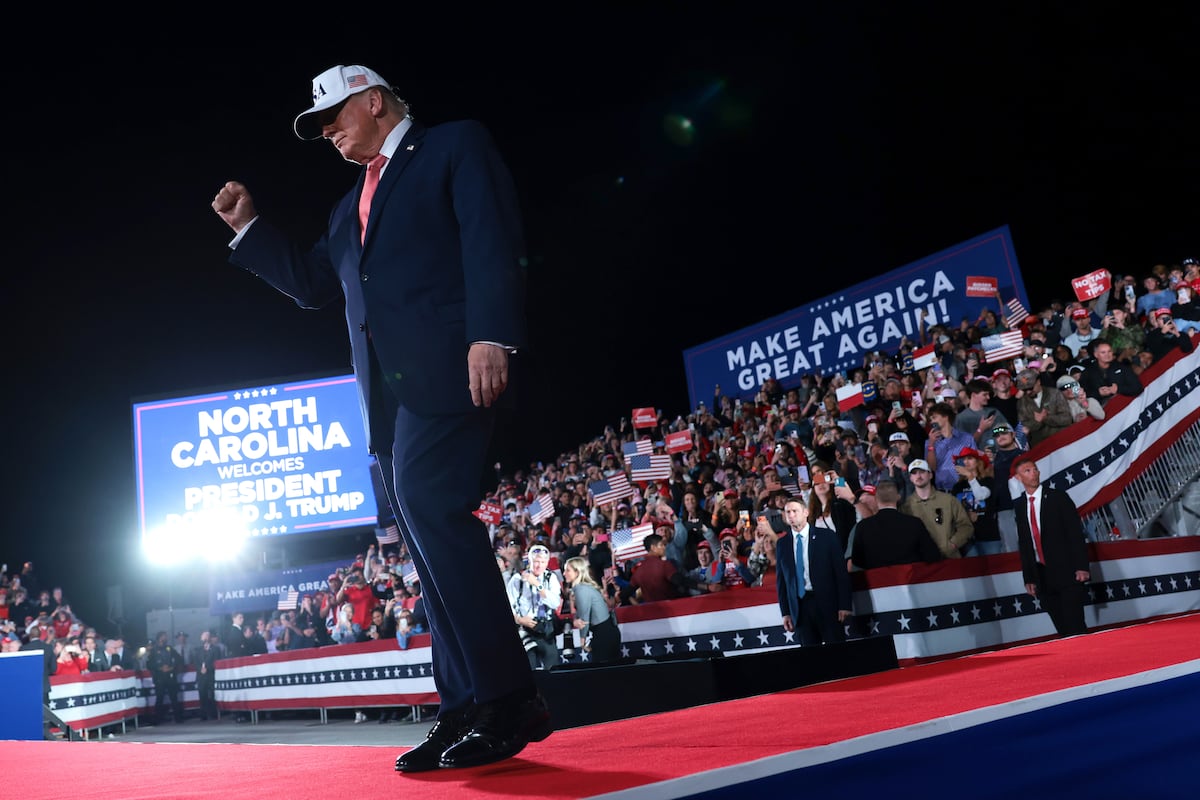
At a campaign-style rally held Tuesday in Greenville, North Carolina, Trump told the crowd that monetary compensation for victims of contaminated water at the North Carolina Marine Corps base depends on whether Republicans take control of Congress in the upcoming midterms.
Trump stated directly:
“If we win the House and the Senate, I am directing the Department of Justice to settle all remaining legitimate claims as soon as possible and get it off the books and get it finished.”
He then went further, leaving little ambiguity about what happens if Republicans lose:
“If we don’t win, there’s no money. If we do win, you’re getting it.”
Trump also added,
“We don’t want to give any [money] to the trial lawyers.”
What Happened at Camp Lejeune
The Camp Lejeune water contamination crisis unfolded quietly over more than three decades. From the early 1950s through the late 1980s, service members and their families living on base were unknowingly exposed to drinking water laced with trichloroethylene — a toxic chemical that seeped into the water supply from a nearby dry cleaning business, according to the Centers for Disease Control and Prevention. Underground storage tanks and broader industrial pollution compounded the problem, as documented by the National Research Council. Military officials reportedly didn’t discover the contamination until 1982 — nearly 30 years after it began.
The health toll has been severe. A study published in 2023 found that veterans and family members who were stationed at Camp Lejeune are 70% more likely to develop Parkinson’s disease compared to other veterans. Many survivors have also linked cancer diagnoses directly to their exposure at the base, and the contamination has been connected to numerous deaths and dozens of lawsuits.
Where the Law Stands
In 2022, the Biden administration signed the Promise to Address Comprehensive Toxins (PACT) Act into law, which expanded VA healthcare access for veterans exposed to toxic substances and opened the door for Camp Lejeune victims to seek financial compensation through the legal system. The Camp Lejeune Justice Act was included as part of that legislation.
The Justice Department announced in March that it had approved 649 settlement offers totaling $175 million over just three weeks. Since the program launched, more than 2,500 settlement offers worth approximately $706 million have been approved, with individual payments ranging from $100,000 to $550,000. The DOJ also moved to expedite settlements in March, working through outstanding claims more quickly. A separate settlement track through the U.S. Navy and DOJ, introduced in 2022, allows applicants to receive faster payouts by agreeing to waive litigation.
Trump claimed at the rally that his administration had already distributed $1 billion in cash settlements to victims — though the publicly confirmed figure from the Justice Department stands at approximately $706 million in approved offers.
Why This Matters for Voters and Democratic Accountability
The core question raised by Trump’s remarks isn’t just about Camp Lejeune — it’s about how elected officials use their authority and what it means when government relief for citizens who served their country is framed as a reward contingent on partisan election outcomes.
Veterans and military families affected by the contamination have waited years — in some cases, decades — for resolution. Many have already died waiting. The settlement program currently underway is the product of bipartisan legislation and ongoing legal processes, not something that simply switches on or off with election results. Legal experts and veterans’ advocates have noted that the Justice Department’s settlement authority exists independently of which party controls Congress.
For voters heading to the polls this November, Trump’s comments put a spotlight on how political messaging can shape public understanding of government programs — and how that messaging can affect public trust in whether institutions will serve all citizens fairly, regardless of election outcomes. Keeping that distinction clear is essential to an informed electorate.
For more on military and veterans’ issues in the news, see coverage of the 2027 cost-of-living increase for retirees and veterans, the Army’s move to address blocked parental access to teen medical records, and updates on a planned DEERS outage that could affect Tricare beneficiaries. If you’re a service member or military family member voting this cycle, absentee ballot deadlines are approaching.







Comments are closed.