
For millions of military families, the benefits that come with service — healthcare coverage through Tricare, financial stability, and community connection — are deeply tied to how well the Army can recruit and retain its force. A quiet but significant change to one of the Army’s longest-running outreach programs may have ripple effects that reach far beyond the recruiting station.
The U.S. Army has suspended its Hometown Recruiter Assistance Program (HRAP), a decades-old initiative that allowed newly trained soldiers to return to their home communities for 14 days — with pay — before reporting to their first duty station. In exchange, those soldiers were expected to work alongside local recruiters, sharing their experiences and encouraging peers to consider military service. According to Lt. Gen. Johnny Davis, the head of U.S. Army Recruiting Command, the program simply wasn’t delivering enough results to justify the cost.
That matters for everyday Americans because military service is one of the few paths that provides immediate, comprehensive healthcare coverage — not just for the service member, but for their entire family. When recruiting falters or programs designed to grow the force are cut without clear replacements, fewer families ultimately gain access to that coverage and the financial security that comes with it.
A Program With Good Intentions — And a Weak Track Record
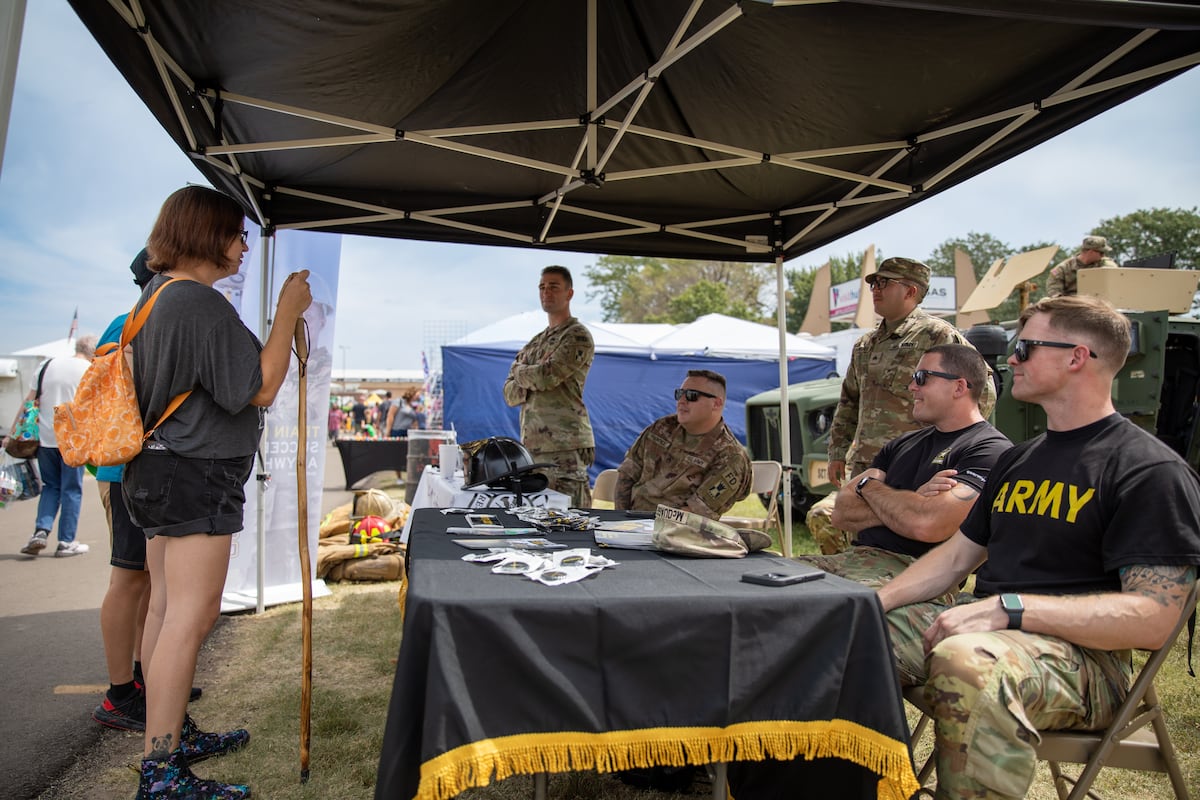
HRAP has roots going back to the 1980s, built on a straightforward idea: who better to recruit young people into the Army than someone who just went through it themselves? In its most recent form, soldiers had to be selected and approved by a company commander to participate. Once home, they were supposed to visit high schools, appear at community events, and support local recruiters as living proof that military service was achievable for ordinary people.
Staff Sgt. Colton Dunbar, a recruiting center station commander in Missouri, described the value of that personal connection in a 2022 Army news release.
“We try to get the most out of them while they’re here by bringing them to the high school where they graduated and their communities to show everyone that this person was in your community six months ago as a civilian, but look at them now,”
he said.
“It helps to break down any barriers because they know that person in uniform — it helps show we are people just like everybody else.”
But the reality on the ground told a different story. Davis, speaking at a forum hosted by the Association of the United States Army, acknowledged that return on investment had always been modest at best.
“I would tell you, when the program was initiated and really delivered to the Army years ago and executed, that we had some good return on investment — about, you know, one or two percent,”
Davis said. He went on to explain that the core problem was human nature: tens of thousands of young soldiers returning home were understandably more focused on reconnecting with family and friends than on staffing a recruiting table.
“But, bottom line, what we’ve learned over the years is that 20, 30,000 young superstars, when they were headed back home, were good; they got to go home. But they weren’t really working with the recruiters as much as we wanted them to.”
The same dynamic played out during the holiday season. The Army had also allowed National Guard and Reserve soldiers to return home during the Christmas Exodus — a traditional holiday leave period — on the condition they would support recruiting efforts. Davis was candid about how that worked out in practice.
“During that Christmas holiday, was there a lot of recruiters in the recruiting stations working with them? No. So we’re really thinking through: is this return on investment, and is it worth the cost to the Army? Or can we take those funds and spend them in other ways to help our men and women.”
Why This Matters for Military Families and Healthcare Access
The stakes here go beyond personnel logistics. The Army — like all military branches — has faced serious recruiting challenges in recent years. A smaller force means fewer families enrolled in Tricare, the military’s healthcare system, which covers not just active-duty service members but their spouses and children. It also means reduced pressure on Congress to adequately fund veterans’ healthcare through the VA, since a shrinking veteran population can make those budgets easier to cut.
Community-based recruiting efforts like HRAP also tend to reach into rural and lower-income areas where military service is one of the most reliable routes to healthcare coverage, stable income, and educational benefits. When those pipelines weaken, it’s often families in underserved communities who feel it first — young people who might have gained health coverage through enlistment instead remain uninsured or underinsured.
Concerns about military benefit access aren’t limited to recruiting. A planned DEERS system outage has already raised alarms about Tricare beneficiaries potentially losing the ability to verify their eligibility at pharmacies and healthcare providers — a reminder of how fragile the infrastructure supporting military family health can be.
What Comes Next
The suspension of HRAP was first discussed on Army recruiting social media pages back in January, but the service had not publicly confirmed the move until Davis spoke at the AUSA forum. The program’s fate remains uncertain. Davis said the Army is
“looking at other ways”
to help soldiers access hometown leave outside of the recruiting program framework, but offered no specifics on timing or alternatives.
The challenge of measuring HRAP’s impact is not new. A study conducted decades ago by the U.S. Army Research Institute for the Behavioral and Social Sciences found it was difficult to track what program participants actually accomplished, since much of their influence happened informally — conversations at a cookout, a chance encounter at a grocery store — rather than in a recruiting office where numbers could be tallied. As the study noted,
“Aides are credited for individuals they brought to the recruiter who subsequently enlist, but the total effect of the aide’s efforts is more subtle than the sum of their recruits. For example, aides can ‘plant seeds’ or lay the groundwork months in advance of an enlistment decision and receive no credit for an enlistment that occurs months after his or her departure.”
That intangible community impact — the kind that doesn’t show up in spreadsheets but shapes whether a teenager from a small town sees military service as a real option — is exactly what’s at stake as the Army weighs whether to bring HRAP back in a reformed version or let it fade away entirely. For families in communities where the military represents one of the clearest paths to healthcare coverage and financial stability, the outcome of that decision is anything but abstract.





Comments are closed.