
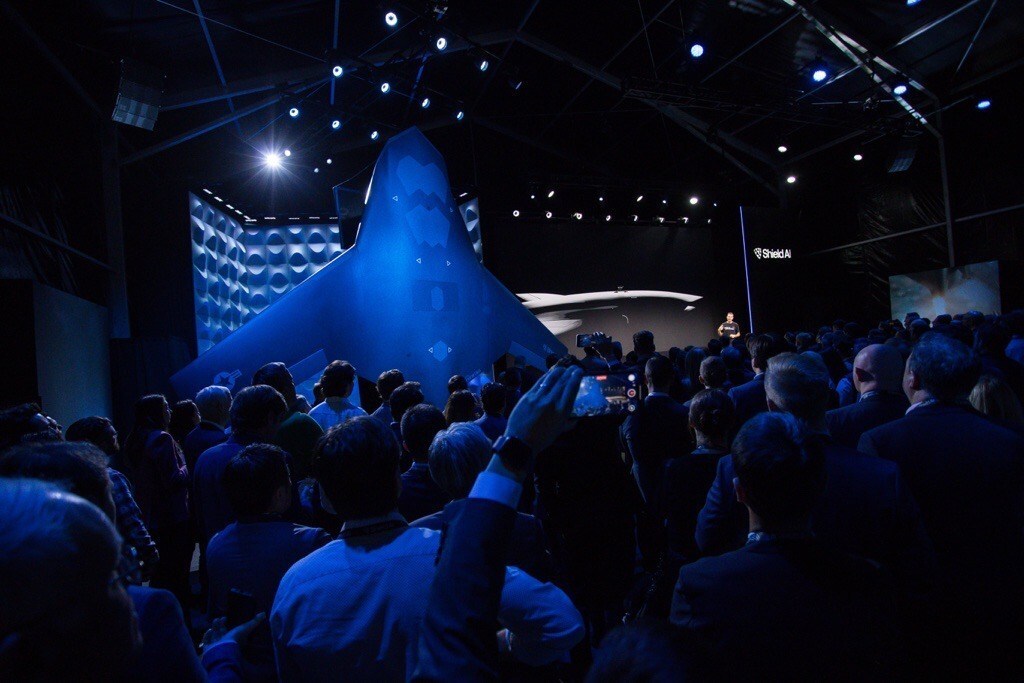
Two defense technology companies are joining forces in a deal that could reshape how the U.S. military detects and defeats drone threats. Shield AI announced it will acquire Echodyne for $5.3 billion, bringing together a leading autonomous drone developer and a maker of cutting-edge radar systems at a time when demand for counter-drone technology is surging worldwide.
The deal, announced Thursday, positions Shield AI to expand well beyond its existing drone platforms and into the rapidly growing market for systems that can detect, track, and neutralize unmanned aerial threats.
What Echodyne Brings to the Table
Echodyne specializes in solid-state radar systems built on its patented Metamaterials Electronically Scanned Array — or MESA — technology. These radar systems are compact, adaptable, and can be integrated into a wide range of defense and security platforms, including high-energy lasers and microwave-based counter-drone weapons.
The company’s technology is capable of simultaneously tracking more than 1,000 objects at once, including small quadcopter drones that are notoriously difficult to detect. That capability caught the attention of the Pentagon’s premier counter-drone task force, JIATF-401, which awarded Echodyne a $250 million contract in September to supply counter-drone technology to military forces over a 36-month period.
Echodyne CEO Eben Frankenberg has described the market environment as extraordinary. Speaking to Defense News in July, he said demand for counter-drone radar could grow tenfold by 2030.
“There is a rush of interest globally for counter-drone. The Ukraine war made it obvious to everyone that drones had changed the face of warfare, but the Iran war made it obvious that everything’s at risk.”
— Eben Frankenberg, CEO, Echodyne
Shield AI’s Expanding Role in Defense
Shield AI is already well established in the defense sector as the developer of the X-Bat and V-Bat vertical takeoff and landing (VTOL) drone systems. The V-Bat has been used by the U.S. Coast Guard for maritime reconnaissance, helping law enforcement identify and intercept illegal drug shipments at sea.
The company also develops Hivemind, an autonomy software platform that enables AI-driven pilots to operate across multiple unmanned systems simultaneously — including aircraft, drone boats, and spacecraft. The software supports what the industry calls multi-agent teaming and swarming, where groups of unmanned systems coordinate with one another in real time.
Shield AI CEO Gary Steele framed the Echodyne acquisition as a key step in building out the company’s long-term strategy across three distinct but connected business areas.
“We are building a new-generation defense technology company consisting of three fast-growing, high-margin, mutually supporting business units: autonomy software, autonomous systems and mission systems,”
Steele said in a statement.
Why the Two Companies See This as a Natural Fit
Frankenberg described the merger as a logical combination, arguing that autonomous systems are only as effective as the sensors feeding them information.
“Hundreds of customers rely on our radars to detect and track drones, protect people and infrastructure, secure borders, and ensure safe airspace operations,”
Frankenberg said.
He added:
“Shield shares our view that autonomous systems can only act on what they can sense, and superior sensors lead to superior systems and outcomes. By joining Shield, we’re creating a company with the size and breadth to deliver even more value to our broad range of defense, government, and commercial customers around the globe.”
The acquisition reflects a broader trend in the defense industry, where companies are racing to build integrated platforms that can both deploy and counter drones — a capability that has become increasingly critical as unmanned systems play a larger role in modern conflicts. Follow Military Times for continued coverage of developments in defense technology.









Comments are closed.