
For millions of American families, healthcare isn’t just a political talking point — it’s the difference between keeping the lights on and going bankrupt over a hospital bill. The 2026 midterm elections made that reality impossible for Washington to ignore, as voters across the country sent a clear message that the cost of staying healthy has become too heavy a burden to bear.
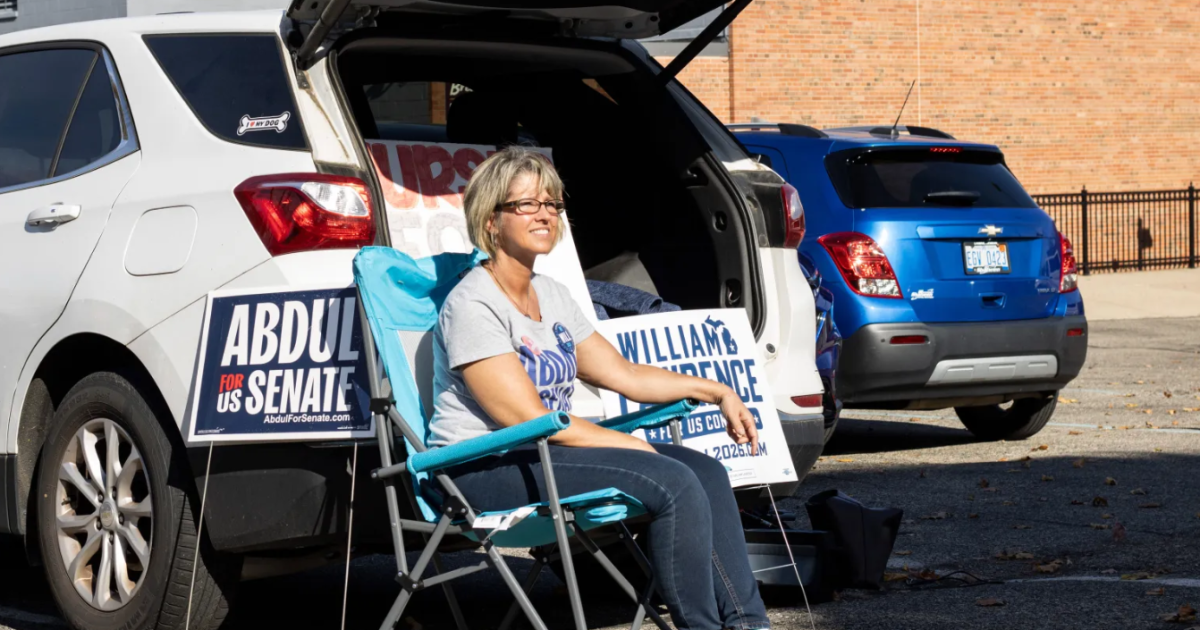
Kim Bogan has watched that burden crush people for fifteen years. As an emergency room nurse at Sparrow Hospital in Lansing, Michigan, she regularly cares for five or six patients at once — patients who arrive sicker than ever and often leave without being able to afford the prescriptions she hands them. That daily reality drove her to spend the past year splitting time between 12-hour ER shifts and campaigning for Abdul El-Sayed, the Democrat who made Medicare for All a centerpiece of his congressional campaign and is now a senator-elect.
“Nobody expected that,” Bogan said — referring to the wave of progressive candidates who successfully ran on some form of universal healthcare in states like Texas, Iowa, Maine, and Michigan.
What Medicare for All Actually Means
Medicare for All generally refers to a government-run health program that would replace most or all private insurance, guaranteeing coverage to every American. The idea has gained traction as families across the country struggle under the weight of healthcare costs that keep rising faster than paychecks.
But turning that campaign promise into law won’t be simple. Even in a blue wave as large as the 2026 midterms, analysts noted that the most vocal Medicare for All advocates won by smaller margins than more moderate Democrats — a signal that enthusiasm for the policy has real limits.
Jonathan Oberlander, a healthcare reform expert and professor at the University of North Carolina-Chapel Hill, put it plainly:
“Whatever else people voted for in this midterm election — anger about inflation, anger about corruption, anger about the Iran war — they by and large didn’t vote to have the government take over health insurance.”
Still, Oberlander acknowledged that the healthcare affordability crisis
“dominated this election, and Medicare for All speaks to that.”
He expects the policy to gain significant momentum heading into the 2028 Democratic presidential primaries.
A Family’s Breaking Point
Few stories illustrate the crisis more personally than that of Jaime Bardenhagen, a former nurse from rural Leelanau County in northern Michigan. She lives with Parkinson’s disease and sialidosis, a rare genetic disease that can cause seizures. Next year, she will qualify for disability benefits — something that sits uneasily with someone who grew up on a farm believing you worked for what you needed.
“And I did work as hard as I could, for as long as I could,” she said.
When enhanced Affordable Care Act subsidies expired, the financial hit was immediate and severe. The Bardenhagens’ monthly insurance premiums jumped from $700 to $1,300, with a $7,500 deductible attached. Medical tests her doctor recommended had to wait.
“We couldn’t afford that,”
she said.
Her husband, who voted for Donald Trump in 2016, sat out this election. Bardenhagen, a Democrat, almost did the same.
“I just don’t trust either party anymore,”
she said. Despite that frustration, years as a nurse left her convinced that the current system — where insurance companies, not doctors, determine which prescriptions and procedures patients can receive — isn’t working.
“So, absolutely, the government should take it over,”
she said.
The Opposition’s Warning
Not everyone agrees that government control would improve things. Michael Cannon, a healthcare economist at the libertarian Cato Institute, argues that expanding federal authority over healthcare would leave patients worse off, not better.
“If Medicare for All actually had the price levels that Bernie Sanders and Abdul El-Sayed envision, the industry would tear it to shreds,”
he said.
Cannon also warned that patients would end up
“in even more vulnerable positions, because they would be relying for their access to healthcare on government spending that is just not sustainable.”
He’s skeptical that a government-run system could realistically negotiate lower drug and hospital prices, adding:
“Everyone knows that the industry is going to end up running the show, and that has been the case since they passed Medicare.”
Public support for Medicare for All is near a decade-long high, but it weakens significantly when voters hear common counterarguments — such as the possibility of higher taxes or longer wait times for care — according to recent KFF polling data.
The Political Tightrope
Even within the Democratic Party, there’s no unified path forward. Moderate Democrats who flipped seats in states like Iowa, Kansas, and South Carolina may have little appetite for a policy that could put those gains at risk in future elections.
“If Democrats want to hold those seats, which were very difficult to win, they’re probably not interested in passing Medicare for All,”
Oberlander said.
“That’s a huge political risk in red-leaning states. So just because Democrats have a majority doesn’t mean it’s a majority for Medicare for All.”
El-Sayed, for his part, has described his current plan as a “guaranteed baseline government health insurance” rather than a full elimination of private coverage.
“If you like your insurance from your employer or from your union, that can still be there for you,”
he said.
Smaller Steps, Real Consequences
Whatever the long-term vision, the immediate pressures on American families aren’t waiting for a perfect political solution. ACA premiums are set to rise by double digits again next year. Employers are shifting more of their insurance premium costs onto workers. And cuts to Medicaid are projected to leave 7.5 million more people without coverage by 2034 — real people who would lose access to doctors, prescriptions, and preventive care.
Sara Collins, a senior scholar at the Commonwealth Fund, sees the election results creating pressure on both parties to act.
“With the election results, both parties are going to be under pressure to come up with solutions to address the current affordability crisis in healthcare,”
she said.
That pressure could unlock bipartisan deals that might have seemed unlikely before the midterms: reinstating the enhanced ACA subsidies that expired last year, or reining in insurance companies’ use of prior authorizations — the process requiring patients to get insurer approval before moving forward with treatments their doctors have already recommended.
Several states, including Oregon, are already examining what it would take to build their own single-payer systems, suggesting that action may come from state capitals even if Washington moves slowly.
Oberlander’s advice to Democrats is straightforward: don’t squander the moment.
“If the window opens, you better jump right through.”
For Bardenhagen, the message is even simpler. After watching patients and families struggle through a broken system, the former nurse has one demand of the politicians now in power:
“Do something.”








Comments are closed.