
When a community votes to spend $1.5 billion on its public schools, it’s making a statement that goes far beyond bricks and mortar. That’s exactly what happened in Dearborn, Michigan this week — and school leaders say the decision has been a long time coming.
Dearborn Public Schools secured one of the largest school bonds in Michigan history on Tuesday, with voters approving a $1.5 billion infrastructure millage by a commanding 68% margin, according to unofficial results released by Wayne County. The vote clears the way for a sweeping, two-decade construction and renovation effort across the district — a plan administrators describe as a generational reset after years of deferred investment.
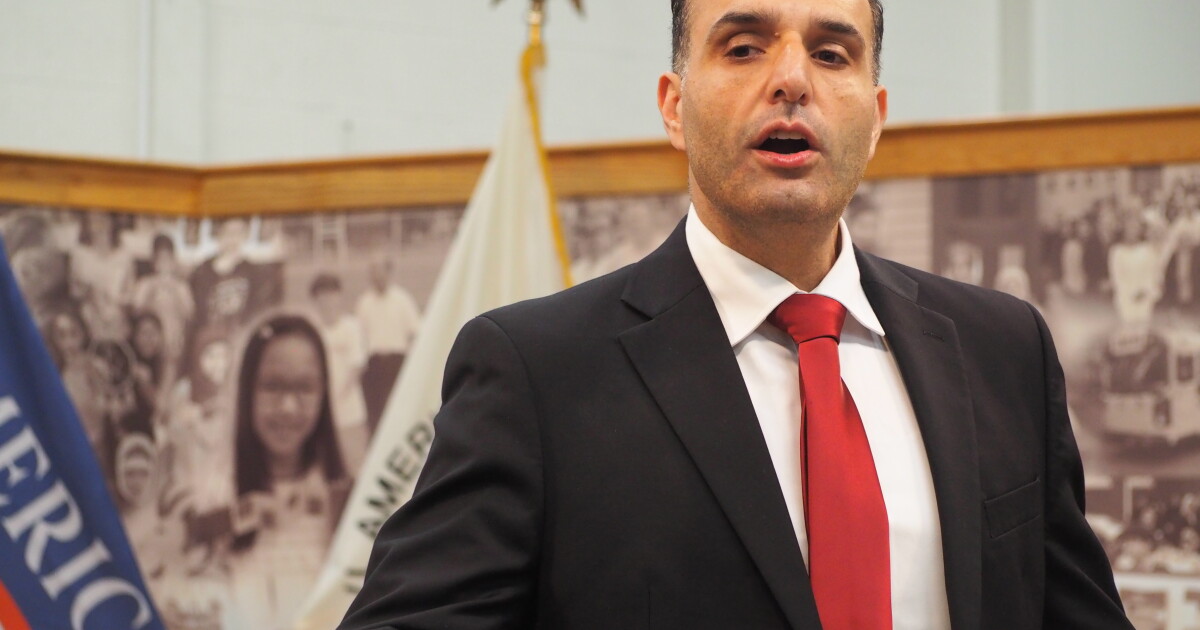
At a press conference Thursday, Superintendent Mike Esseily framed the outcome as a defining moment for the community.
“Tuesday was a statement about who we are as a community and what we believe our children deserve. We are not just building and improving schools. We are building opportunities for generations of children to come.”
What the Money Will Build
The bond will fund six brand-new school buildings and significant renovations to the district’s remaining facilities. Rather than spreading the work haphazardly, the district has mapped out four structured phases spanning 20 years, with the most critical projects breaking ground as early as next year.
Part of the plan involves closing older elementary and middle school buildings and replacing them with consolidated pre-K through 8th grade campuses. These new facilities will house younger and older students in separate classroom wings while sharing common spaces — gyms, cafeterias, and elective-education classrooms — under one roof. The approach is designed to maximize efficiency while preserving a degree of separation between age groups.
Esseily said the sheer scale of the bond is intentional. Rather than patching problems as they arise, the district wants a plan that holds for the long haul.
“I’m hoping we’re not asking anything of the community for another 50, 60 years. We want this bond to last generations of students to come.”
What Taxpayers Will Actually Pay
For most residents, the net financial impact will be more modest than the billion-dollar headline suggests. The district serves most of Dearborn and a small portion of Dearborn Heights. While homeowners there will see a new bond assessment of 3.14 mills — equal to $314 per $100,000 of taxable property value — that figure doesn’t tell the whole story.
The city is simultaneously cutting a sewer-related tax by 0.96 mills, and the school district is waiving an existing operating millage of 2.18 mills. Together, those reductions nearly cancel out the new bond assessment. As additional taxes phase off the books over time, the city plans to gradually increase the bond assessment to maintain funding — but officials say the overall tax burden for homeowners is expected to remain manageable.
A Second Chance After a Near-Miss
This week’s landslide didn’t happen without a painful lesson. Back in 2019, the district brought a far more modest $240 million bond to voters — and lost by just 242 votes. School Board Trustee Adel Mozip noted that even that smaller ask represented only half of what the district actually needed at the time.
Rather than regroup and try again with a similarly scaled proposal, district leaders went back to the community. They listened, analyzed, and ultimately returned with a plan six times larger — but grounded in long-term solutions rather than incremental fixes.
“Losing [the 2019 millage] was a blessing in a disguise. We needed a transformational bond where we actually want to rebuild from the beginning and offer these transformational spaces for our kids.”
That approach appears to have resonated with voters in a way the earlier proposal didn’t.
What This Says About Voter Trust
Don Wotruba, executive director of the Michigan Association of School Boards, said large school bond proposals typically face an uphill battle. Voters tend to reject them when they question whether administrators can be trusted or whether the need is real. The size of Tuesday’s majority, Wotruba suggested, signals something different was happening in Dearborn.
“Voters said, ‘I clearly understand what Dearborn is asking for … and if this is what the need is, we’re going to support that.'”
Even so, Wotruba was cautious about reading too much into the result as a broader trend. He said he doesn’t expect to see another billion-dollar school bond on a Michigan ballot anytime soon.
What makes Dearborn’s situation unusual, Wotruba noted, is how little the district had invested in infrastructure over the past several decades.
“If you go back and look at their previous bond issues, they haven’t done much.”
Tuesday’s vote, then, is as much a correction of long-neglected needs as it is a vision for the future — a community choosing, decisively, to change course.











Comments are closed.