
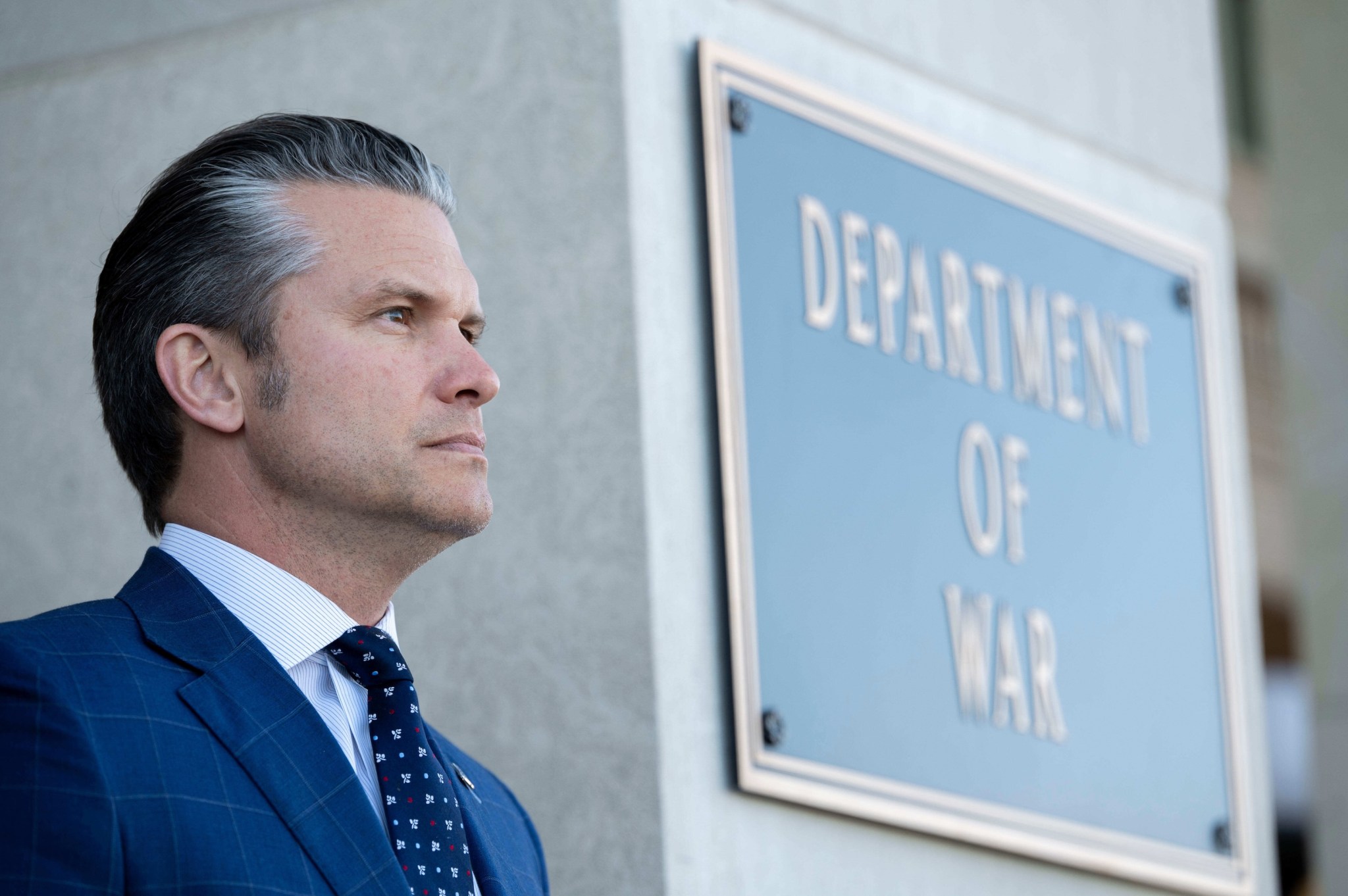
When U.S. troops place financial bets on military missions they’re involved in, the enemy could be watching — and winning. A new Pentagon directive is drawing a firm line to make sure that never happens again.
Defense Secretary Pete Hegseth signed a memo last week formally prohibiting all Department of Defense personnel from engaging in financial transactions — directly or through a third party — using nonpublic information gained through their military roles. The ban covers all financial platforms, with prediction markets Polymarket and Kalshi specifically named in the directive.
The memo was shared with senior Pentagon leadership, combatant commanders, defense agencies, and field activity directors. It reinforces existing federal law that bars government employees from using nonpublic, work-related information for personal financial gain. Violations could trigger administrative, disciplinary, or criminal action under the Uniform Code of Military Justice or applicable federal law.
What Sparked the Crackdown
The directive follows a series of troubling incidents involving military personnel and prediction market betting. Six months ago, a U.S. Army Special Forces master sergeant was charged with using insider information to place bets on the removal of Venezuelan President Nicolas Maduro through Polymarket, netting roughly $400,000. The soldier has since pleaded not guilty, with a criminal trial set for early December.
That same month, bettors around the world used Polymarket to wager on the rescue of Dude 44 Bravo — one of the airmen who ejected after a U.S. Air Force F-15E Strike Eagle was shot down over Iran during Operation Epic Fury. Polymarket removed those bets, stating they didn’t meet the site’s integrity standards. But other war-related markets had already been created, raising alarms among lawmakers and national security experts.
In a separate case, an anonymous Polymarket account made $550,000 on the first day of Operation Epic Fury strikes, placing bets on U.S. military action against Iran and the fate of Iran’s Supreme Leader Ayatollah Ali Khamenei — who was killed by Israeli air strikes on the war’s opening day.
The National Security Risk
The Pentagon’s concern goes beyond individual misconduct. When military personnel place bets on outcomes tied to their own operations, those transactions can generate signals that adversaries may track. According to the memo, hostile foreign intelligence services could monitor activity on these markets to anticipate American military movements, targets, and timing.
Hegseth framed it as a matter of life and death for service members in the field.
“The lives of our service members often depend on the enemy not knowing what is coming,”
he wrote.
“The men and women who carry our flag into harm’s way deserve a Force that protects them — not one that exposes them to the enemy for personal gain.”
The memo first surfaced publicly on the unofficial Facebook page Air Force amn/nco/snco. A Defense Department official confirmed its authenticity to Military Times and underscored that the Pentagon intends to hold violators accountable.
“The memorandum from the Secretary of War regarding predictive markets is a reminder that engaging in financial transactions using nonpublic information, and using nonpublic information to further private interests, is prohibited and may result in punitive action,”
the official said.
“The Department takes this misconduct seriously and will take appropriate action, to include coordinating with the Department of Justice, to ensure anyone who engages in this misconduct is held accountable,”
the official added.
Hegseth also argued that having a financial stake in military outcomes can distort judgment and erode what the military calls the “warrior ethos” — the singular focus required to fight and win wars. In his memo, he was direct about what the mission demands.
“We are restoring lethality, discipline, and singular focus on fighting and winning our Nation’s wars, and nothing should distract us from that sacred mission,”
he wrote.
“Not entertainment. Not a payout.”




Comments are closed.