
When a new leader takes the helm of a state’s election system, the decisions she makes can shape who votes, how they vote, and how much trust the public places in the results. In Georgia, that moment has arrived — and Penny Brown Reynolds is wasting no time signaling what direction she intends to take.
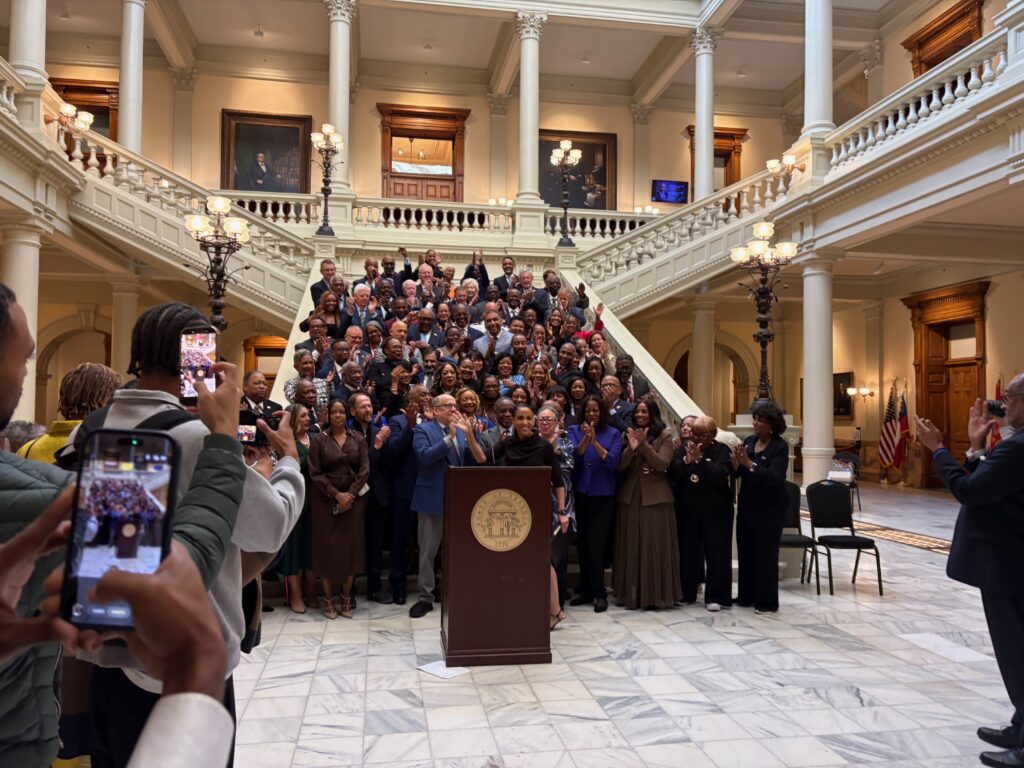
Reynolds, a Democrat, will become Georgia’s first Black secretary of state. At the south steps of the Georgia Capitol on Thursday, she addressed a crowd of supporters — most of them Black — and outlined a vision centered on expanding voter access while maintaining secure elections. Her transition team reads like a who’s who of Georgia Democratic politics: U.S. Sens. Raphael Warnock and Jon Ossoff, former U.N. Ambassador Andrew Young, and former Gov. Roy Barnes, under whom Reynolds served as executive counsel.
“The diversity is intentional,”
Reynolds said of her advisers, who span the state and represent a wide range of professions.
A Law at the Center of the Debate
Much of Reynolds’ agenda revolves around Democrats’ long-standing criticism of Senate Bill 202, the 2021 election law passed by Georgia Republicans. GOP lawmakers said the measure was necessary to strengthen election security. The law tightened rules around absentee voting, restricted the use of ballot drop boxes, and banned most people from handing out food or water to voters standing in line. On the other side of the ledger, it also added more early voting days.
Reynolds was direct about where she stands.
“Senate Bill 202 restricted voter access. It did it because we had a party that rather than try to earn votes, they tried to eliminate votes,”
she said.
She added that she would comply with the current law while pushing the Georgia General Assembly to roll back its most restrictive provisions. Reynolds made clear that she sees both security and access as essential — not competing — values.
“We have to have secure elections,”
she told reporters after her transition announcement.
“But we have to have more access.”
Restoring a Seat at the Table
Reynolds also said she supports giving the secretary of state a seat back on the State Election Board. Republicans had previously removed current Secretary of State Brad Raffensperger as chair of that rule-making body. Reynolds said she would work to restore that role.
The secretary of state’s office carries significant responsibilities beyond elections — including overseeing the issuance of professional licenses across the state. But election administration is where Reynolds’ platform is drawing the most attention, particularly around Georgia’s voting machines.
New Voting Machines on the Horizon
Legislation passed earlier this year — Senate Bill 3EX — requires Georgia to replace its voting machines by 2028. The bill, passed during a special session in June, also postponed a planned ban on QR codes appearing on ballots until that same deadline. The ban had originally been set to take effect for this year’s elections. The legislation also established a committee on election equipment specifications and standards to help guide the selection of new machines.
Whether that 2028 deadline holds is an open question. State Rep. Scott Holcomb, a Democrat from Atlanta who sits on that committee, said last week he would not be surprised if the deadline were pushed back again — potentially past the next presidential election.
Reynolds said she would wait for the committee’s report before making any decisions about acquiring new equipment. For now, Georgia voters are watching to see whether the state’s new top election official can balance modernizing the system with keeping it accessible and trustworthy.








Comments are closed.