
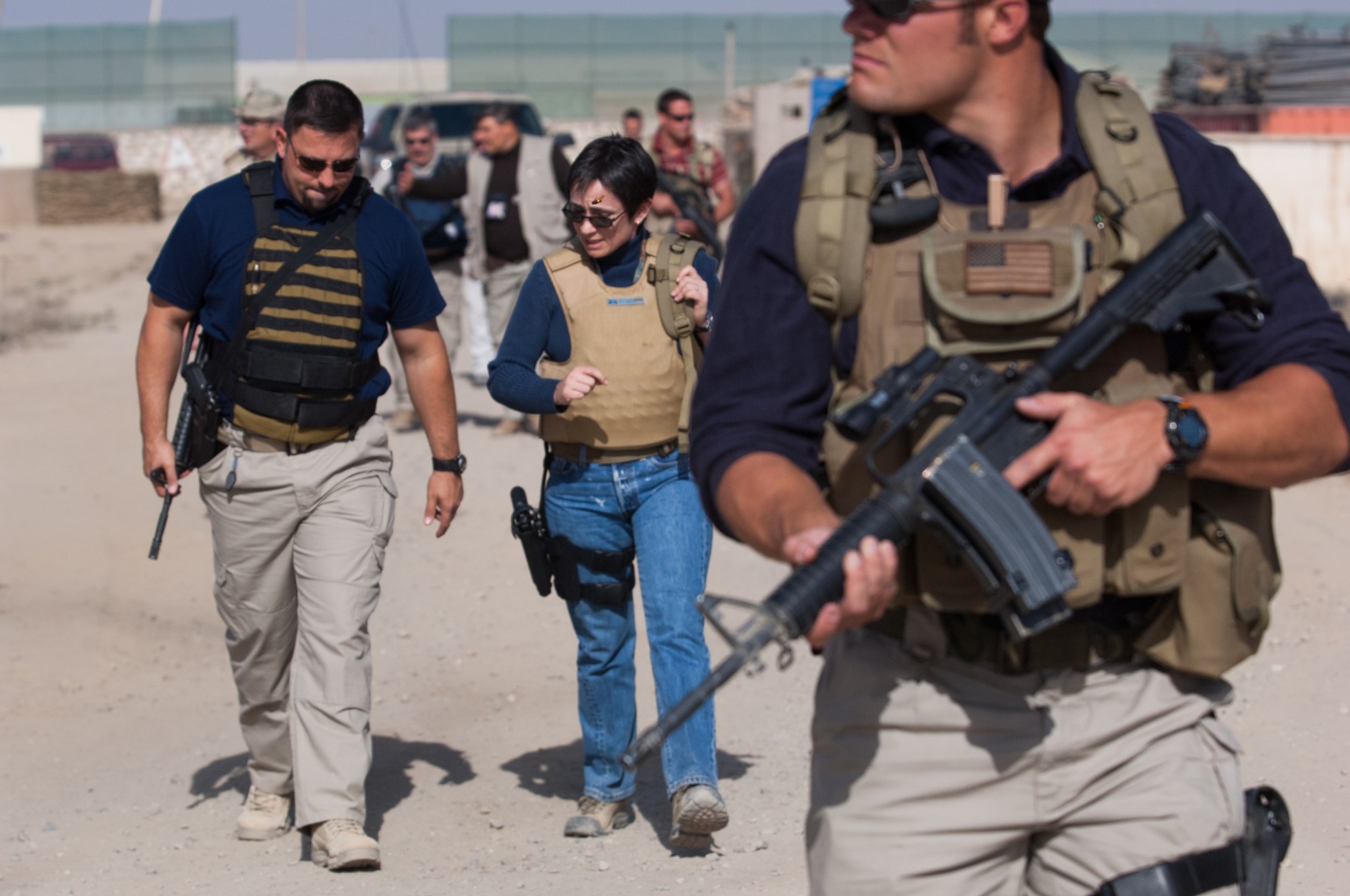
When American workers risk their lives in war zones abroad, they’re promised a safety net — healthcare, disability pay, and survivor benefits if they don’t come home. But a ProPublica investigation reveals that safety net has quietly been turned into a profit machine, with billions of taxpayer dollars flowing to insurance companies while injured workers wait years for care.
At the center of this story is an obscure federal program called the Defense Base Act and War Hazards Compensation Act — a system designed to protect civilian contractors who support U.S. military operations in places like Iraq and Afghanistan. Guards, cooks, truck drivers, and logistics workers — many of them foreign nationals hired from low-income countries — were supposed to be covered when they were injured or killed. Instead, the investigation found, a handful of large insurance companies have exploited the program, collecting billions while some injured workers went without timely care.
Over the past decade, American taxpayers have paid nearly $5 billion to insurers through this program. A senior official who oversaw the program under the Biden administration estimated that between $100 million and $150 million is being wasted every year. The government itself has described the system as “ripe for potential fraud or, at the very least, gamesmanship for profit,” according to an internal memo obtained by ProPublica.
How the System Is Supposed to Work
The program traces back to World War II, when more than 150 civilian contractors working on Wake Island were killed or died in Japanese prison camps. Congress created the Defense Base Act to require government contractors to purchase workers’ compensation insurance for employees overseas. Because insurers balked at covering catastrophic combat injuries, Congress added the War Hazards Compensation Act — which made the federal government responsible for reimbursing insurers when workers were hurt or killed due to hostile acts, like a roadside bomb or insurgent attack.
In theory, it was a reasonable arrangement: keep premiums affordable, protect workers, and share risk between private industry and government. In practice, the system has developed into something far more troubling for American families who rely on it.
When a contractor is injured, the insurer covers medical treatment and lost wages. If that injury stemmed from combat or hostilities — not just a slip on a wet floor — the government reimburses the insurer for the full cost of the claim, plus a handling fee of up to 15%. That fee applies to medical costs, lost wages, attorney fees, and virtually every other expense the insurer incurs.
Injured Workers Left Waiting, Insurers Collecting Billions
The human cost of these failures is real. Arbesa Zeqa, a 23-year-old cook from Kosovo, spent 15 months at Bagram Airfield in Afghanistan, one of the most frequently attacked U.S. military bases during the war. When she returned home in 2021, she was diagnosed with PTSD — trouble sleeping, nightmares, difficulty concentrating. She filed a workers’ compensation claim with Starr Insurance, the contractor’s carrier.
Starr fought her claim for nearly two years, hiring a neuropsychologist who concluded,
“The current evaluation did not support a psychological condition.”
Eventually, Starr settled with Zeqa for $210,000 — but then turned around and applied to the Labor Department for a government reimbursement, now asserting that Zeqa was indeed a victim of war-related trauma. The company received $269,287.15 from taxpayers — more than she received — including over $40,000 for the attorneys, doctors, and a private investigator Starr had used to challenge her diagnosis.
Jon Robinson, an attorney who now represents Zeqa, didn’t mince words:
“They’re getting away with it because they can.”
He said insurance companies are
“manipulating the system for profit from the government. Period.”
Zeqa’s case is not unique. A worker from North Macedonia, who asked not to be identified because of the stigma surrounding PTSD, filed a claim with Starr in 2019 after surviving repeated insurgent attacks during three years in Afghanistan — including a missile strike that hit about 50 yards from his sleeping quarters. Starr rejected the claim, citing “no specific incidents.” Three years later, Starr settled for $200,000. Seven months after that, the Labor Department paid Starr $230,800. The worker waited three years for compensation. The insurance company collected in seven months.
Lloreta Sefedini, a 36-year-old waitress from Kosovo, also worked in Afghanistan. Her boss was killed in a suicide attack. A friend died in a convoy. She spent countless nights in bunkers during rocket fire. When she came home in 2019, she was diagnosed with PTSD. After more than three years of legal battles, Starr settled her claim for $275,000. The government then reimbursed Starr $668,498.36 — including nearly $210,000 for the insurer’s own legal fees, doctors, translators, and private investigators.
Even more troubling: $24,345.54 of that reimbursement was categorized as “medical payments” for Sefedini — but records show virtually all of it was spent by Starr to defend the case, including $421.71 to hand-deliver records to its own psychiatrist and $1,715.79 for deposing a paid expert. The Labor Department then applied its 15% handling fee to those charges, adding another $24,857.78 for Starr — money that had nothing to do with treating Sefedini.
A 2018 Policy Change That Opened the Floodgates
Much of the financial surge can be traced to a single policy change. In 2018, after lobbying by insurance industry executives, the Labor Department issued Bulletin 18-03, which loosened the rules for documenting PTSD cases. Previously, insurers had to tie a worker’s psychological injury to a specific incident. The new guidance required only that the worker had been present in a region where attacks occurred at some point. A doctor’s general “affirmative statement” was now sufficient.
An email from Karen Colonna, then a senior vice president at Allied World, warned the agency that without easier reimbursement rules, premium rates
“will materially increase and, with certainty, will likely lead to carriers limiting coverage in war zone areas.”
The lobbying worked. After the bulletin was issued, annual reimbursements to insurance companies soared from $242 million in 2018 to more than $915 million through September of this year. By 2024, the Labor Department was approving nearly 97% of insurer applications — up from 90%. AIG even noted the policy shift in its 2018 annual report to the Securities and Exchange Commission, acknowledging that the “expansion of the definition of reimbursable War Hazard claims by the US Government” had helped offset losses.
PTSD claims exploded. In 2020, psychological injuries made up 21% of all cases. By 2024, that figure had risen to 61%. In 2024 alone — more than a decade after the end of major combat operations — insurers received more than 21,000 injury reports, up fivefold from 2018.
Industry insiders admit what happened next. Because insurers knew they’d be reimbursed regardless, some stopped thoroughly investigating whether claims were legitimate. Lawrence Postol, an attorney for AIG, captured the mindset in an email to an opposing lawyer:
“If we win, great, and if we lose, War Hazard coverage is assured.”
A former Labor Department attorney said officials worried that carriers would engage in
“rubber stamping”
settlements because they
“were playing with house money.”
A Broken Watchdog
The Labor Department, the federal agency responsible for overseeing this system, has repeatedly failed in that role. Its computer system is so outdated it cannot issue fines. Until recently, examiners processed thousands of reimbursement requests using decades-old CD-ROM technology. An effort to hire independent actuaries to review insurance company books went nowhere. A proposal to increase penalties on carriers was rejected.
The agency’s internal 25-page review, obtained by ProPublica, bluntly documents the dysfunction. Among its findings:
“The process still lacks safeguards in some areas.”
“Questionable medical evidence is often overlooked.”
“Minimal investigation by insurers during the course of … litigation has become standard practice.”
The memo also warned that “business-savvy” insurers had stopped conducting thorough investigations because the agency was paying out reimbursements on “dubious claims” that relied upon “scant or unreliable evidence.”
When reform ideas were considered, they were dismissed. Officials even acknowledged they feared fervent objection from insurers if more scrutiny was added to the approval process.
Chris Godfrey, who oversaw the program under President Biden and previously ran Iowa’s state workers’ compensation system, found the situation alarming from the start.
“The war hazards reimbursements were a nightmare. They were ever-expanding,”
he said. He estimated that up to 10–15% of money paid to insurers —
“upwards of a hundred million a year”
— could be the result of fraud, overbilling, or other improper payments. His attempts to fix the system were blocked at every turn.
“We just ran out of time. It was all slow-walked,”
he said.
“The agency should be doing their job to adequately police the reimbursement requests rather than just open the checkbook to insurance companies.”
A former senior manager at the agency was even more blunt:
“You can’t look under the covers. You just had to pay.”
Who Profits — and What’s Been Done About It
Four large insurance companies have collected the most from the program since 2014, according to a ProPublica analysis of Labor Department records: AIG has received more than $1 billion, CNA Financial Corp. more than $740 million, Starr Insurance more than $730 million, and Allied World more than $350 million. None has been accused of wrongdoing.
Insurers argue they are losing money on the system because the government is slow to reimburse them — sometimes taking years — forcing them to cover worker benefits in the meantime, essentially as an interest-free loan to the government. Starr said in a statement that it has
“consistently endeavored to process all legitimate and proper claims in a timely manner and to administer these important programs in full compliance with all applicable laws and regulations in accordance with its fiduciary responsibility to American taxpayers.”
AIG said it
“adheres to the Department of Labor’s requirements and guidelines.”
Allied World and CNA declined to comment.
A Labor Department spokesperson said the agency is
“taking steps to increase oversight of the program to address potential waste, fraud, and abuse,”
but acknowledged that
“substantive reform”
would require an act of Congress. In August, a government fraud task force headed by Vice President JD Vance said the Trump administration had “stopped” $11.8 billion in fraudulent payments across the Labor Department — but the agency did not answer questions about whether that figure included war hazards reimbursements.
Earlier reform efforts also fell short. A bill introduced by Democrats in 2013 to have the government pay worker benefits directly — cutting out private insurers — died in committee. A similar initiative from the Obama administration was never adopted. ProPublica’s earlier 2009 investigation into the same program prompted congressional hearings, and a senior official at the time acknowledged
“systemic problems.”
More than 15 years later, the problems remain.
Mark Reinhalter, a former Labor Department attorney who spent three decades specializing in Defense Base Act law, said the financial burden on taxpayers is not going away:
“There’s way more to come, to be honest. We’ll likely see continuous increases over the next 20 years or so.”
For workers and their families — the people the program was designed to protect — this is more than a story about government waste. It’s a question of whether the United States keeps its promise to the people it sends into harm’s way, and whether the healthcare and financial support they were guaranteed will actually be there when they need it most. As Doug Brooks of the International Stability Operations Association put it, an insurance safety net
“is essential for ensuring companies are able to operate in these dangerous environments cost effectively and with the risks to personnel properly addressed.”
Reporting for this article was contributed by Agnel Philip and Ryan Little of ProPublica.






Comments are closed.