
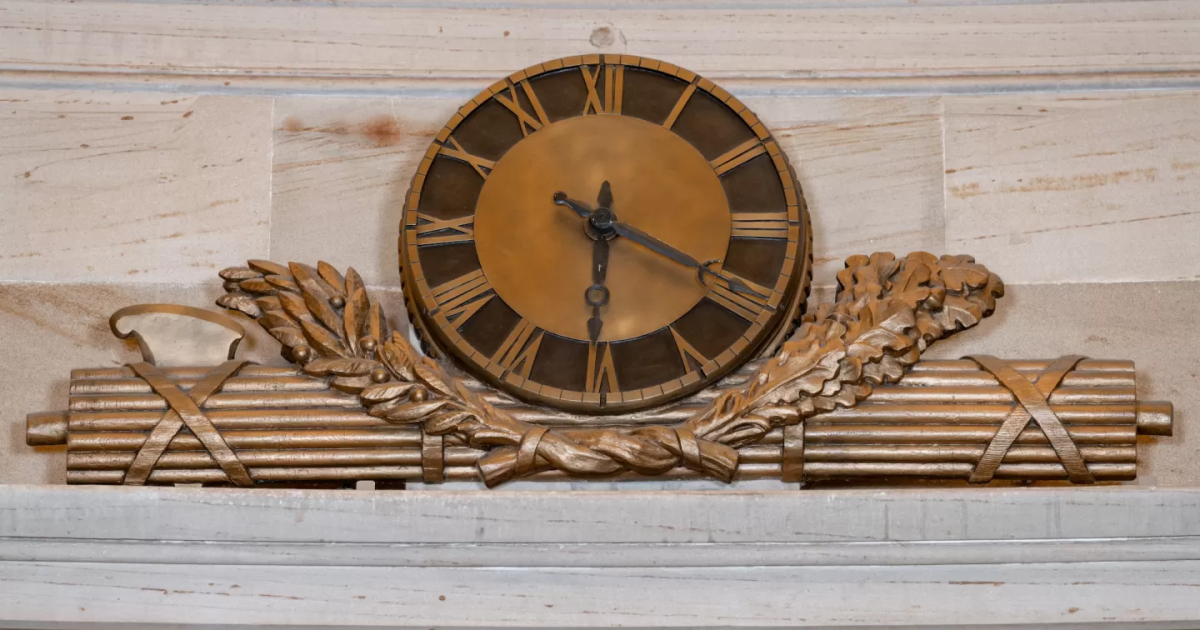
Every year, millions of Americans reset their clocks twice — losing sleep in the spring and gaining it back in the fall. But a growing push in Washington could make that ritual a thing of the past.
This Sunday, November 1, at 2 a.m., clocks across most of the United States will “fall back” one hour as the country transitions from daylight saving time back to standard time. For most people, that means an extra hour of sleep — and noticeably earlier sunsets through the winter months. Smartphones and digital devices will update automatically, but analog and older clocks will need to be adjusted by hand.
Nearly every state follows this twice-yearly routine. The only exceptions are Hawaii and Arizona — excluding the Navajo Nation territory within Arizona — both of which remain on standard time year-round. Several other states have expressed a desire to opt out of the clock-changing system entirely, but federal law currently prevents states from adopting permanent daylight saving time on their own.
The next time change will occur on Sunday, March 14, 2027, when clocks “spring forward” one hour.
Where Did Daylight Saving Time Come From?
The concept of shifting clocks to capture more daylight was first proposed in 1895 by George Hudson, a New Zealand entomologist who wanted longer evening hours for outdoor activity. European nations adopted the practice during World War I as a fuel-saving measure, and the United States followed in 1918.
After the war ended, the U.S. dropped the national policy in 1919, though some states voluntarily kept it. Decades of inconsistency followed until President Lyndon Johnson signed the Uniform Time Act of 1966 into law, establishing the standardized system that remains in place today, with only minor adjustments to start and end dates since then.
Most Americans Want a Change
Public frustration with the current system is well-documented. A 2025 AP-NORC poll found that just 12% of Americans support keeping the twice-yearly clock change. Another 40% said they were indifferent, while 47% said they opposed the current system outright.
Among those who want a change, opinions split on which direction to go. Fifty-six percent said they preferred permanent daylight saving time — keeping evenings lighter year-round at the cost of darker winter mornings. Forty-two percent favored permanent standard time, which would mean brighter mornings but earlier sunsets.
A Bill in Congress — and a Political Standoff
The Sunshine Protection Act of 2025 would end the biannual clock change by locking the country into permanent daylight saving time. The bill passed the House of Representatives in July of last year, but has since stalled in the Senate.
Senate resistance to permanent daylight saving time has historical precedent. In January 1974, Congress passed and President Richard Nixon signed a law making daylight saving time permanent as part of an effort to conserve energy during an oil crisis. The change was initially well-received, but public support collapsed once winter arrived and some areas of the country didn’t see sunrise until 9:00 a.m. The law was repealed later that same year.
Today, the bill has become a flashpoint between President Donald Trump, who supports it, and a bloc of Senate Republicans who do not — most notably Sen. Tom Cotton of Arkansas. In a striking move earlier this month, Trump posted Cotton’s personal cell phone number publicly, urging his supporters to call the senator and tell him to “GET IT DONE.”
With the Senate currently in recess and midterm elections just days away, the prospects for the bill passing in the near term are slim. Any legislation that does not clear Congress before the new session begins must be reintroduced from scratch.









Comments are closed.