
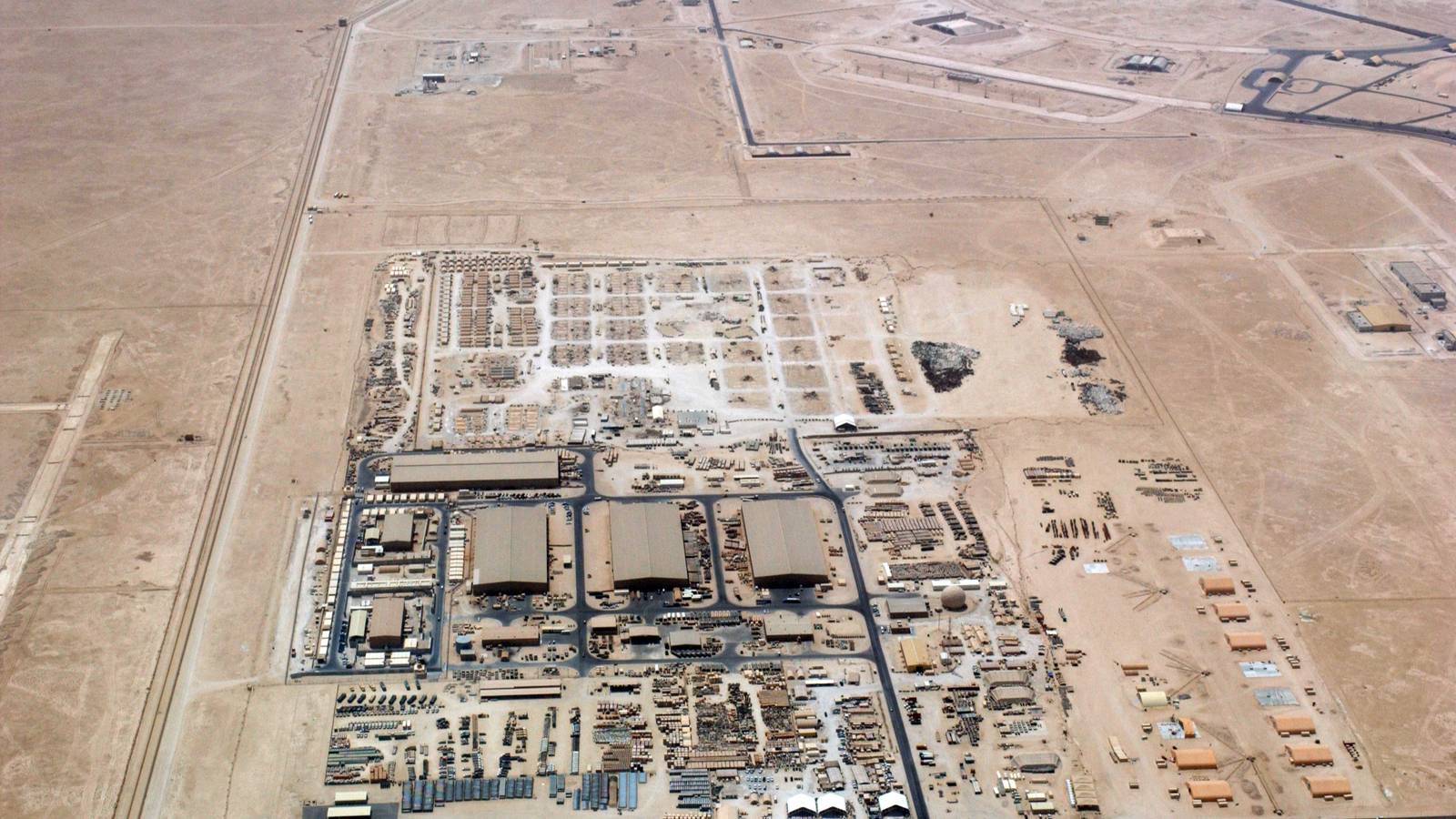
Over the past eight months, American military bases across the Middle East have absorbed more than 115 drone and missile strikes — and for the first time, a detailed analysis reveals exactly what Iran was aiming at, and what it destroyed. The scale of the damage, running into the billions of dollars, is only now coming into focus.
An Associated Press investigation — drawing on satellite imagery from multiple providers and interviews with four regional officials who were briefed on or have firsthand knowledge of the strikes — found that Iran’s strikes followed a deliberate pattern: first blind the defenses, then destroy everything else. The analysis covered 26 U.S. military bases and other sites with American equipment, confirming damage from drone or missile strikes claimed by Iran or Iranian-backed militias through August.
Two regional officials told the AP that the U.S. has since moved many of its assets — aircraft, air defense systems, communications equipment — out of the Persian Gulf entirely. The damage has fundamentally altered America’s military footprint in the region.
A Deliberate Strategy: Knock Out the Eyes First
Iran did not strike randomly. Within the first two days of the conflict’s start in late February, Iranian forces destroyed enclosures protecting U.S. radar systems at Camp Arifjan in Kuwait and Naval Support Activity Bahrain. Portable radar systems at Prince Sultan Air Base in Saudi Arabia and Muwaffaq Salti Air Base in Jordan were also hit early on.
One of those early radar strikes in Jordan destroyed a system that was one of only 13 of its kind possessed by the U.S. Army globally, according to manufacturer Raytheon. Budget documents show each unit costs approximately half a billion dollars. A second radar in Qatar — purchased as part of a 2013 deal valued at $1.1 billion — was significantly damaged, and may have been the only such system in the entire region.
N.R. Jenzen-Jones, director of the technical intelligence consulting firm Armament Research Services, explained the logic behind targeting those systems. Hitting them was likely
“intended to disrupt and degrade the U.S. and allies’ ability to respond to further strikes,”
he said. Iran prioritized striking at the backbone of the U.S. air defense system, targeting key early-warning radars that are difficult and expensive to repair or replace, Jenzen-Jones added.
Once those defenses were degraded, Iran launched more than 50 successful strikes on 18 locations with U.S. military equipment in just the first month of fighting — this time hitting aircraft hangars, fuel bunkers, refueling aircraft, communication systems, and troop housing.
What Was Hit — and Where
Most of the attacks have been concentrated in Kuwait. Ali Al Salem Air Base there was struck at least 30 times, with at least 15 aircraft hangars damaged or destroyed, along with numerous warehouses and 10 buildings near a residential area. Camp Buehring, also in Kuwait, sustained even broader damage: its gym was destroyed in March, a store used by troops was hit in late July, and a garage and dining room were severely damaged, according to two regional officials.
The deadliest known strike on U.S. troops during the conflict took place in Kuwait, where a drone killed six soldiers in an attack at Port Shuaiba on March 1.
U.S. sites in Bahrain, Iraq, Jordan, Oman, Qatar, Saudi Arabia, and the United Arab Emirates were also targeted. At Prince Sultan Air Base in Saudi Arabia, an Iranian strike in March damaged the rear section of a Boeing E-3 Sentry surveillance aircraft. The same attack damaged several other aircraft, including two aerial refueling tankers. A Congressional Research Service report updated in October said 15 U.S. aircraft had been damaged on regional bases overall.
A regional military official who recently visited Prince Sultan Air Base described what he saw there: a severely damaged facility with scattered debris and broken construction materials, including bombed-out barracks and mess halls.
A separate Iranian strike hit a CIA unit at the U.S. Embassy in Riyadh. Al Dhafra Air Base in the UAE, located about 20 miles south of Abu Dhabi, was hit frequently early in the war, with damage reported to aircraft hangars, an early-warning radar system, and surveillance drones, according to a second regional military official with direct knowledge of the situation.
The Bigger Question: What Does This Mean Going Forward?
The toll of the conflict on people and equipment has been difficult to track. The Trump administration and U.S. military have provided limited public details, and major satellite imagery providers with U.S. contracts delayed or blocked public release of images at the request of American officials — sometimes citing national security. At Camp Buehring, reliable imagery was unavailable from early March until late August, a period during which more than 30 structures were damaged or destroyed.
The Pentagon’s inspector general has conducted independent reviews, but the AP’s analysis goes further in detailing Iran’s targeting strategy and the scope of physical damage.
Pentagon spokesman Sean Parnell pushed back on characterizations of vulnerability, saying U.S.
“forces and bases are well protected and America’s military is stronger than ever.”
Parnell added:
“Our service members in CENTCOM have everything they need to continue their historic success ensuring Iran never obtains a nuclear weapon.”
U.S. Central Command, which oversees military operations in the Middle East, declined to comment on specific damage to bases or equipment, citing operational security concerns.
With President Donald Trump weighing new strikes following the midterm elections and Iran vowing major retaliation, the prospect of further damage to already-weakened bases looms large. Defense analysts say the conflict has exposed a structural vulnerability that goes well beyond this particular war.
Raphael Cohen, director of the National Security Program at the RAND School of Public Policy, noted that the way wars are fought today makes all militaries
“susceptible to large-scale, cheap drone attacks.”
“This should be a wake-up call for the United States,”
Cohen said.
He added a broader warning about what this conflict signals for future military planning:
“This is the operating environment that we’re going to face in the future. The idea that we can rely on fixed infrastructure in the way that we have during the global war on terrorism is over.”







Comments are closed.