
A $1.5 million ad campaign targeting Black voters in Michigan’s U.S. Senate race has a paper trail that leads far from the communities it claims to represent — and straight back to a public relations firm with a troubling history in the state. Understanding who is behind political messaging, and why, is essential to every voter’s ability to make an informed choice at the ballot box.
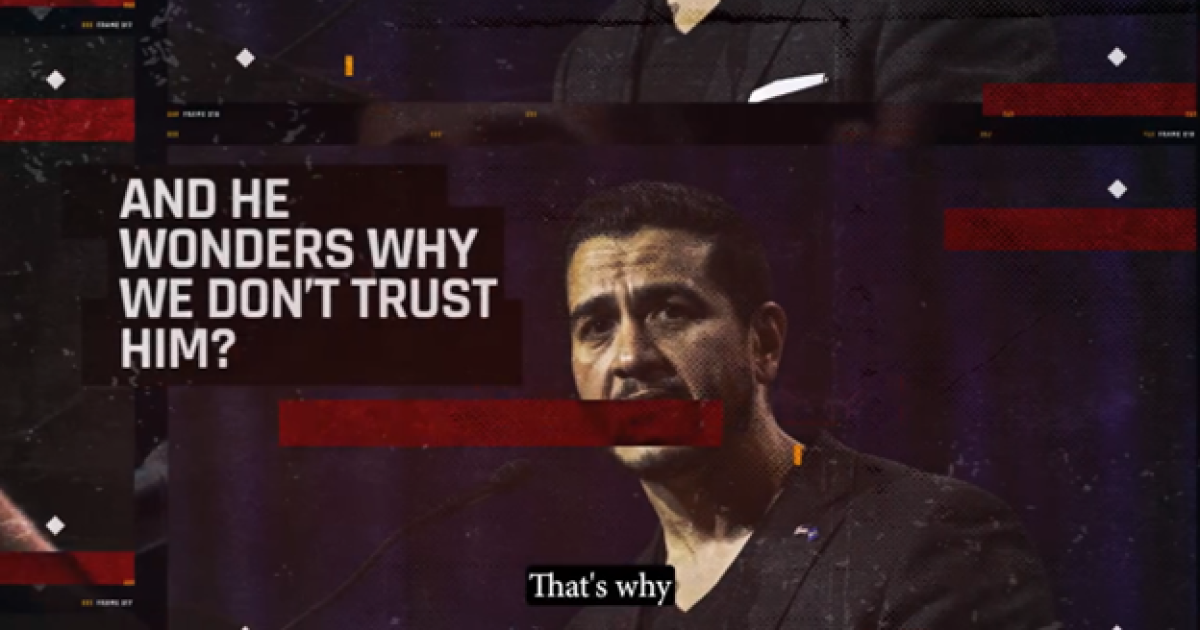
Since October 19, a group calling itself Empowering Black America PAC has flooded Michigan airwaves with video ads describing Democratic U.S. Senate candidate Abdul El-Sayed as “Disrespectful. Dismissive. Dishonest.” The timing was deliberate — the campaign launched just five days before former President Barack Obama appeared in Detroit for a high-profile rally with El-Sayed as early in-person voting was already underway.
The ads were first reported by The Michigan Chronicle and represent part of a wider effort by Republican candidate Mike Rogers’ campaign and allied outside groups to peel away support from a critical piece of the Democratic base. Since the primary, dark money groups have spent millions targeting Black voters with negative ads focused on portraying El-Sayed as indifferent to the Black community.
Who Is Actually Funding These Ads?
The name “Empowering Black America” and the use of “we” and “us” throughout the ads are designed to create the impression that the messaging comes from within the Black community. But campaign finance records tell a different story.
According to federal filings, the lone reported donor to the PAC lives in Florida — not Michigan. That donor gives heavily to Republican causes and to Political Action Committees associated with the American Israel Public Affairs Committee (AIPAC). The pro-Israel lobbying organization spent $30 million opposing El-Sayed before the primary election. The full $1.5 million campaign, by all appearances, is being financed by outside interests with no direct ties to Michigan’s Black communities.
The PR firm that created and executed this messaging strategy also has no Michigan roots — but it does have a significant and controversial history in the state.
The PR Firm Behind the Message
When the Flint water crisis erupted in late 2015 and evidence of lead contamination began to surface, then-Governor Rick Snyder turned to a network of crisis consultants and PR professionals to manage the political fallout. One of those firms was the Washington, D.C.-based lobbying and public relations company Mercury Public Affairs.
French water company Veolia — which had been sued by Flint residents and the Michigan Attorney General’s Office for its work on the city’s water system — also hired Mercury. Snyder kept Mercury on a monthly retainer until September 2016, though he later claimed he had cut ties with the firm months earlier.
Mercury’s work for Veolia went far beyond traditional public relations. According to documents obtained through public records requests and court filings, Mercury helped devise a years-long digital and social media strategy that spread misleading information about Veolia’s role in the water crisis and the health effects of lead exposure. The campaign used websites, targeted advertising, and social media accounts to push this narrative — and at times deliberately pitted Flint residents against their own attorneys. That conduct eventually triggered scrutiny from a federal judge who raised concerns that the methods were designed to influence the jury pool.
Federal disbursement records show that since launching in 2024, Empowering Black Americans PAC has paid Mercury Public Affairs more than $80,000 for services including polling and website hosting. Tax filings for a nonprofit connected to the Super PAC reveal Mercury received a total of $844,000 in consulting fees in 2024 alone.
A Flint Resident Recognizes the Playbook
Arthur Woodson is a Flint resident who watched Mercury’s tactics unfold during the water crisis litigation firsthand. Today, he sees the same playbook being run at the statewide level in a U.S. Senate race.
Woodson says he isn’t backing either candidate. Like many in Flint, he carries a deep and understandable wariness toward politicians he feels have abandoned his community. But he believes voters across Michigan deserve to know who is behind these ads and why.
“They use Black communities to try to get you to go against the people who really are trying to help you,” Woodson said of Mercury and Empowering Black Americans PAC, adding that their latest attack campaign in Michigan was deployed
“just to help pump fear or agitate our community.”
El-Sayed’s campaign spokesperson, Roxie Richner, pointed directly to Mercury’s history in her response.
“The same PR firm Rick Snyder hired during the Flint water crisis is now trying to mislead Black Michiganders about a doctor who has spent his career fighting to improve health outcomes and equity,”
Richner said.
“Republicans and special interests are resorting to divisive attacks because they can’t defend Mike Rogers’ record of selling out Michigan families.”
The Rogers campaign did not respond to specific questions about the ads being run on his behalf. Rogers has made outreach to Black communities a part of his campaign strategy, recruiting Black politicians and community leaders as surrogates for his candidacy and making stops in Detroit, Pontiac, and Flint. After a debate earlier this month, he told reporters that Democrats have ceded ground in these communities.
“We’ve had a lot of great conversations in Flint on how we can get that (water infrastructure) fixed, get their schools turned around,”
Rogers said.
“What’s interesting about this is those are supposedly Democrat strongholds. They don’t hear from Democrats.”
Do the Ads Match Reality on the Ground?
The narrative pushed by these ads — that El-Sayed lacks support in Black communities — does not appear to be supported by available polling data. A recent Glengariff/Detroit News poll showed El-Sayed drawing support from 88% of likely Black voters, compared to just 4% for Rogers.
El-Sayed’s record on environmental health issues in Michigan also runs counter to the ads’ framing. He worked to combat lead contamination in Detroit, overseeing widespread testing in schools following the Flint crisis and helping establish Detroit’s Lead Safe coalition. He has also been a consistent critic of the Snyder administration’s use of emergency management in Flint.
“The Flint water crisis was a devastating failure of government and families are still living with the consequences. Emergency management has been a devastating failure — it’s what happens when we deny people self-government,”
El-Sayed said.
“I’ll fight for sweeping investments in clean water infrastructure and accountability for the government agencies that have failed to keep our communities safe.”
That narrative about El-Sayed’s supposed disconnect from Black voters took hold partly because of a cable news feedback loop stemming from earlier primary-season attack ads. Once amplified by media coverage, the messaging became self-sustaining — even when the underlying data tells a very different story.
Snyder, it should be noted, was sued by Flint residents in cases that settled in 2020 and was charged with a criminal misdemeanor in 2021. Those charges were ultimately dismissed after the Michigan Supreme Court ruled that using a one-person grand jury to issue the indictments was unconstitutional.
For residents like Woodson, the work of cutting through misleading political messaging is exhausting — and never-ending.
“I’m just tired of all the politics, man,”
he said.






Comments are closed.