
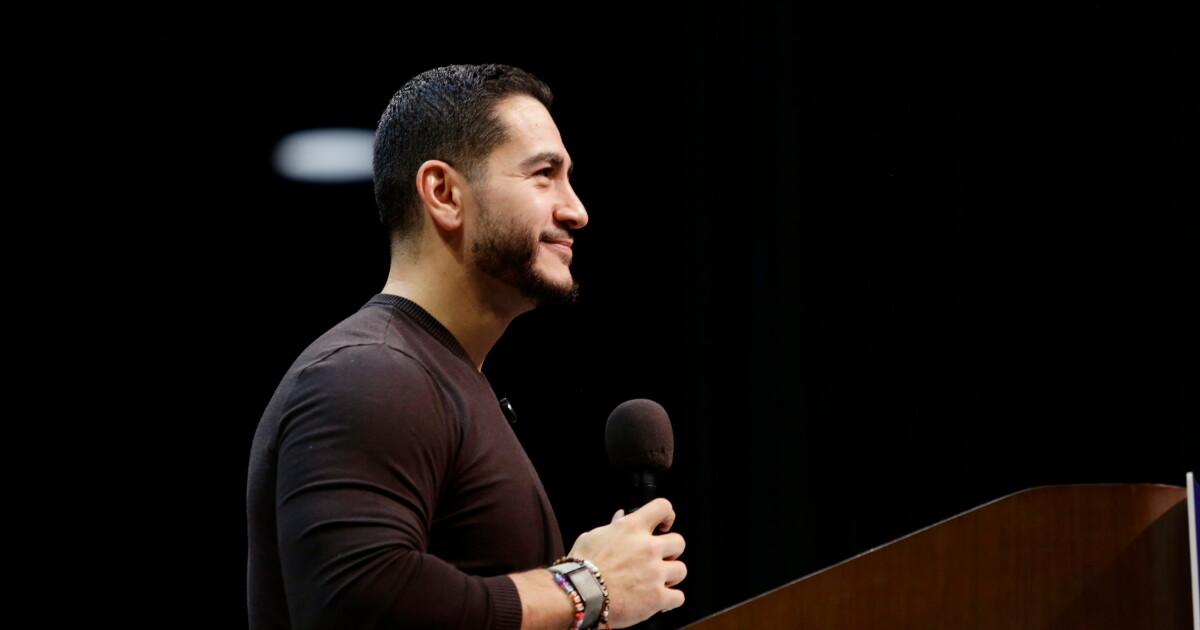
With Election Day just two days away, Michigan’s high-stakes Senate race is coming down to a question every democratic system depends on: can candidates mobilize the voters they need, and will those voters show up? In Michigan, that question is being tested by months of party fractures, competing community loyalties, and a last-minute push to unify a divided Democratic base.
Michigan Democratic Senate candidate Abdul El-Sayed will campaign Sunday at a Detroit church alongside former primary opponent Rep. Haley Stevens and South Carolina Rep. Jim Clyburn, one of the country’s most prominent Black political figures. The get-out-the-vote event is designed to send a message of Democratic unity ahead of Tuesday’s election — but the timing raises real questions about whether it’s enough to move the needle on voter turnout.
The joint appearance is their first since a unity breakfast held just days after the August 4 primary, which El-Sayed won by an extremely narrow margin. According to reporting first confirmed by The Associated Press, the event reflects ongoing efforts by Democrats to consolidate support — particularly among Black and Jewish voters who backed Stevens in large numbers during the primary.
A Fractured Coalition and What It Means for Voters
Understanding why this unity effort matters requires a look at the lingering divisions that have defined this race since August. Stevens drew significant support from Michigan’s Jewish and Black communities — two voting blocs whose enthusiasm in the general election could determine whether El-Sayed wins or loses the seat.
Those divisions became very public this week when Stevens’ fiancé, Jason Turkish, told The Detroit News that he would vote for Republican Mike Rogers — El-Sayed’s general election opponent. Stevens herself quickly appeared on CNN to reaffirm her support for El-Sayed, but she also called on his campaign to take stronger steps to address community concerns.
“Shut out the hate and call it out,”
Stevens said, adding that El-Sayed needed to reach out to members of her coalition and
“make them feel comfortable about coming to the polls.”
That phrase — “comfortable coming to the polls” — goes to the heart of what’s at stake. When voters don’t feel heard or represented by a candidate, they stay home. And in a race this close, depressed turnout in any major community could decide the outcome.
Advertising Wars and Community Trust
Nearly $60 million was spent on advertising attacking El-Sayed during the primary campaign, including $30 million from the American Israel Public Affairs Committee (AIPAC). Stevens, a strong supporter of Israel who represents a district with a large Jewish population in Detroit’s suburbs, benefited from that spending.
Concerns about El-Sayed’s positions on Israel, past statements, and his association with controversial streamer Hasan Piker have continued to create friction with some Jewish voters heading into the general election.
A new flashpoint emerged when an independent left-wing group called Rebellion PAC released an ad linking U.S. support for Israel to high grocery prices. El-Sayed distanced himself from it.
“That has nothing to do with our campaign,”
he said.
“It’s certainly not what I want to be talking about right now.”
But Stevens and other Democrats called on him to go further and denounce the ad’s content directly — not just distance himself from who paid for it. Rabbi Aaron Starr of Congregation Shaarey Zedek in Southfield voiced concern about the overall climate during a call with reporters, criticizing both the Rebellion PAC advertisement and El-Sayed’s own campaign ad featuring clips of conservative figures — including former Fox News host Tucker Carlson, who has faced accusations of antisemitism that he denies.
“We are one week away from the election, and it feels like the temperature has turned way up,”
Starr said.
“Instead of things getting better over the last seven weeks, they’ve actually gotten worse.”
The Fight for Black Voters in Wayne County
Both El-Sayed and Rogers are working aggressively to win over Black voters, especially in Detroit’s Wayne County, where Stevens actually defeated El-Sayed during the primary. The Sunday church event with Clyburn is a direct attempt by El-Sayed to shore up that support before polls open Tuesday.
Rogers has also made outreach efforts to Black communities in Detroit and surrounding areas, visiting a reading remediation program at a Detroit high school and speaking with residents in Pontiac about housing costs. Earlier this month, his wife distributed $10 gift cards at a gas station — a gesture that did not land well with everyone.
Ruby Farmer, a 68-year-old Detroit retiree, was among those who took note.
“You’re giving out gas cards in the inner city; you never would come for any other reason,”
she said. Despite having some difficulty pronouncing El-Sayed’s name, Farmer cast her ballot for him three weeks ago — driven by what she says are direct impacts on her family from federal policy changes.
“I have a special-needs son,”
Farmer said.
“He depends on Medicaid. Medicaid has been cut, and for home care workers in Michigan, all the benefits are on hold.”
Republicans Face Their Own Headwinds
Rogers has worked to align himself with President Trump throughout the campaign. He appeared alongside Trump at a Michigan rally Sunday in Port Huron, just across the river from Canada — a country with deep economic ties to Michigan that Trump has targeted with tariffs. Rogers credited Trump with bringing manufacturing jobs back to the state.
Rogers also appeared Wednesday with Republican Sen. Ted Cruz at an event hosted by the Republican Jewish Coalition in Birmingham, Michigan, where Cruz called antisemitism
“a poison that is ripping the country apart”
and accused Democrats of being taken over by
“self-proclaimed communists and Islamists.”
Trump, meanwhile, has repeatedly attacked El-Sayed’s Muslim faith throughout the campaign, calling him a “jihadist” and saying Sunday that he was “on the side of terrorists.” Such rhetoric — targeting a candidate based on religion — raises broader concerns about the tone surrounding voter participation and the democratic process itself.
Michigan early voting began October 24. With the church event on Sunday and Election Day on Tuesday, both campaigns are making their final arguments — not just to persuade voters, but to get them to the polls at all. In an election shaped by community divisions, contested advertising, and competing outreach efforts, turnout among Detroit’s Black and Jewish voters may ultimately decide who represents Michigan in the U.S. Senate.




Comments are closed.