
Thousands of Georgia families could soon have access to well-paying manufacturing jobs — and a boost to the local economy — as German automaker Audi prepares to build its first-ever U.S. factory in the state. The announcement marks a significant win for working communities in central Georgia that have long sought the kind of stable, high-wage employment that large manufacturers can provide.
Audi’s CEO and chairman Gernot Döllner announced plans to construct the company’s first American manufacturing facility at a megasite in Peach County, near Macon. The plant is expected to produce as many as 200,000 vehicles per year by 2031, focusing on SUVs tailored for the North American market. Audi plans to invest roughly $4 billion in the facility, which is projected to create approximately 4,500 jobs in the surrounding region.
What These Jobs Could Mean for Georgia Families
For families in the Macon area, the numbers being discussed are meaningful. Georgia Department of Economic Development Commissioner Pat Wilson said the facility will operate as a highly automated, high-tech plant — and the jobs will reflect that.
“Those are quality jobs, high-skill jobs,”
Wilson said, adding that workers would earn an average of more than $63,000 per year. Collectively, that wage base is expected to pump $283 million annually into the state economy — money that flows through local businesses, schools, and communities.
It’s worth noting that the contracts have not yet been finalized. Audi’s board of directors must still formally approve the deal, though both Governor Brian Kemp and Wilson expressed confidence that the agreement would be completed.
Years in the Making
The road to this announcement was anything but smooth. The deal took nearly two years to come together, and at one point it nearly fell apart entirely.
Kemp said it started after he read a Wall Street Journal article about Audi’s interest in expanding to the United States. With the Munich Security Conference approaching in early 2025 — an event where Kemp would be speaking — he saw an opening and asked Wilson to arrange a meeting with Audi executives.
“It was really a cold call quite honestly,”
Kemp said.
The two sides met in a small hotel room, where Georgia’s team walked Audi through the megasite opportunity. The executives gave little away.
“They didn’t really say a whole lot to us best I remember,”
Kemp said. Eventually, Audi expressed interest — but then went quiet altogether, leaving Georgia to consider marketing the site to other companies. Audi ultimately returned to the table, and negotiations resumed.
Why Georgia?
Several practical factors made Georgia attractive to Audi. The Peach County megasite sits near the state’s rail lines, ports, and an established network of automotive parts suppliers. Kemp said he believed access to a skilled workforce was ultimately the top selling point.
Also key was what officials call “speed to market” — the idea that Georgia’s megasites are fully prepared for companies to begin construction quickly, rather than spending years on permitting and infrastructure setup. That preparation includes pre-arranged environmental permits and guaranteed access to the water and power supplies needed to run a large factory.
“It couldn’t just be, you know, a piece of land,”
Kemp said.
That competitive readiness has paid off for Georgia more broadly. Georgia was again ranked the No. 1 state for business by Area Development magazine — the 13th consecutive year it has held that title. The state also ranked first for cooperative and responsive government.
This project is part of a broader economic development strategy that Kemp pursued throughout his time in office. When he first ran for governor eight years ago, Kemp made a point of pledging to bring more jobs to rural parts of the state. His administration assembled three large megasites east and south of Atlanta. Rivian chose the first site near Social Circle. Hyundai selected the second near Savannah. Audi is now poised to occupy the third.
Kemp, who is term-limited and leaves office in January, described the Audi plant and the other automakers as magnets for related businesses that will continue generating economic growth long after his departure.
“You land these projects and they’re going to grow over time or bring suppliers,”
he said.
For the families and workers in Peach County and the surrounding communities, those suppliers — and the jobs that come with them — could represent a generational shift in local economic opportunity.
“We will see this payoff for decades to come,”
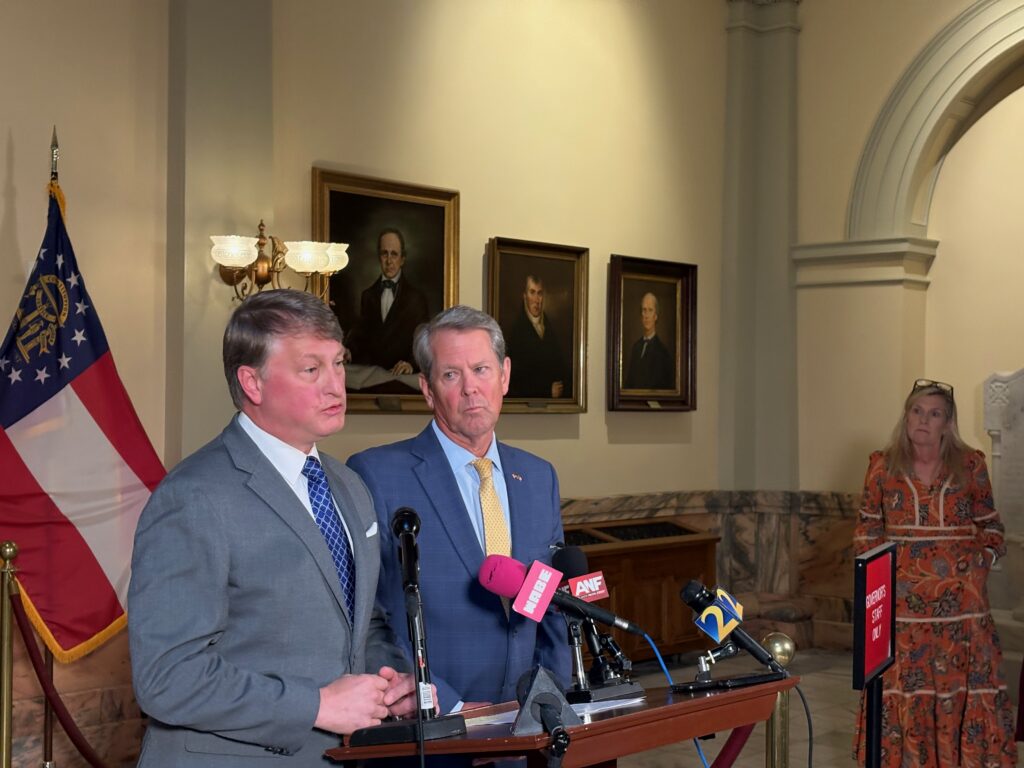
Kemp said at the Capitol on Monday.








Comments are closed.