
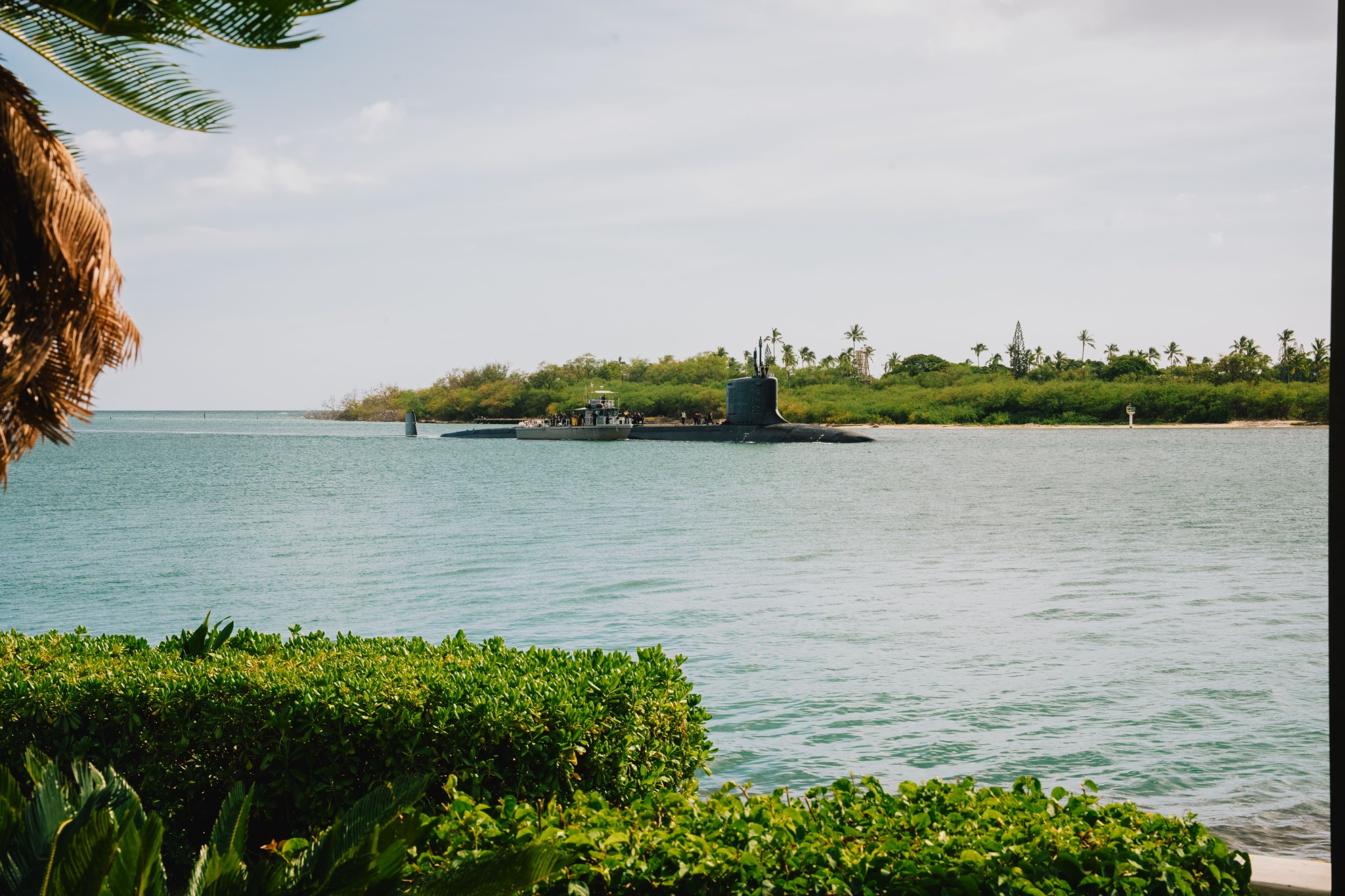
A Virginia-class fast-attack submarine is making history as the first American vessel formally assigned to a new allied submarine force stationed in the waters off western Australia. The move marks a concrete step in one of the most significant defense partnerships the United States has forged in the Indo-Pacific in decades.
Defense Secretary Pete Hegseth announced Monday that the USS Colorado will be the first U.S. Navy submarine assigned to Submarine Rotational Force-West, known as SRF-West. The announcement was made alongside representatives from the United Kingdom and Australia, the two other nations that form the AUKUS trilateral security partnership.
SRF-West is designed to rotate a fleet of four U.S. fast-attack submarines and one UK fast-attack submarine through HMAS Stirling, an Australian naval installation near Perth. The force is expected to reach full operational capability in 2027.
What SRF-West Is Built to Do
According to the Pentagon, the rotational force serves a dual purpose: building Australia’s long-term submarine capability while strengthening the broader alliance’s presence in the region. A Pentagon statement explained the mission in direct terms:
“SRF-West will accelerate Australia’s readiness to own, operate, maintain, and regulate a sovereign, conventionally armed, nuclear-powered submarine capability, as well as support submarine deployments by expanding maintenance options and sustainment infrastructure in the region for AUKUS partners.”
To support that mission, the U.S. Navy stood up Naval Support Activity Stirling in Western Australia in June. According to a Navy release, the installation provides “services and programs for U.S. service members, civilian personnel, contractors and their families” assigned to SRF-West. The new support activity is also intended to expand maintenance resources and build out a broader sustainment framework for allied submarines operating in the region.
Diplomatic Groundwork
The SRF-West announcement builds on high-level diplomatic engagement among the three AUKUS nations. On May 30 in Singapore, Hegseth met with Australian Deputy Prime Minister and Minister for Defence Richard Marles and UK Secretary of State for Defence John Healey to align on AUKUS goals for the Indo-Pacific.
Coming out of that meeting, Australian and UK officials confirmed that Australia remains on schedule to receive a conventionally armed, nuclear-powered submarine within the next few years. The three nations also signaled a shared focus on developing and deploying uncrewed undersea vehicles — technologies designed to provide both defensive and offensive military options across the region.
AUKUS, which links Australia, the United Kingdom, and the United States, was established to promote stability and security in the Indo-Pacific. The submarine cooperation component is widely regarded as the partnership’s most consequential element, given the strategic importance of undersea capabilities in the region.
For more on related military developments, see recent coverage including the Pentagon’s warning to personnel about prediction market betting, new restrictions at a Japan air base following a local murder, AI tools being adopted by Marine Corps Osprey squadrons, and a Marine sniper veteran’s visit to Ukraine to meet the man behind a record-breaking 2,069-meter shot. Defense industry leaders also recently weighed in on how to increase production and integrate AI, covered in depth during Defense News Weekly’s full episode for October 27.



Comments are closed.