
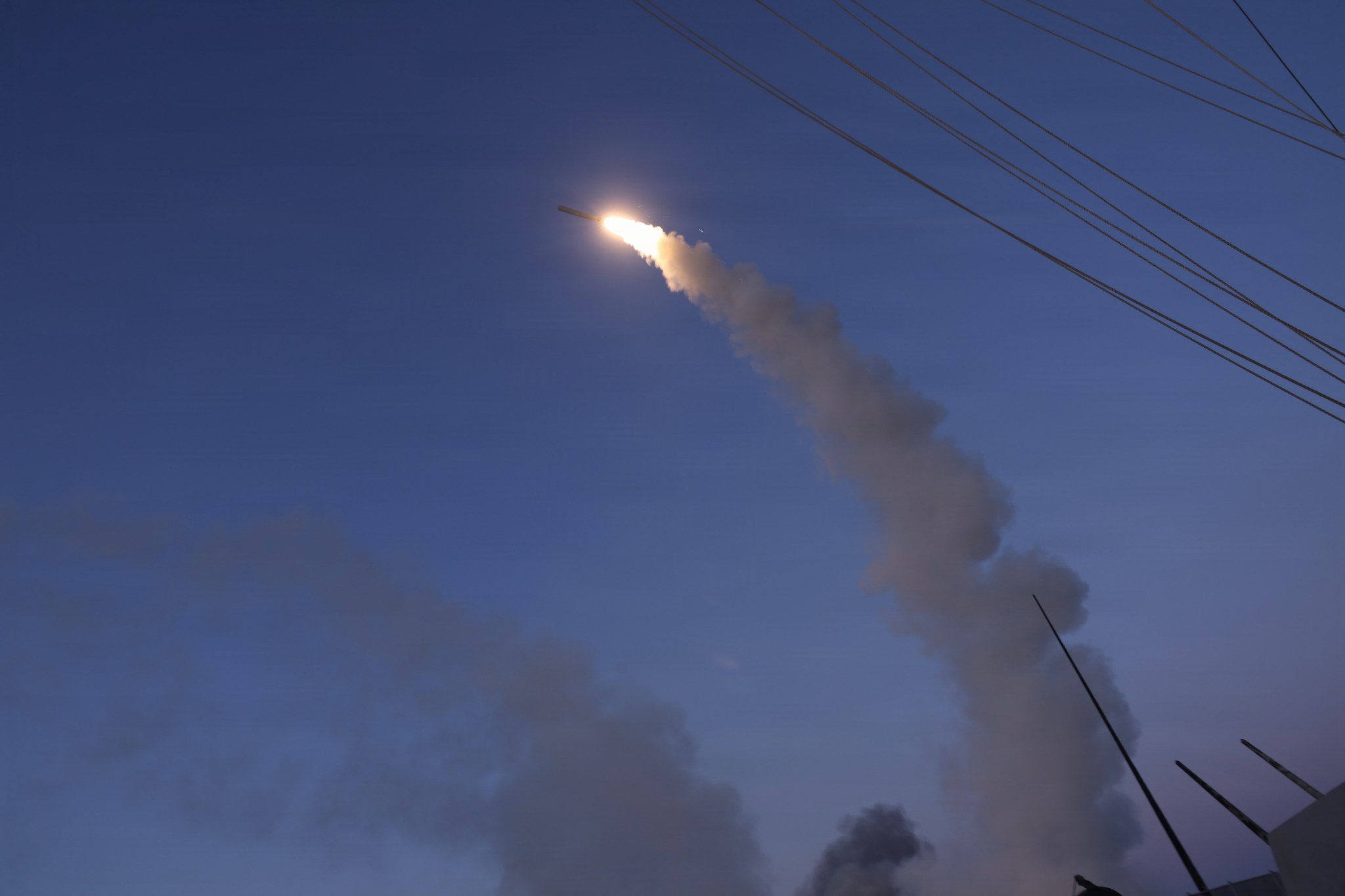
America’s military firepower is facing a quiet but serious stress test — and a new defense analysis suggests the strain is showing in ways that matter for national security. A recent assessment of U.S. missile inventories reveals that sustained operations against Iran have drawn down some of the country’s most critical long-range weapons to levels that could limit future military options.
The Center for Strategic and International Studies (CSIS) published an analysis this month examining how U.S. munitions expenditures — based on data current as of November 3 — have affected America’s overall defense posture around the world. The findings raise pointed questions about readiness, production timelines, and what happens if the U.S. is drawn into a conflict elsewhere.
According to the report,
“In the 39-day campaign until the April 8 ceasefire and subsequent operations, the United States expended between a third and two-thirds of key munition inventories.”
Long-Range Weapons Hit Hardest
CSIS sorted its assessment across nine missile categories. Seven of the nine were flagged as having “detrimental effects” on resupply capacity — a stark signal about the depth of the problem.
Among the most strained are three cornerstone air defense systems: Patriot missiles, Terminal High Altitude Area Defense (THAAD) missiles, and Standard Missiles — vertically launched surface-to-air weapons that form a core layer of U.S. and allied air defense. All three were classified in the report as “heavily used, no substitutes,” meaning there are no comparable backup systems that could fill the gap if these stockpiles run dry.
On the offensive side, Tomahawk cruise missiles, AGM-158 JASSM cruise missiles, and Precision Strike Missiles (PrSMs) — all long-range ground-attack weapons — were categorized as “heavily used” with only “some substitutes” available. By contrast, shorter-range munitions fared considerably better in the assessment. The report identified air-to-air missiles, GBU-39B small-diameter bombs, and the AIM-120 AMRAAM — a missile designed to engage low-altitude targets — as having “no significant constraints in most scenarios.”
The core issue is reach. Long-range missiles allow the U.S. military to strike targets from a distance, keeping aircraft and personnel further from danger. When those weapons are depleted, the military is left relying on munitions with ranges under 300 miles — which changes the tactical calculus considerably.
“The United States has large numbers of munitions with the same explosive yield and accuracy as the long-range systems described above but with ranges under 300 miles,”
the report notes. But operating at closer range requires controlling the skies — and against a well-armed adversary with strong air defenses, that becomes a much harder task.
China Remains the Bigger Concern
The CSIS analysis draws a distinction between the U.S. ability to sustain operations against Iran versus a potential conflict with a major power competitor. The report states:
“Does the United States have enough munitions to renew the fight? The short answer is yes—against Iran. Against China, there is great concern. Rebuilding inventories will require a multiyear commitment extending beyond the current crisis.”
The Pentagon has moved to address the situation by working with defense manufacturers to accelerate production, and Congress may provide additional funding. But the report is clear that money alone won’t solve the problem quickly.
“Although production rates are increasing, demand exceeds supply—from both the United States and allies—so timelines have lengthened,”
the report warns.
“The problem is not money, assuming Congress continues its support, but time.”
The CSIS report underscores that while the U.S. retains the capability to strike targets in the near term using existing stocks, the depletion of long-range systems narrows the range of scenarios in which the military can operate at full effectiveness — particularly at distance from potential adversaries.








Comments are closed.