The U.S. Navy has recorded its worst year for serious unplanned accidents involving aircraft and ships in ten years — and the numbers are drawing attention from military safety observers across the country. From fires aboard nuclear-powered carriers to helicopter emergencies over open water, fiscal year 2026 has tested the Navy’s operational resilience in ways not seen in a generation.
According to data announced by the service and updated Monday, the Navy logged 16 Class A aviation mishaps and 11 Class A afloat mishaps during fiscal year 2026 — the highest combined total of unplanned catastrophic incidents in a decade. The Navy Safety Command defines a Class A mishap as any incident resulting in $2.5 million or more in damage, the destruction of an aircraft, a fatality, or a permanent total disability.
Several of these incidents took place in an active combat zone. The Navy has been operating in the Middle East since February 28, when President Donald Trump launched Operation Epic Fury — initiating a war with Iran that has kept American naval forces in a high-tempo environment for months.
A Sailor Lost at Sea
One of the most tragic incidents of the year unfolded on July 1, when a U.S. Navy aircrewman went missing after an MH-60S Sea Hawk helicopter made an emergency landing in the Arabian Sea. The aircraft was assigned to the USS George H.W. Bush, which was operating in the region at the time. Three other crew members were rescued, but the missing sailor was later presumed dead. The Navy confirmed the emergency landing was not caused by enemy action and said an investigation into the cause is ongoing.
Fire Aboard the World’s Largest Carrier
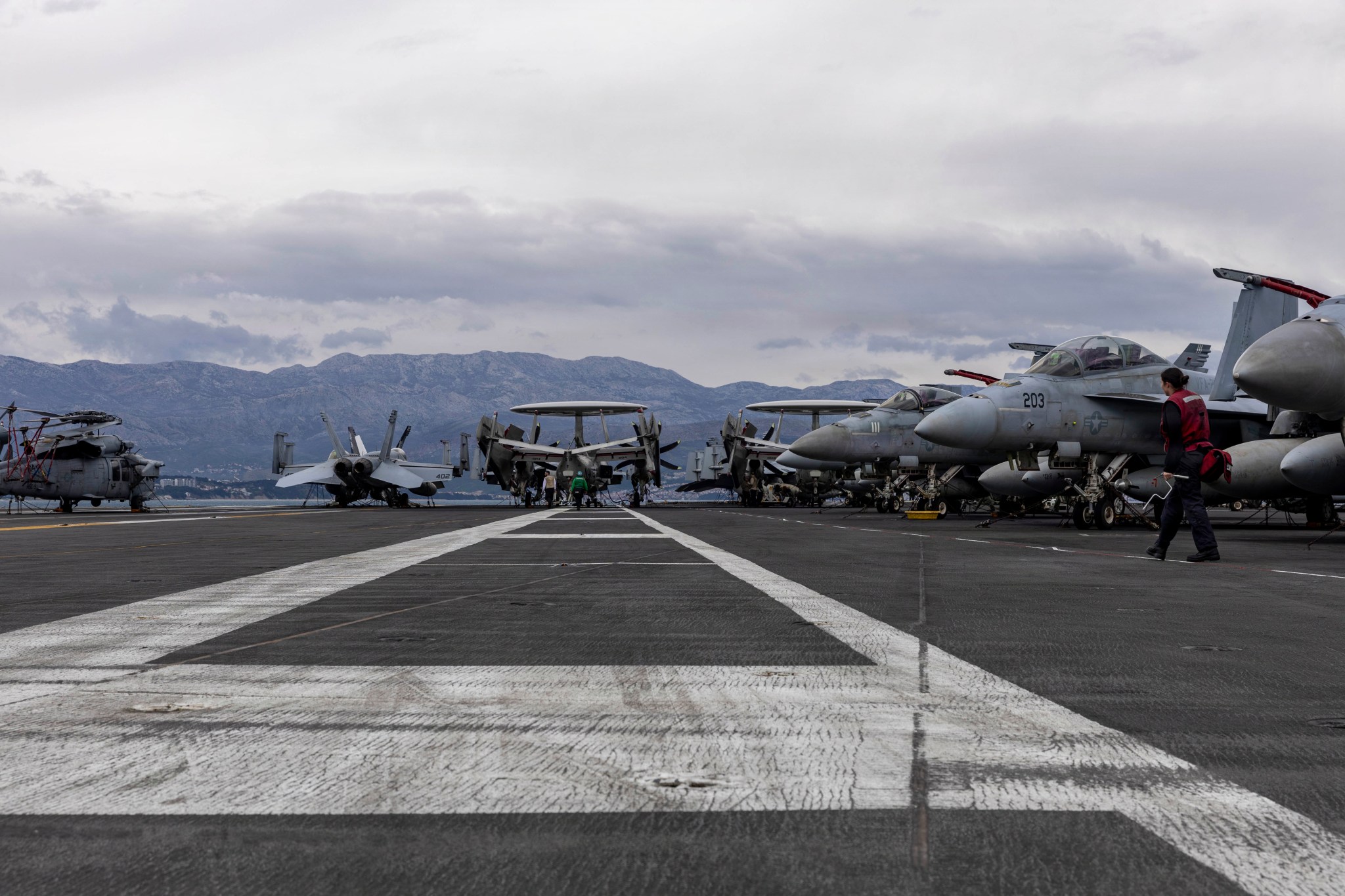
The USS Gerald R. Ford — the world’s largest aircraft carrier — experienced a serious non-combat fire on March 12 while operating in the Red Sea in support of Operation Epic Fury. The blaze broke out in the ship’s main laundry room and took more than 30 hours to fully extinguish. Three sailors were injured, with one requiring medical evacuation off the ship.
The fire’s aftermath created significant hardship for the crew. The damage damaged sleeping arrangements for more than 600 sailors, forcing many to sleep on floors and tables. The Ford was ultimately pulled from the theater for several days to undergo repairs at a port in Split, Croatia.
Ejections Off the Virginia Coast
Stateside waters also saw a serious incident late in the fiscal year. On September 28, two pilots were attempting to land an E/A-18G Growler aboard the USS Dwight D. Eisenhower off the coast of Virginia when an arresting gear failure forced them to eject from the aircraft at 6:18 p.m. The ejection and resulting landing mishap left six sailors and two aviators injured. The Eisenhower is a Nimitz-class carrier, one of the Navy’s most storied ship classes.
In a separate incident that also occurred on July 1, an F/A-18F Super Hornet developed a left engine fire during a routine training mission above Naval Air Station Fallon in Nevada. The crew managed to land the plane safely, and no injuries were reported.
Taken together, the incidents paint a picture of a naval force under significant strain — managing both wartime operations abroad and the routine hazards that come with operating some of the world’s most complex military machinery. Safety officials have not yet commented publicly on what systemic changes, if any, may be implemented in response to the elevated mishap rate.