Control of Michigan’s state government could shift significantly after this election — and the battleground stretches from suburban Grand Rapids to the outskirts of Detroit. At the center of the fight is whether voters trust the process that gets them there.
Democrats are mounting a serious challenge in Kent County, one of Michigan’s historically Republican strongholds, as they try to expand their hold on the state Senate. If successful, the party could secure a three-seat Senate majority — and potentially reclaim a full trifecta controlling the governor’s office, the state House, and the Senate.
The Kent County race pits incumbent state Sen. Mark Huizenga (R-Walker) against state Rep. Carol Glanville (D-Walker), the same Democrat who flipped Huizenga’s former state House district in a 2022 special election. Republicans currently hold four out of the five state Senate seats that include parts of Kent County, making any Democratic gain there a notable shift.
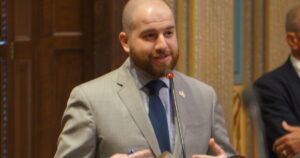
State Rep. John Fitzgerald (D-Wyoming), who campaigned for Glanville in Grand Rapids, pointed to tangible policy priorities — food assistance, tax credits, and road repairs — as the reason West Michigan has been trending toward Democrats.
“To go from one, two representatives from the Democratic Party to now having five state representatives, a Senate majority leader to boot and now potentially another seat here in Kent County, but metro Grand Rapids, that is a real change that people can see, that people can feel,” Fitzgerald said.
Gov. Gretchen Whitmer, speaking at a separate campaign event Monday, acknowledged that Democrats could be on the verge of recapturing full control of state government, but she expressed interest in getting housing and economic development legislation passed before the current legislative term ends — regardless of what the election brings.
Whitmer also suggested that even a Republican-controlled House, if it flips, might still find common ground with her administration in a lame-duck period.
“I think the House might say, ‘Well, we’ve figured out how to work with this governor. Maybe there are a few more things we’d like to get done and maybe the Senate is interested in negotiating on,” Whitmer said. “You never know how people are going to feel after an election.”
Election Monitors and the Question of Public Trust
Several of the most competitive legislative districts — in suburbs surrounding both Grand Rapids and Detroit — are located in cities where the U.S. Department of Justice is sending election monitors. The DOJ routinely deploys monitors to ensure voters have fair access to the ballot — it sent monitors to four cities during Michigan’s August primary as well. The practice is standard procedure and is not an indication of suspected fraud.
Still, the presence of federal monitors comes amid heightened concerns about election intimidation. At a campaign rally in Port Huron, former President Donald Trump repeated claims that the 2020 election was stolen — claims that have been rejected by courts, election officials, and independent investigators. There are mountains of evidence disproving those claims.
That kind of rhetoric has put Michigan election officials on alert. Governor Whitmer was direct in her response, drawing a firm line around state authority over elections.
“States run elections and anyone who comes in to try to interfere with them is going to bump up against that truth, which is the states run elections and intimidation, no matter where it comes from, is not acceptable and we will not abide by that,” Whitmer said.
Trump’s all-time low approval ratings in Michigan add another layer of complexity for Republicans running in competitive districts. Historical patterns also suggest that voters tend to shift away from a sitting president’s party during midterm elections — a dynamic that could compound Republican challenges in key races across the state.
For Michigan voters, the outcome of these races will directly shape which policies get passed on issues like housing, infrastructure, and economic opportunity. But perhaps just as important is whether voters feel confident their ballots are cast and counted in a fair, secure process — and that no outside pressure, from any direction, is allowed to interfere with that.