
A sweeping federal land closure along Arizona’s border with Mexico is raising questions about public access, government transparency, and the cost of the administration’s border wall push. The Coronado National Forest announced it is shutting down a 55-mile stretch of land along the U.S.-Mexico border in Arizona — a closure set to remain in effect until January 20, 2029, the final day of President Trump’s current term.
The affected areas extend well beyond the immediate border line. Portions of the Buenos Aires National Wildlife Refuge and the San Rafael Valley are also included in the restrictions, cutting off significant swaths of federally managed public land from visitors, researchers, and local residents alike.
A Forest Service representative told the Arizona Daily Star that active border wall construction creates an “inherent danger” for members of the public and that the closures are unrelated to recent confrontations between construction crews and protesters. The agency cited the presence of heavy equipment and trucks moving through the affected zones as a safety concern.
The announcement came just days after Border Patrol agents raided a protest camp set up in and around the so-called “grandmother cottonwood” tree near the small town of Lochiel, Arizona. Protesters were arrested and forcibly removed by crane from the tree itself before it was pulled down. At least 10 people were arrested as contractors felled the tree, which was estimated to be up to 250 years old and was the last of an old grove cleared to make way for two parallel steel bollard walls. Protests have continued in Lochiel in the days since.
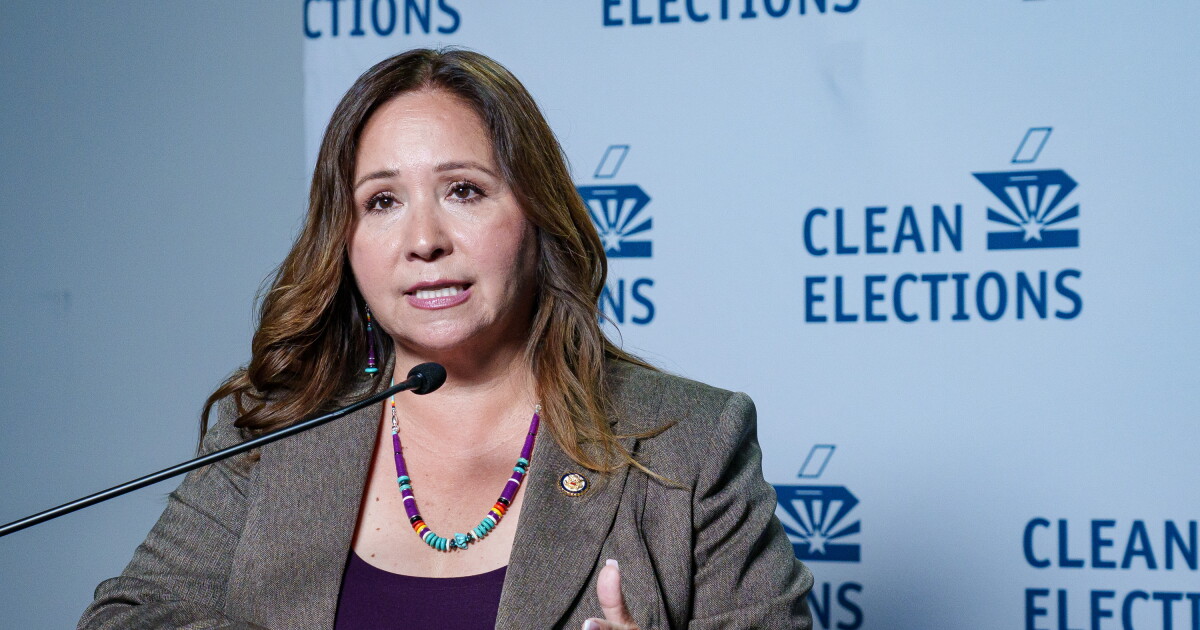
Congresswoman Adelita Grijalva, who represents southern Arizona, disputes the Forest Service’s safety rationale. In an interview with KJZZ’s The Show, she argued the closures are driven not by worker safety but by a desire to avoid public scrutiny of construction activity.
“They’re trying to limit access, because they don’t want anyone to be paying attention to what they’re actually doing. So they don’t want the documentation, and they’re trying to discourage people. They’re pushing people out and then discouraging people from coming in.”
Grijalva pointed to prior incidents of environmental damage along the border as evidence of what can happen when construction proceeds without public oversight. She specifically cited the destruction of Las Playas and Taglio — a site now confirmed to contain an ancient Indigenous geoglyph older than Stonehenge and the Egyptian Pyramids — as examples of what she described as reckless construction.
“We’ve seen the devastating consequences when DHS and its contractors operate without oversight along the border, including the destruction of Las Playas and Taglio. And so this is DHS following that same playbook: shut out the public, evade scrutiny, and recklessly bulldoze our lands and do really whatever they want.”
The congresswoman also questioned whether proper permitting and environmental review actually took place before construction began.
“I’ve also heard that they went through the proper channels to get the permits and that there were studies done. Literally, there’s no way that that happened.”
In a related development, the National Park Service has denied an activist group’s request to place water stations along the Arizona-Mexico border — the first such denial in over two decades.
A $46 Billion Question
The border closures are unfolding against the backdrop of massive federal spending on border security. Grijalva said that $46 billion was allocated specifically for border wall construction under what is officially called the “One Big, Beautiful Bill” — and that figure is part of a broader $260 billion Congress has approved for immigration enforcement under the Trump administration. A recent watchdog audit found that tens of millions of dollars in ICE detention spending were wasted under the same administration.
Grijalva argued that the scale of that investment stands in stark contrast to cuts being made elsewhere. She noted that the same legislation included significant reductions to the Supplemental Nutrition Assistance Program, with real consequences in her district.
“We saw 400,000 people lose their SNAP benefits, and that includes a lot of seniors. 200,000 children lost access to food.”
She added that the funds being spent on border wall construction could alternatively be used to reverse a decade of cuts to SNAP, extend Affordable Care Act subsidies for more than seven years, or offset more than two years of Republican-backed Medicaid reductions.
On the question of what Congress can actually do, Grijalva acknowledged the limits of the Democratic minority. She noted that the administration has repeatedly bypassed legislation through executive order — a dynamic she said is behind the wave of lawsuits challenging border-related decisions.
“He goes around us anyway. That’s why we have so many lawsuits, because he decides by executive order to do things that only Congress can decide.”
Looking ahead to the midterm elections, Grijalva said a Democratic majority would mean congressional hearings, direct visits to the border for members of Congress, and a renewed push to fully staff and modernize ports of entry.
“Let’s fix our broken immigration system. Let’s become true partners with those who have historically been allies of Mexico and Canada, work to make things more affordable for all of our community members, but hold people accountable who have broken the law.”
The land closures, which were posted to the Forest Service website with little public notice, cover areas that Grijalva described as largely remote — meaning the kind of on-the-ground documentation that has driven media coverage and legal challenges has depended almost entirely on activists and landowners who happen to be nearby.
“Using the border wall construction to justify the closing of dozens of acres of public lands at a moment’s notice — people found out because they posted something on the website through January of 2029, that is unnecessary and deeply troubling.”
Coverage of Arizona politics, the Southwest Border, and environmental issues in the Tucson region continues on the KJZZ Fronteras Desk. Reporting was conducted by Lauren Gilger and Alisa Reznick. This story touches on broader political and policy debates playing out across the region and the country.

Comments are closed.