The right to cast a secret ballot is one of the most fundamental protections in American democracy — but for blind voters in Detroit, that right has been slipping away for years. At the center of the problem is a piece of technology that is supposed to guarantee equal access to the polls but keeps falling short.
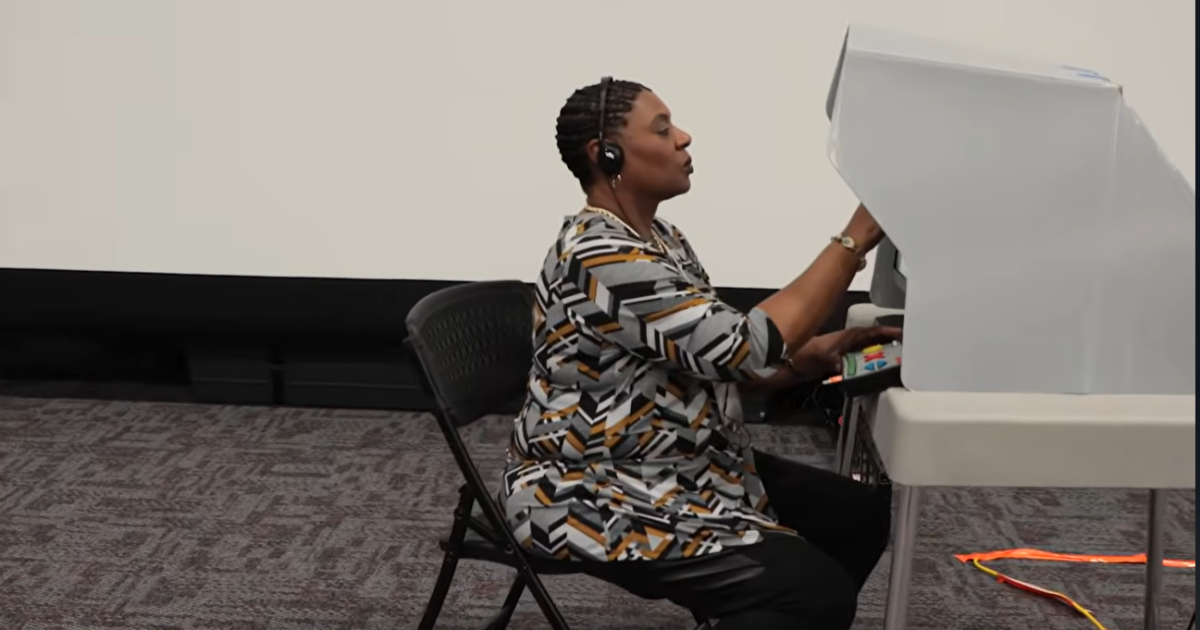
Under Michigan’s constitution, every voter has the right to cast their ballot privately, without anyone else knowing their choices. To help voters with disabilities exercise that right, every polling place in the state is equipped with a Voter Assist Terminal — a machine that uses audio through headphones, large buttons, and adjustable text to let voters navigate their ballot independently. In theory, these machines are a lifeline. In practice, blind voters in Detroit say they fail too often to be relied upon.
A System That Keeps Breaking Down
At an October 12 Detroit Election Commission meeting, Stephen Handschu told city officials that Detroit has consistently failed him. Having lived in other Michigan cities without issue, he was direct about what’s happening in his home city.
“I have not been able to vote secretly with my right to privacy intact since 2016 when I came back to Detroit,”
said Handschu, who is blind.
Richard Clay, president of Detroit Advocates of the Blind, has been raising alarms about these machines for at least eight years. His group is careful to say the terminals don’t fail every time — but the odds aren’t reassuring.
It’s about a
“50/50 chance”
that all aspects of the machine will be functional on any given election day, Clay said. And for blind voters, that’s not good enough — because they need every component to work.
“The issue with the VAT machine is that there are so many ways for the machine to fail,”
Clay told Michigan Public’s Stateside.
“Some of the voters who have [other] disabilities, they’re only using parts of what the VAT machine offers. Whereas the blind voter needs everything on this machine to work.”
When the Machine Fails, So Does Privacy
When a Voter Assist Terminal breaks down, blind voters are left with difficult choices — none of which preserve the privacy that the Constitution is supposed to guarantee.
They can wait at the polling place while workers try to fix the machine, which can take anywhere from a few minutes to several hours if a technician has to be called. Or, under Michigan state law, they can ask poll workers to help fill out their ballot — but that requires telling at least two people exactly how they want to vote.
For Clay, who often knows the poll workers in his precinct as neighbors, that’s not a neutral option.
“The information about how I vote could get to other people and could affect things in terms of my employment or my relationship with my neighbors and so on and so forth,”
he said.
“And that just should not happen for any voter, let alone a disabled voter.”
Voting absentee doesn’t solve the problem either. Blind voters typically need a family member or friend to physically fill out the paper ballot for them — and must trust that person to record their choices accurately. Michigan does offer an accessible electronic absent voter ballot that can be completed online, with an application deadline of 5 p.m. on the Friday before Election Day, but awareness and access to that option varies.
Who Makes These Machines — and Who’s Responsible?
Detroit’s Voter Assist Terminals are manufactured by Liberty Vote, a company formerly known as Dominion Voting Systems. The machines were approved by the Michigan Department of State, and Wayne County chose to purchase them. Detroit is far from alone — 64 other Michigan counties use the same machines.
The concerns aren’t limited to accessibility. During the 2024 general election, a “programming issue” prevented voters from making a straight-party selection on Liberty Vote machines. Michigan Public reached out to the company, Wayne County, and the state to ask whether there are broader design or manufacturing problems with the terminals. None responded to multiple requests for comment.
City Clerk Janice Winfrey has repeatedly assured the public that the machines are checked before every election and are
“all working.”
But at the same October 12 meeting, she also called the machines
“trash”
— and offered a candid explanation for why.
“They purposely, in my opinion, don’t put a lot of thought and effort into [the Voter Assist Terminals] because they don’t sell like the other machines,”
Winfrey said.
Clay said he was
“shocked”
to hear the clerk use that word — especially after Winfrey had previously called critics of the machines
“disingenuous”
and
“unfair.”
A spokesperson for Winfrey declined an interview request and did not respond to written questions seeking clarification.
Eight Years of Advocacy, Still Waiting for Results
Clay and other disability advocates say they’ve been pushing county and city officials for concrete commitments — additional poll worker training, more thorough pre-election testing at every polling location — for nearly a decade. For a time, Detroit Documenters helped track these concerns across public meetings and media coverage in the lead-up to the 2026 election.
Clay says advocates made more progress in conversations with Wayne County than with the city clerk’s office — but eventually, even county officials went quiet.
“We’ve had more productive conversations over the years with (Wayne) County,”
he said.
“[But] you get to the point … where we kind of indicated to them like, okay, ‘it’s time to put our foot down here. This is just not acceptable. It’s a violation of our federal civil rights and we want something done now.'”
After that, Clay said, the county stopped communicating
“cold turkey.”
Winfrey has said trained staff are stationed at every polling place on Election Day, identified by special aprons as
“Voter Assist Terminal specialists,”
whose job is to test every machine before the polls open. Clay acknowledges there has been some improvement — machines are more often set up before voters arrive, and poll workers appear better trained than in past years. But for advocates who have spent eight years asking for something more reliable, incremental progress isn’t the finish line.
As Michigan prepares to issue new contracts to voting machine companies, Clay is hoping disability advocates will have a meaningful seat at the table — with real authority to weigh in on which machines should, as he put it,
“never see the light of day.”