
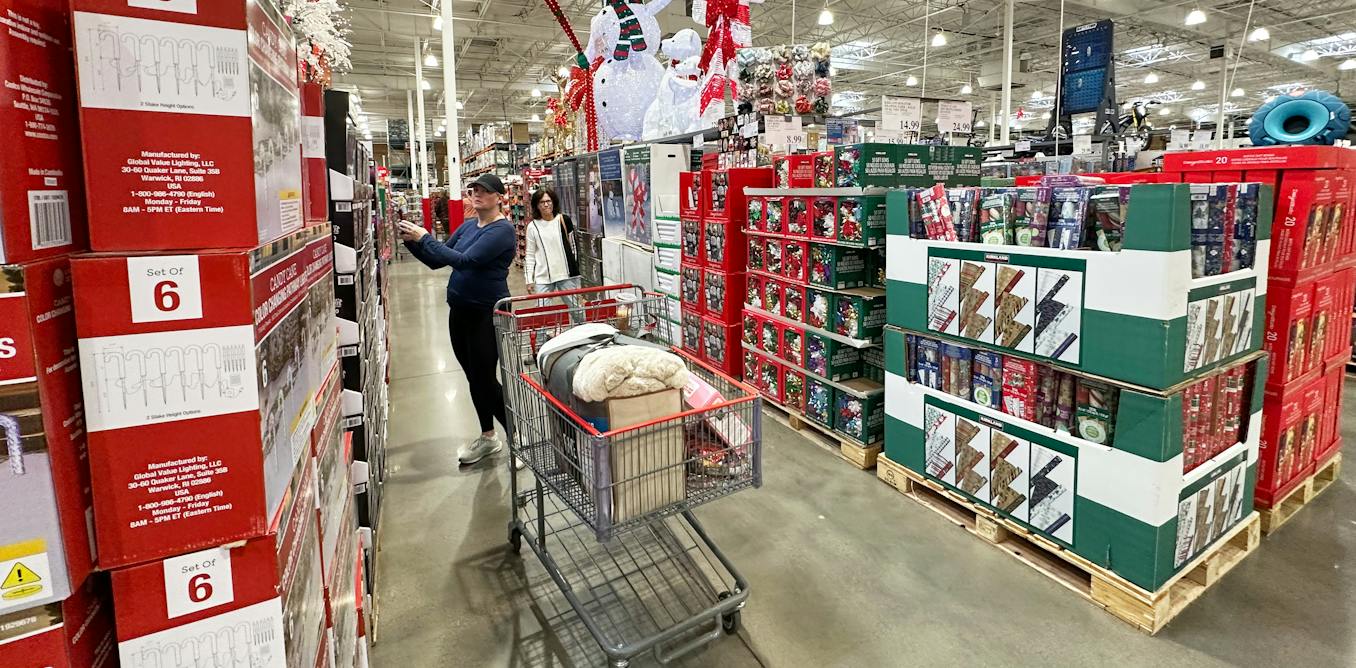
As Black Friday deals flood inboxes and store aisles, millions of American families are facing a quieter, harder question: how much longer can they keep up? Despite years of inflation fatigue, declining real wages, and stock market turbulence, consumer spending has remained surprisingly steady — but cracks are beginning to show.
Economists have long been puzzled by why American households keep spending even as their confidence in the economy sinks. The short answer: people are working harder, cutting corners, and leaning on each other — but that balancing act is becoming increasingly difficult to maintain.
Americans Are Stretching Further Than Ever
A supply chain researcher at Georgia Tech who modeled the economic impact of the Iran war on global supply chains found that consumer spending held up remarkably well — even as Americans dealt with higher gas prices from disruptions in the Strait of Hormuz, tariff-induced inflation, and high interest rates. The key factors the researcher identified: resilience and innovation.
But those words don’t tell the full story of what families are actually going through. In practice, “innovation” means switching to off-brand and discount stores, hunting for deals wherever possible, eating more meals at home instead of dining out, and downsizing vacation plans. And “resilience” often means taking on more work just to stay afloat.
More Work, More Side Hustles
Economists describe a pattern called the added worker effect — when household income drops or becomes uncertain, other family members enter the workforce to compensate. It happened during the 2007–09 Great Recession, when married women joined the labor force as their spouses lost jobs. In 2026, the same pattern is playing out again: retirees are heading back to work, and more mothers with children are staying in or reentering the workforce — both driven by the rising cost of living.
Side hustles have also exploded. According to jobs database ZipRecruiter, about 1 in 3 workers has had a side hustle in 2026 — from nanny gigs to Etsy shops, DoorDash deliveries to Uber driving. For many, this extra work isn’t optional spending money. It’s what keeps the lights on. The growing reliance on side income over the past five years underscores the drop in purchasing power from full-time salaries alone.
Food Banks and Charitable Giving Both Rising
Community support networks are also being stretched. Food bank donations and charitable giving continue to rise across the country, even as economic pressures mount. According to Giving USA, charitable giving rose to US$617 billion in 2025 — crossing the $600 billion threshold for the first time. Much of that reflects a growing need for food banks to feed Americans who can no longer afford basic groceries. At the same time, the actual number of donors is falling — meaning fewer people are giving more to meet the demand.
The Spending Picture Is Not Equal
When official economic data shows consumer spending holding steady, it’s worth asking: whose spending? Wealthier Americans are continuing to spend at a strong clip, which props up the headline numbers. But for lower- and middle-income families, the picture looks very different.
According to the Atlanta Federal Reserve, one in four families is spending more than they make, evidenced by rising credit card delinquencies and auto repossessions. Federal Reserve data also shows that Americans are spending a much larger share of their income on necessities — food, healthcare, rent, and transportation — than they did a decade ago.
Auto loan delinquencies are near a 10-year high. For workers who depend on a car to get to work, losing a vehicle can quickly spiral into losing a job, with devastating financial consequences. Even before repossession becomes a threat, rising gas prices are taking a toll: according to recent data, 17% of workers in the labor economy miss more shifts as gas prices rise.
Jobs Remain the Foundation — For Now
The single most important factor keeping household budgets from collapsing is employment. With unemployment at 4.1%, the job market remains relatively stable, and that’s what’s holding the line. If employment holds and energy prices ease, most families will be able to tread water. But if inflation stays elevated and the Federal Reserve is forced to raise rates further, disposable income will shrink — and economic growth could follow.
That scenario carries serious risk: higher unemployment would reduce the household spending that has been holding the broader economy together. For Americans already stretched thin by tariffs, inflation, and stagnating wages, there is very little cushion left. The labor market and unemployment trends heading into 2027 will likely determine whether the current “bend but don’t break” moment holds — or breaks.
The holiday shopping season, with its Black Friday offers and year-end spending surges, is not necessarily a reliable signal of what’s coming. Families often go to great lengths to give their loved ones a good holiday regardless of financial stress. The real test for American consumers — and for the economy — begins in early 2027, when the full weight of ongoing food bank demand, rising debt, and philanthropy and nonprofits filling government gaps will become harder to ignore.








Comments are closed.