
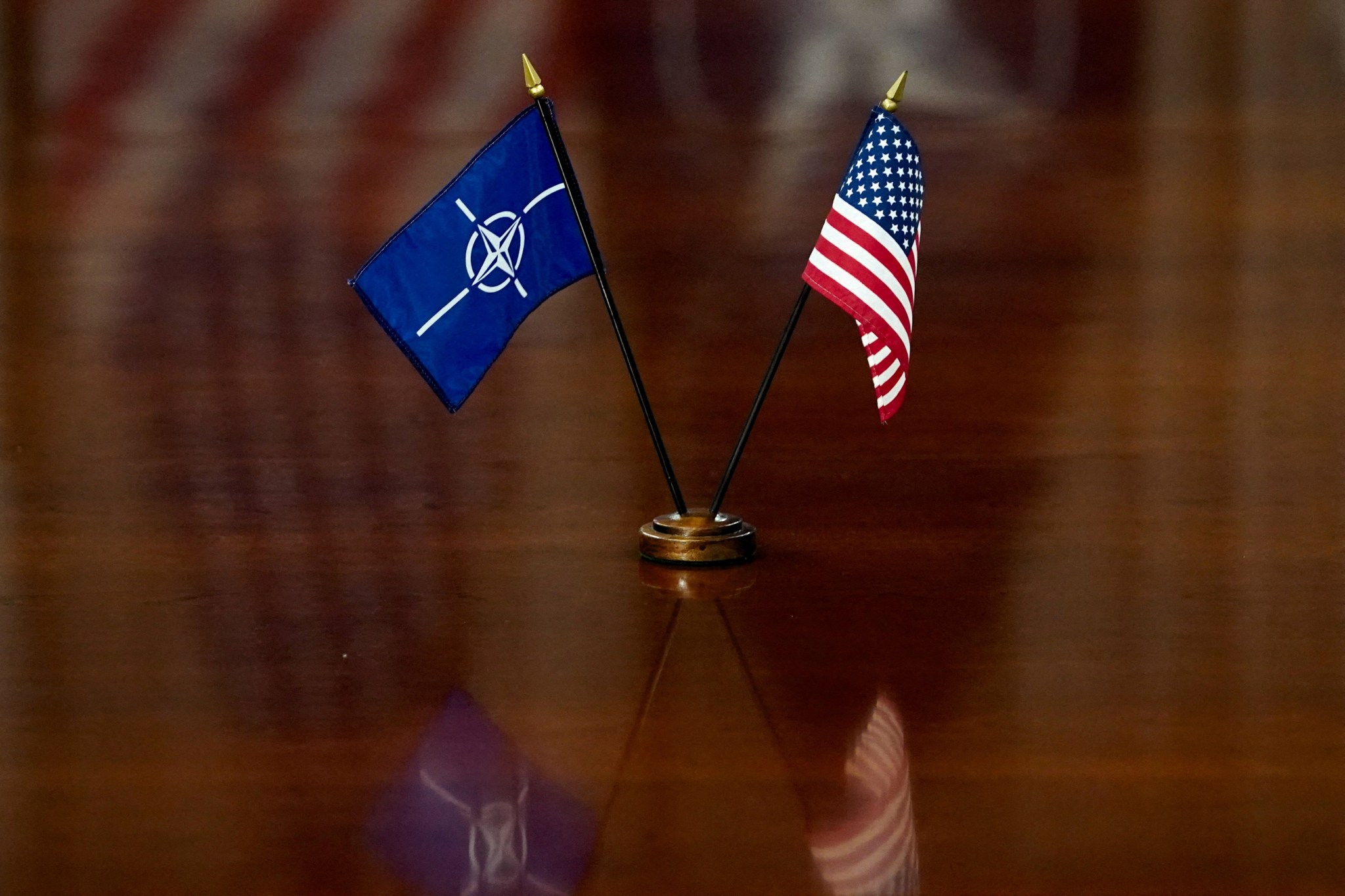
How America withdraws its military forces from Europe may matter just as much as whether it withdraws at all. A new study warns that a rushed, poorly coordinated pullback could permanently cost American defense companies billions in overseas sales — and weaken the very alliances the U.S. depends on.
The RAND study, released Wednesday and titled “Anticipating Allies’ Responses to U.S. Retrenchment from Europe,” takes a close look at how four key NATO partners — France, Germany, Poland, and the United Kingdom — would likely react to various levels of reduced American military commitment in Europe. The findings are based on Cold War historical records, allied government documents, and interviews with 51 officials and defense experts across those four countries, most conducted between April and November 2025.
The central takeaway: the manner of withdrawal shapes everything. The four allies, according to the report’s authors,
“see a stark difference between a coordinated, orderly U.S. withdrawal, which they feel they could handle, and a rapid, uncoordinated one, which they see as creating major capability gaps and potentially emboldening Russia to attack a NATO member.”
What’s Already Happening on the Ground
The U.S. military has already started pulling back from Europe. Roughly 80,000 American troops were stationed across approximately 30 bases in Europe as of 2025. In May, the Pentagon announced it would pull about 5,000 troops out of Germany. In June, the U.S. cut the forces it would make available to NATO in a crisis. A formal review of U.S. forces in Europe is currently underway, with troop-level options due to Defense Secretary Pete Hegseth by November 6 and a full review expected in December.
This backdrop follows the framework known as NATO 3.0, a concept put forward by Under Secretary of Defense for Policy Elbridge Colby in February. It calls on European nations to take primary responsibility for their own non-nuclear defense, while the United States redirects resources toward the Western Hemisphere and the Indo-Pacific. The RAND report notes, however, that
“NATO 3.0 is a vision for a reduced U.S. role and reallocation of resources. But there is no concrete, long-term plan.”
The Cost to American Defense Contractors
One of the most significant economic warnings in the report involves the U.S. defense industry. According to the Stockholm International Peace Research Institute, the U.S. supplied 58% of the major weapons imported by European NATO members between 2021 and 2025, down from 64% in the prior five-year period. A sudden or chaotic U.S. pullout, RAND warns, would accelerate that decline.
The report states directly:
“Such a shift would be detrimental to the U.S. defense industrial base, which benefits from exports that help create economies of scale. The main cause of this shift would be perceptions of U.S. reliability as an ally rather than the loss of any specific U.S. military capabilities.”
Germany is a key example. Berlin has historically purchased American weapons systems partly as a signal to Washington that Europe values the alliance. But if a rapid withdrawal suggests that strategy has failed, the report says Germany
“may not see a benefit to continuing to privilege U.S. firms for arms sales or other deals.”
RAND expects Poland may reach a similar conclusion.
The U.K. presents its own complications. British interviewees told RAND that a sudden withdrawal would
“accelerate the UK’s reorientation away from U.S. defense equipment toward sovereign or European alternatives.”
Still, British Defense Secretary Wes Streeting, speaking at the Center for Strategic and International Studies in Washington on October 15, pushed back on the idea of choosing sides, saying that buying European or American equipment
“should not be an either/or choice.”
He noted that British industry produces about 15% of each F-35 aircraft.
France is already the least reliant of the four allies on U.S. weapons purchases, and RAND says a pullout would have little effect on French procurement. However, French military officials privately acknowledged they would still depend on American capabilities during wartime — including intelligence, surveillance, long-range precision strike, fighter jets, air and missile defense, and logistics — until Paris can develop those capabilities independently.
Intelligence Sharing and Trust
The report also raises concerns beyond weapons sales. If the U.S. were to normalize relations with Russia while the war in Ukraine continued — without addressing European security concerns — allies might begin restricting intelligence sharing and joint military planning out of fear that sensitive information could reach Moscow.
That trend has already started in limited ways. The report notes that the U.K. reduced some intelligence sharing due to concerns about U.S. military operations in the Caribbean, while the Netherlands scaled back over disagreements on U.S. policy toward Russia.
Despite these friction points, RAND found no scenario in which any of the four allies would align with Russia or China on security matters. The report’s authors wrote that
“some strategists’ fears about allies aligning with Russia as the United States draws down are overblown.”
In a joint statement released Monday, defense ministers from France, Germany, Italy, Poland, and the U.K. described Russia as
“the most acute and long-term threat to Euro-Atlantic security and stability”
while also calling the United States
“an indispensable Ally.”
Allies Are Spending More — But Unevenly
On defense spending, the picture is mixed. All four allies have committed to NATO’s target of at least 3.5% of gross domestic product for core defense by 2035, as outlined in the alliance’s 2025 summit declaration. Poland leads the group, having more than doubled its defense spending share since 2014 and targeting 5% of GDP this year. Germany plans to spend €649 billion on defense over five years, with spending rising from 2.4% of GDP in 2025 to 3.5% by 2029, according to Defense News.
France and the U.K. face steeper challenges. France’s public debt climbed from 98% of GDP in 2019 to an average of 112% between 2020 and 2024. One interviewee described the budget problem as France’s
“Achilles’ heel”
in its rearmament effort. The U.K.’s Ministry of Defence requested an additional £28 billion to cover a funding gap through 2030 and received £15 billion, though the British government said on October 28 it would fully fund its Defence Investment Plan, as Reuters reported.
The Danger of Using Troops as a Bargaining Chip
The RAND report also warns against using troop deployments to reward or punish individual allies based on political alignment. Questionnaires the Pentagon sent allies as part of the ongoing review asked about defense spending levels and support for U.S. foreign policy priorities — leading some allies to conclude that troop decisions might be tied to political loyalty rather than strategic need.
Poland’s recent experience illustrates how volatile these decisions can be. In May, the Pentagon abruptly canceled a planned deployment of about 4,000 soldiers to Poland. President Trump later pledged to send 5,000 troops at an unspecified future date. Warsaw attributed the reversal in part to reminding Washington that Poland is a “model ally” that purchases American defense systems. RAND’s authors said the episode shows both the benefit Poland expects from that approach and its fundamental weakness: U.S. troop commitments rest on
“abrupt, easily reversible decisions.”
The report’s recommendation is straightforward: work with allies to establish clear, long-term plans for how many U.S. troops remain in Europe during peacetime, how many would be sent in a crisis, and a defined timeline to reach those goals. Doing so, the authors concluded,
“could sustain a continued, if reimagined, transatlantic partnership,”
while treating troops as bargaining chips
“could undercut regional cooperation and, in turn, NATO 3.0’s goal of European strength.”








Comments are closed.