
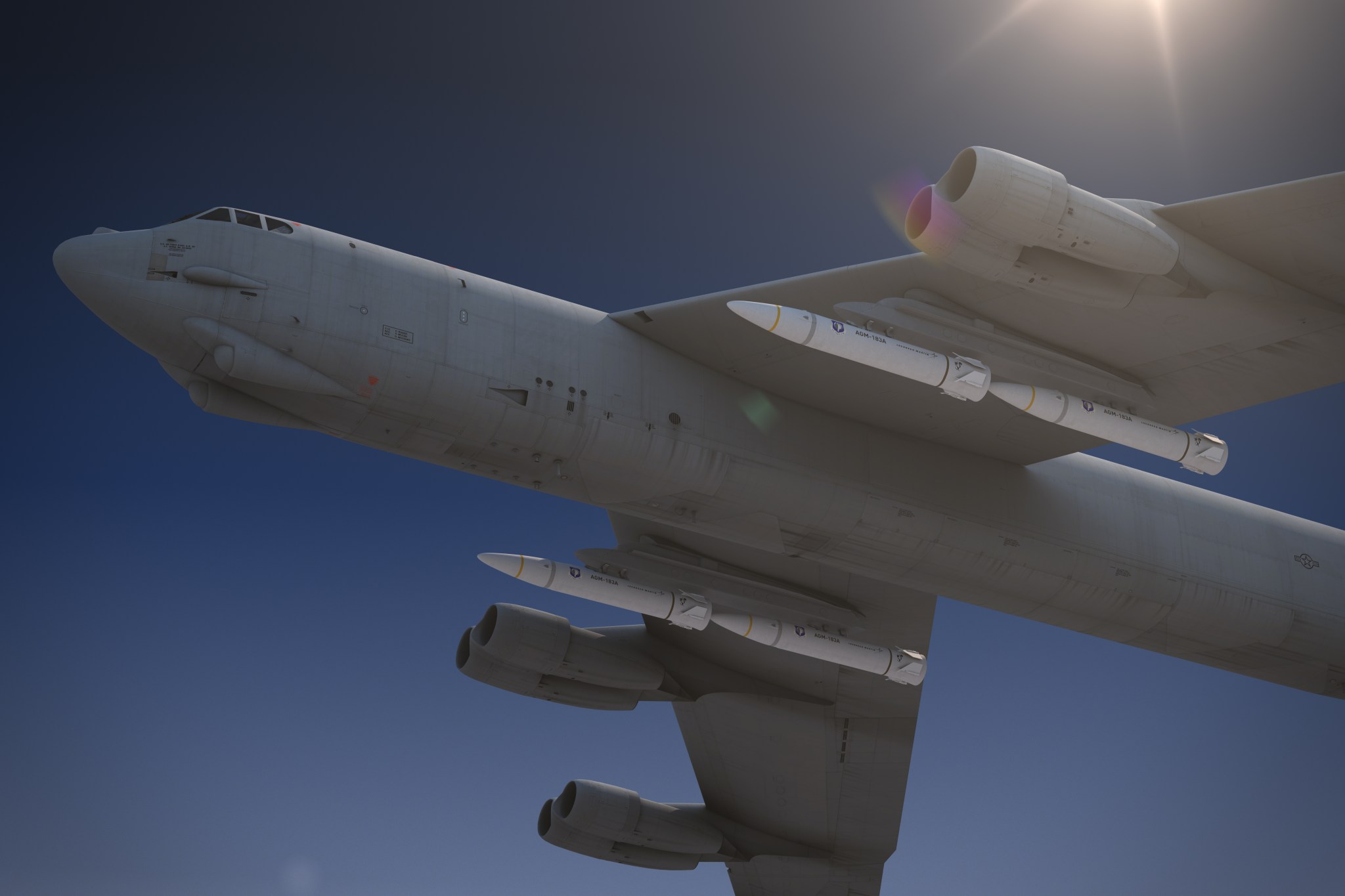
For years, America’s hypersonic weapons program struggled through failed tests and budget cuts — but that chapter appears to be closing. The U.S. Air Force has now committed nearly $700 million to bring one of its most advanced strike weapons out of the testing phase and into full production.
The Air Force awarded Secretary Troy Meink‘s department formally confirmed the $694 million contract to Lockheed Martin in late September, according to a Monday announcement. The contract marks a significant shift for the ARRW — the AGM-183A Air-Launched Rapid Response Weapon — moving it from prototyping and testing into active fielding.
Secretary of the Air Force Troy Meink framed the contract as a major milestone in the country’s weapons strategy.
“This is a turning point in our advanced weapons roadmap. By moving ARRW from test to production, we’re providing our combatant commanders with a credible, high-speed strike weapon capable of penetrating the most advanced anti-access and area-denial systems.”
What the ARRW Actually Does
The ARRW is a hypersonic missile designed to travel at speeds exceeding Mach 5 — more than five times the speed of sound. It works by using a solid-fuel rocket booster to accelerate to those extreme speeds before releasing a hypersonic glide vehicle that homes in on its target.
The weapon is built specifically to hit heavily defended targets from a safe distance, giving military commanders what’s known as a standoff strike capability. That means pilots and aircraft can engage high-priority targets without flying into heavily defended airspace. Air Force Chief of Staff Gen. Ken Wilsbach described what this capability means for American forces:
“Fielding ARRW enhances our ability to hold targets at risk anywhere around the world. This hypersonic weapon provides the Joint Force a flexible and rapid response option for highly contested environments.”
The contract was completed under the Defense Department’s Enterprise-Wide Agile Acquisition Contract, which the Air Force described as part of a broader effort to modernize the country’s Arsenal of Freedom. The announcement did not disclose how many missiles Lockheed Martin is expected to produce or specify a delivery timeline, citing operational security concerns.
A Program That Was Nearly Canceled
The road to this contract was not straightforward. In 2023, the Air Force moved to halt purchases of the ARRW entirely after the prototyping phase ended following a series of unsuccessful tests. The service shifted its focus instead to another program, the Hypersonic Attack Cruise Missile.
Two years later, in 2025, then-Chief of Staff Gen. David Allen told Congress that the Air Force intended to revitalize its ARRW program with fresh funding in the fiscal year 2026 budget proposal — despite the program receiving nothing in the fiscal year 2025 budget request.
That commitment followed through in the numbers. The Air Force requested roughly $387 million for the ARRW program in its fiscal year 2026 procurement budget, according to budget documents. For fiscal year 2027, the Air Force increased that figure slightly, requesting $452 million for the program, as shown in separate budget documents.











Comments are closed.