
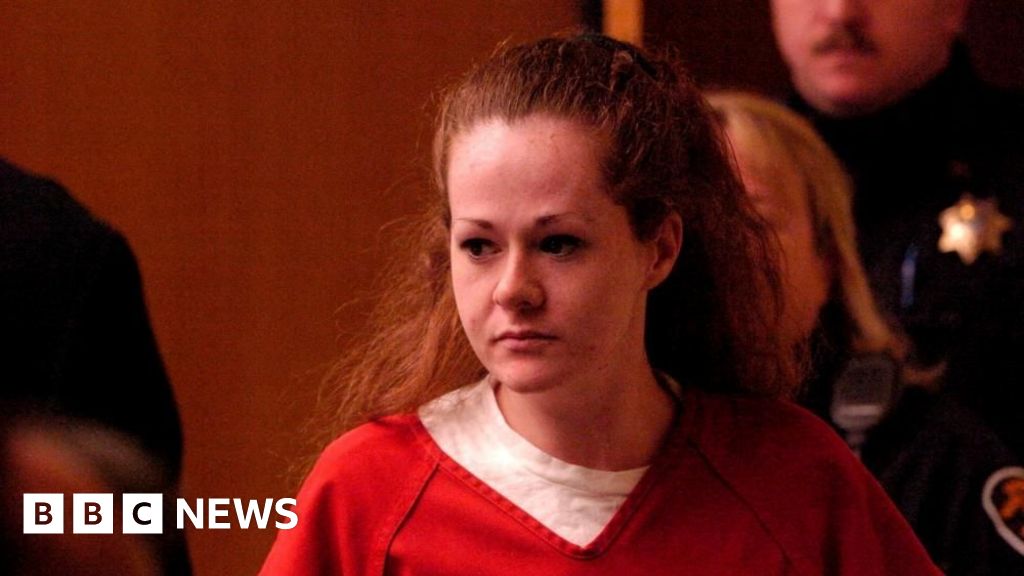
For the first time in recorded history, a person has survived a lethal injection execution — and she is now awake, speaking, and recovering in a hospital bed. The case of Christa Pike has left legal experts, criminologists, and death penalty scholars struggling to find any comparable precedent.
Pike, 50, who was sentenced to death in Tennessee for the 1995 murder of Colleen Slemmer, survived two lethal injections administered on September 30. Her lawyers confirmed Tuesday that she is “conscious and speaking,” though she remains handcuffed and shackled to a hospital bed while receiving critical care. Her prognosis, they cautioned, is still uncertain.
Dr. Joel Zivot, an anaesthesiologist advising Pike’s legal team, told the BBC that Pike had been taken off a ventilator and is now able to communicate in a basic way. She remembered her name and attempted to guess the date — believing it was still September. Crucially, she appears to have no memory of the execution attempt itself.
“She has some memories of being in the hospital but no memory, I believe, of the execution attempt,”
Zivot said.
Pike’s lawyers say that “at a minimum, we expect a long recovery.” They have renewed their call for Tennessee Governor Bill Lee to commute her sentence to life in prison without parole. A court hearing in Nashville was scheduled for Wednesday, followed by a news conference outside the courthouse.
What Went Wrong — and Why It Matters
Authorities have not publicly explained what caused the execution to fail. Pike was injected twice with pentobarbital, the chemical used by Tennessee prison officials to carry out lethal injections. Dr. Zivot has suggested the drug likely spread into the tissue beneath Pike’s skin rather than entering her bloodstream in sufficient quantities to be fatal.
Pike’s attorneys had warned beforehand that her medical history — including thrombocytosis, a blood-clotting condition, and small veins — could complicate the process and cause unnecessary suffering. Zivot stressed that significant medical risks remain.
“I would not, in any way, say at this point that all the big risks are behind her,”
he said. He also noted the grim statistical baseline:
“Most people who get lethal injection die from it.”
Deborah Denno, a criminologist and professor at Fordham Law School, called the outcome extraordinary.
“They did everything they were supposed to do as part of the execution process, and it simply didn’t work,”
she told the BBC.
“This has never happened before.”
Denno said she was
“absolutely astonished”
that Pike was now conscious and speaking.
While seven other prisoners have previously survived execution attempts, Denno explained that in every one of those cases, executioners were unable to inject anything at all. Pike, she said,
“is the only person for whom some kind of toxin has been injected.”
For a full breakdown of what happened in the failed execution and what comes next, reporting from the BBC provides additional detail.
A Story That Raises Difficult Questions
Steven Hale, a journalist for the Nashville Banner who witnessed the attempted execution, said on BBC Radio 4’s Today programme that he knew of no
“exact precedent”
for what occurred. He also raised the human toll the case has taken on Slemmer’s family.
“What must this be like for the victim’s family, who for 30 years has been told we are gonna give you justice and justice is us executing Christa Pike,”
Hale said. More on the broader human dimensions of Pike’s story has been explored in long-form reporting, as has the firsthand account of a journalist who has witnessed nearly 500 executions and called this one unlike anything he had seen before.
Pike was 18 years old when she and her then-boyfriend, Tadaryl Shipp, beat, tortured, and killed 19-year-old Slemmer. The two had met Slemmer at a job training camp for troubled teens. Shipp, who was 17 at the time of the crime, was spared the death penalty due to his age and remains imprisoned. The execution attempt was described by Slemmer’s mother — who had advocated for Pike’s death — as a
“mess.”
State authorities have not announced whether they intend to attempt another execution. In the meantime, Governor Lee has suspended all executions in Tennessee for the remainder of the year, and the head of the state’s prison system has announced his resignation. Ongoing capital punishment issues across the United States continue to draw scrutiny, particularly around the reliability of lethal injection procedures.
According to the Death Penalty Information Center, more than a third of executions carried out across the country in 2022 were botched or highly problematic. In documented cases prior to Pike’s, all failures involving lethal injection occurred before the drugs could be administered. Earlier this year, also in Tennessee, the execution of Tony Carruthers — convicted of kidnapping and murdering three people in 1994 — was postponed after staff could not locate a usable vein. He received a one-year reprieve from the governor.
Updates on Pike’s condition and legal proceedings can be followed through ongoing coverage, including how Pike survived the execution attempt, what is known about her unprecedented recovery, and the latest on her still-uncertain prognosis.




Comments are closed.