
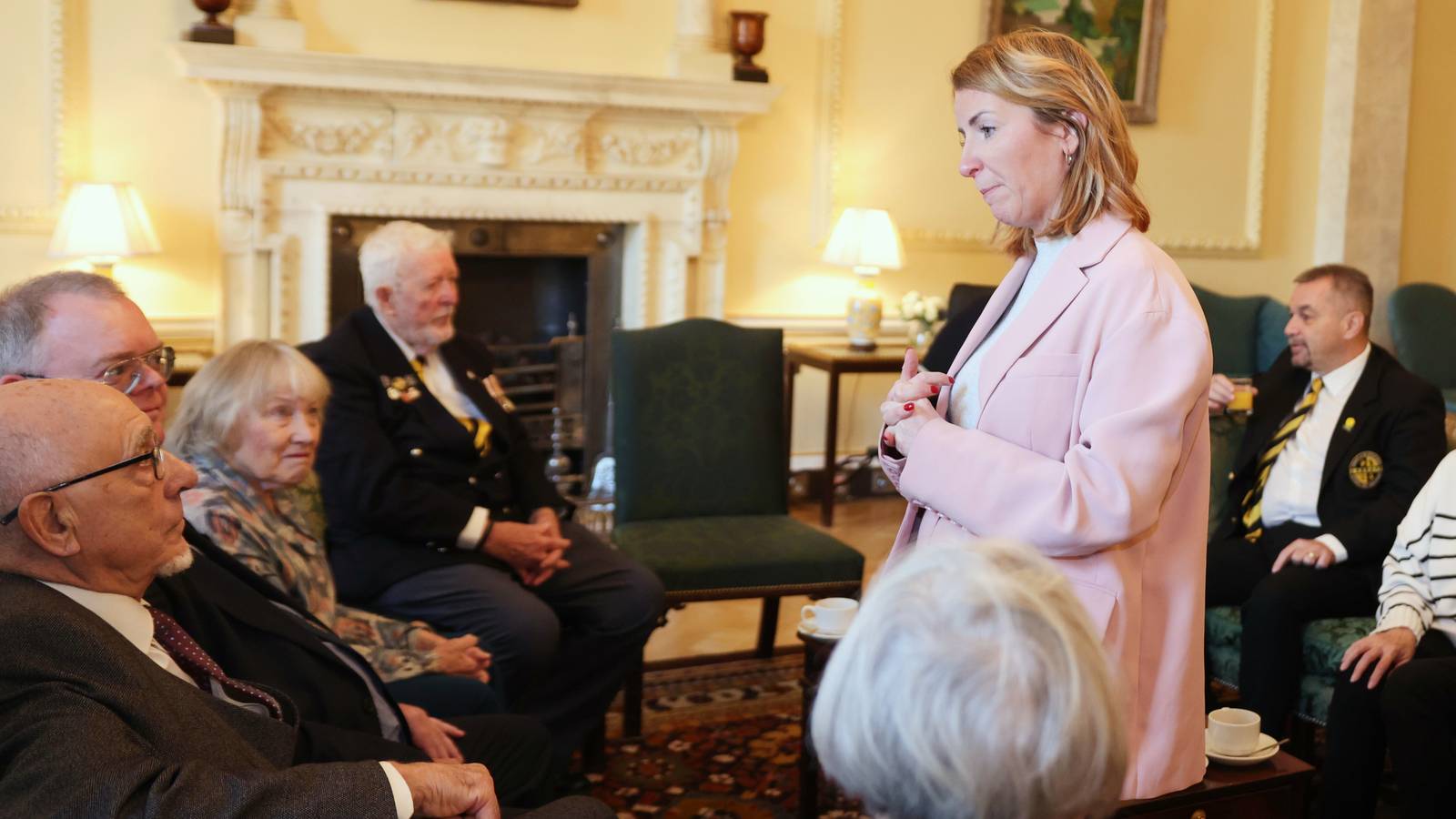
For more than four decades, British military veterans and their families have pushed for answers about nuclear weapons tests that may have permanently harmed their health. Now, after years of denial and delay, an official inquiry is finally moving forward.
Andy Burnham announced Tuesday night on the BBC’s Newsnight program that an independent panel will investigate the health impact of Cold War-era nuclear weapons tests on British military personnel. The inquiry follows a 40-year campaign by survivors who say they were used as unwitting test subjects and that their health — and the health of their children — was permanently damaged as a result.
An estimated 22,000 British military personnel witnessed nuclear weapons tests conducted in the Indian and Pacific oceans between 1952 and 1967. Veterans’ groups allege that many of these personnel, including conscripts, were ordered to fly through mushroom clouds or observe detonations without protective clothing, leaving them exposed to dangerous levels of nuclear fallout.
Decades of Alleged Cover-Up
At the heart of the veterans’ grievances is a claim that Britain’s Ministry of Defense deliberately concealed blood and urine sample data that could have confirmed radiation exposure. Former Defense Minister Tobias Ellwood acknowledged in September that he had “inadvertently misled” Parliament in 2018 when he told lawmakers that no information about blood testing could be located. He later discovered that blood samples had in fact been collected across the military — but veterans seeking compensation for radiation-related illnesses were never given access to them.
Ellwood did not mince words about the gravity of the situation.
“This is among the greatest scandals in Britain, and it must be addressed,”
he wrote in the Guardian.
Unlike the United States and France — both of which have established dedicated compensation programs for veterans affected by nuclear testing — Britain currently has no such program. France conducted tests in the South Pacific and in Algeria before creating its compensation framework. British veterans have so far received nothing comparable.
Britain’s Nuclear Testing History
The United Kingdom’s first atmospheric atomic test took place on October 3, 1952, when a plutonium implosion device was detonated in the Montebello Islands off the coast of Western Australia. That blast made Britain the world’s third nuclear-armed nation, behind only the United States and the Soviet Union. Over the following years, the U.K. set off dozens of additional nuclear explosions across Australia and Pacific Ocean territories, including Kiritimati — formerly known as Christmas Island.
Who Will Lead the Inquiry
Burnham announced that the panel will be chaired by Bishop James Jones, who previously led the inquiry into the 1989 Hillsborough disaster, in which 97 people were killed in the crush of fans at a match between Liverpool and Nottingham Forest. Burnham said Jones would be “relentless in his pursuit of the facts.”
“Nuclear test veterans and their families have waited too long for the truth, and that’s exactly what the independent panel will establish,”
Burnham said in a statement.
The panel is expected to release an interim report by October of next year — the 75th anniversary of Britain’s first nuclear weapons test.
Voices From the Campaign
For those who have spent years fighting for this moment, the announcement carries deep personal meaning. Alan Owen, who co-founded the campaign group LABRATS, called Burnham’s announcement a
“fantastic step forward.”
Owen’s father participated in a nuclear test on Christmas Island in 1962. Owen said it had taken a lot of work “over many, many years” to reach this point, noting that the broader campaign stretches back nearly four decades.
“The campaigners have been fighting since 1984,”
he said.
“We’re just the next lot of campaigners that have come through to get it over the line.”




Comments are closed.