
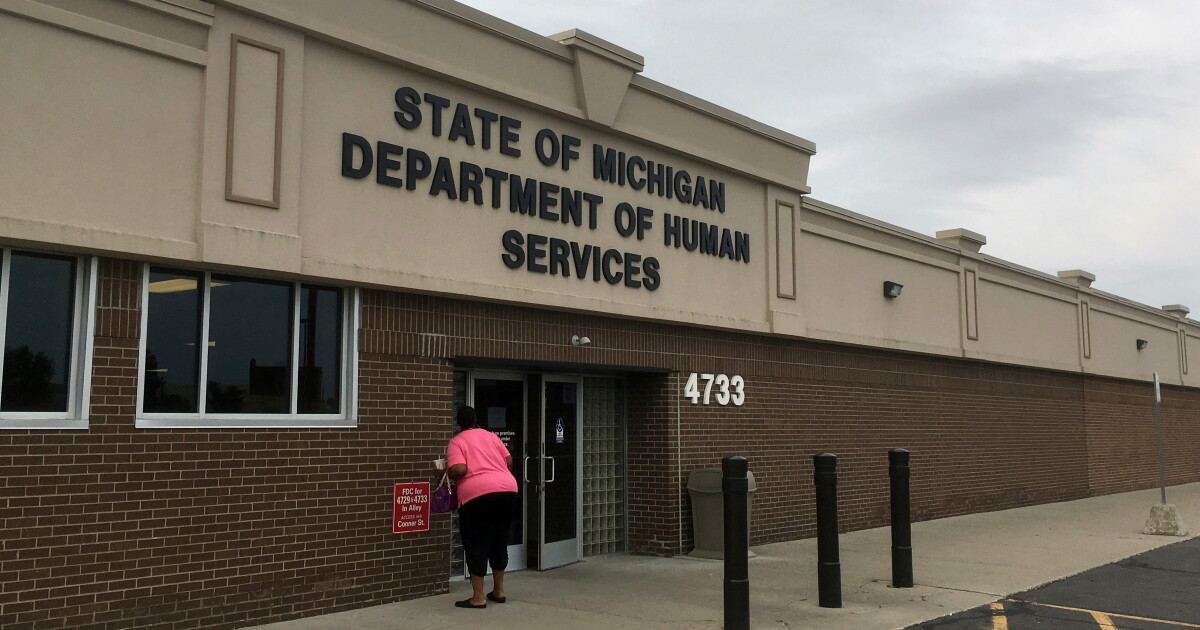
For nearly two decades, Michigan’s foster care system has operated under federal court supervision — the result of a 2006 lawsuit that exposed widespread failures in how the state protects its most vulnerable children. Despite 18 years of oversight and more than $40 million spent, the rate of abuse and neglect inside that system is now climbing, not falling.
Federal court monitors have flagged the trend as an
“urgent safety threat to children,”
even as Michigan’s Whitmer administration pushes a federal judge to end the oversight entirely, calling it outdated and financially wasteful.
The tension at the heart of this story is straightforward: a state that has failed to meet 19 of 24 required performance benchmarks is now arguing it no longer needs the system designed to hold it accountable.
How Michigan Ended Up Under Federal Watch
A class action lawsuit filed in 2006 accused Michigan’s child welfare system of inflicting serious harm on the children it was supposed to protect. The complaint cited maltreatment, lack of basic healthcare, prolonged stays in the system, and constant caregiver changes for children in state custody.
Rather than contest the allegations, the state settled in 2008, agreeing to let federal monitors oversee a sweeping set of required improvements. That arrangement — known as a consent decree — has governed Michigan’s foster care system ever since.
Today, approximately 9,200 children are in state care. Federal monitors’ July report documented 447 substantiated abuse or neglect incidents over the prior year — 163 more than the minimum allowable standard. When monitors reviewed a random sample of 150 state abuse and neglect investigations, they found that one-third
“were not undertaken adequately.”
The rate of child victimizations per 100,000 days in foster care hit 14 last year, up sharply from 5.6 in 2021 and well above the federal benchmark of 9.07.
The State Wants Out
One month before those troubling findings were released, Michigan asked a federal judge to dissolve the consent decree. In a June court filing, Assistant Attorney General Neil Giovanatti argued that the agreement, though
“initially beneficial,”
“has become archaic”
and is
“premised in outdated theories of child welfare.”
He added that it now
“imposes unnecessary and harmful burdens on both the state and children in foster care.”
Michigan is currently paying roughly $2.7 million per year to fund the federal monitors and argues that money could instead hire approximately 18 additional child protective services workers, case managers, or other frontline staff.
Samantha Bartosz, an attorney for Children’s Rights — the organization that brought the original 2006 lawsuit — pushed back in a court filing, arguing that
“(d)ifficulty or inconvenience”
in meeting required metrics does
“not legally justify the modification of a consent decree.”
State Sen. Jim Runestad, who organized a foster care reform rally at the Michigan Capitol last spring, was equally firm. The state’s request to end federal oversight should
“absolutely not”
be granted, he said.
“The state of Michigan never takes this seriously,”
Runestad said.
“There’s always failures in every single audit report I’ve seen. Colossal failures.”
The White Lake Republican, who also chairs the state GOP, argued that protecting children is
“the number one of the number one”
priority for government — and said the state consistently falls short.
“And they never, ever will put forth the resources to fix the problem,”
he added.
A Trial That Illustrated What Failure Looks Like
A recent case in Clinton County brought the human cost of system breakdowns into sharp focus. Michigan Attorney General Dana Nessel said that Tamal and Jerry Flore
“subjected their foster and adopted children to prolonged, routine and systemic mental and physical abuse all for personal financial gain”
over 14 years.
When charges were first filed in 2023, Nessel said the case
“highlight[s] not only a moral and legal failure of those entrusted with the children’s care, but a failure in our systems to ensure children placed in custody are properly taken care of.”
Testimony at trial described children beaten with a 35-inch boat oar, withheld meals, bedrooms that could only be locked from the outside, security cameras placed in children’s rooms, and children forced to live in a laundry room as punishment. The abuse allegedly began in 2009 but wasn’t criminally investigated until 2021, when Clinton County Sheriff Sean Dush — then a detective — accompanied a CPS investigator to the Flore home on a search warrant.
“I walked in the house and I went to Jerry and I asked, ‘Jerry, where’s the boat oar you beat your kids with?'”
Dush testified.
“… He walked right upstairs without saying a word and pointed it out in the closet in the master bedroom.”
From 2010 through September 2021, the Flores collected approximately $1.7 million in state adoption subsidy payments, according to testimony.
In late October, Tamal Flore, 59, was convicted on 11 felonies, including five first-degree child abuse counts that carry maximum sentences of life in prison. Jerry Flore, 61, was convicted on a second-degree child abuse charge and faces up to 10 years in prison. His attorney told Bridge Michigan he plans to appeal. Tamal Flore’s attorney declined to comment.
The CPS investigator who accompanied Dush during the 2021 search was later suspended and fired after it emerged she had conducted child interviews inside a patrol vehicle — contrary to forensic protocol — and made errors in her written report. She testified that
“limited time and resources”
contributed to those mistakes.
Understaffing, Turnover, and the Weight of Caseworkers
Staffing problems have plagued Michigan’s child welfare system since the 2006 lawsuit was filed. At the time, national standards called for one caseworker per 10 to 15 children — but Michigan workers were often managing 25 to 40 cases each.
The consent decree required the state to add staff, but high turnover and inexperience remained persistent problems, according to Sarah Font, who was hired as a Michigan child welfare worker in 2008 and is now a researcher at Washington University in St. Louis. During her two and a half years with the state, Font had three different supervisors and was training new employees after just six months on the job. Most of her eight-week orientation focused on the internal data system and state laws — not investigative techniques.
“Parents just don’t admit to whatever the allegations are,”
she said.
“You need really strong investigation and observational skills to know what’s going on.”
Font said CPS investigators must be comfortable entering homes where they’re not welcome and facing hostility. When investigators are timid or fail to gain adequate access to a child, she said, serious risks go undetected.
“And that’s where, I think, really serious risks or safety issues get missed or unaddressed,”
Font said.
In January, the family of 5-year-old Ethan Belcher — killed by his mother and her boyfriend — filed a federal lawsuit against the state, alleging officials failed to properly investigate the case despite opening a CPS inquiry less than two years before his death.
Jill Berrick, a child welfare expert at the University of California, Berkeley, described the broader challenge plainly. Child welfare systems are
“probably the most difficult public service to operate,”
she said, with investigators forced to make high-stakes safety judgments under severe constraints.
“It’s a system of scarcity,”
Berrick said.
“There’s scarcity of time. There’s a scarcity of money. There’s a scarcity of great community members stepping forward to be a part of kids’ lives.”
The Kinship Care Question
An expert hired by the state to assess Michigan’s foster care outcomes found that while abuse and neglect rates are elevated, the picture is more complicated than the top-line numbers suggest.
Joseph Ryan, director of the University of Michigan’s Child and Adolescent Data Lab, noted that Michigan’s 447 substantiated incidents occurred across a collective 3.1 million days children spent in foster care — roughly one incident for every 7,000 days. In general, he wrote, children in foster care
“are safe”
despite the concerning metrics.
Ryan also identified where the incidents are most concentrated: kinship care placements, where children live with relatives rather than licensed foster families. As of 2024, more than half of Michigan’s foster children were in kinship homes, and Ryan found that unsupervised or unapproved visits with biological parents were frequent factors in those maltreatment cases.
From 2021 to 2024, about 1% of Michigan foster children were abused or neglected — higher than the 0.6% national average and placing Michigan among the 10 worst-performing states. Ryan cautioned, however, that interstate comparisons are
“not advised”
because states differ significantly in their reporting systems, investigatory practices, and data quality.
Bartosz, the Children’s Rights attorney, pointed to Ryan’s own findings when arguing to the court that federal monitoring must continue — saying Michigan was attempting to
“water down accountability”
on kinship care after falling short of performance benchmarks every year since 2020.
Berrick acknowledged the trade-offs inherent in kinship placement. Relatives are more likely to keep sibling groups together, which is a meaningful benefit. But outcomes aren’t always clear-cut.
“You don’t always get great outcomes, but you get ‘better than’ outcomes,”
Berrick said.
“And there are compromises along the way.”







Comments are closed.