
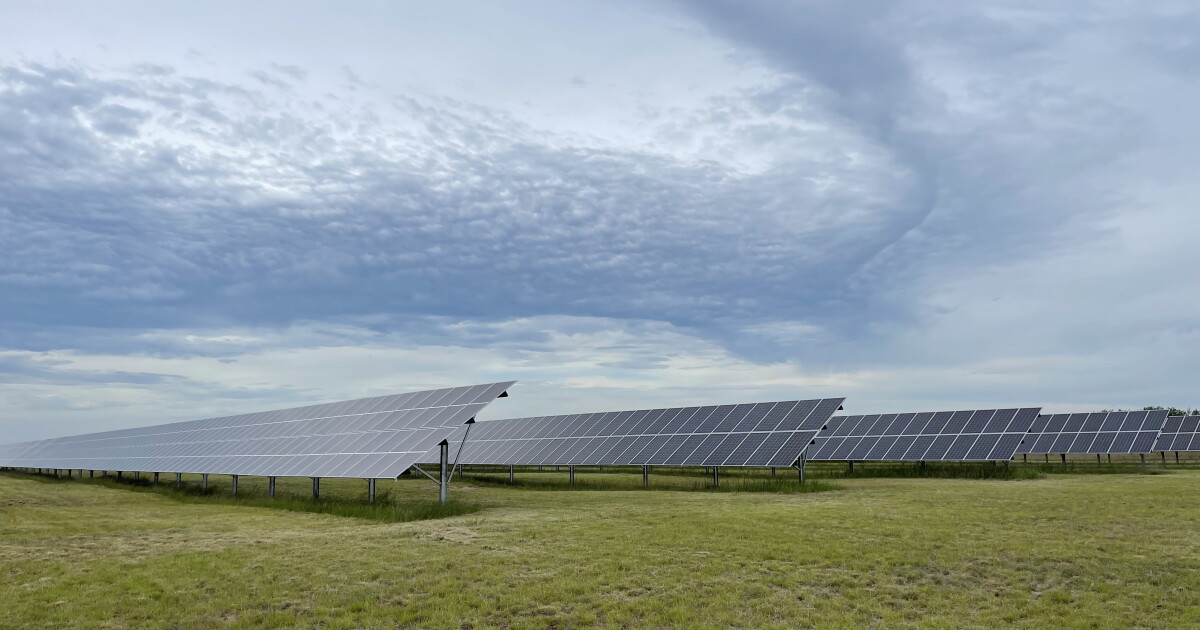
A major legal battle over who controls renewable energy development in Michigan has reached a pivotal moment — and both sides are walking away claiming a win. The Michigan Supreme Court’s latest ruling on Public Act 233, the state’s 2023 renewable energy zoning law, has drawn a complex boundary between state authority and local government rights.
Passed in 2023, P.A. 233 gives Michigan’s state government the power to override local zoning rules and approve renewable energy projects — but only when local ordinances are found to be overly restrictive. The Michigan Public Service Commission had interpreted “overly restrictive” to mean any local rules that went beyond the law’s specific listed regulations, which cover things like fencing, height limits, and sound levels.
Dozens of Michigan townships pushed back on that interpretation, challenging it in court. They lost at the Court of Appeals level, but kept fighting. When the Michigan Supreme Court issued its order Friday, it upheld most of the law — a result that clean energy advocates immediately welcomed.
Clean Energy Industry Calls the Ruling a Win for Cooperation
Laura Sherman, President of the Michigan Energy Innovation Business Council — a trade organization representing clean energy businesses — argued that the ruling reinforces a framework designed to encourage developers and local governments to work together, not against each other.
She noted that going to the state for project approval comes with real costs, including fees that often flow back to local governments anyway. That dynamic, she said, gives both sides an incentive to reach agreements at the local level.
“If you want to be assured that a project cannot go to the state, then you set up a local ordinance that has these very clear requirements. Today, [it] has been affirmed by the Supreme Court that those are the simple requirements,”
Sherman said.
Townships Claim Their Own Victory on a Key Definition
Despite the broader ruling going against them, the townships scored a significant win on a separate but important question: which local governments qualify as an “affected local unit” with the right to negotiate with energy developers.
Previously, the Public Service Commission had defined that term narrowly — only local governments with direct zoning authority over a proposed project site were considered affected parties. Both the Court of Appeals and the Michigan Supreme Court rejected that interpretation as too limiting.
Under the new standard, any local government whose community is touched by a project — even if it doesn’t hold zoning authority — is considered an affected party with rights under the law. For counties and municipalities that might experience a project’s impacts without having formal zoning control, that distinction matters enormously.
Michael D. Homier, the Foster Swift attorney serving as lead counsel for the townships, called the development a meaningful step forward for local governments across the state.
“This is an important win for counties and other local governments that may not exercise zoning authority over a project site but will nevertheless experience the project’s impacts,”
Homier said in a press release.
“The decision confirms that those communities cannot be excluded from the rights and protections the Legislature provided under PA 233 simply because another local government exercises zoning jurisdiction.”
One More Question Still to Be Decided
While the Supreme Court’s ruling resolves several contested issues, it has set up oral arguments for January on one remaining question: how much time local governments have to respond to developer proposals before the state can step in.
Sherman made clear that whatever the court decides, there are limits to how long local governments can stall. The law, she emphasized, was never meant to give communities an indefinite window to delay projects.
“The intent of the Legislature was really clear, that you want to give local governments the opportunity to regulate these projects, but if you choose not to do that, they cannot delay in perpetuity, that was one of the reasons that this law passed in the first place,”
she said.
The January arguments will determine the final major unresolved piece of how Michigan balances the push for renewable energy expansion with the rights of local communities to have a say in what gets built in their backyards.






Comments are closed.