
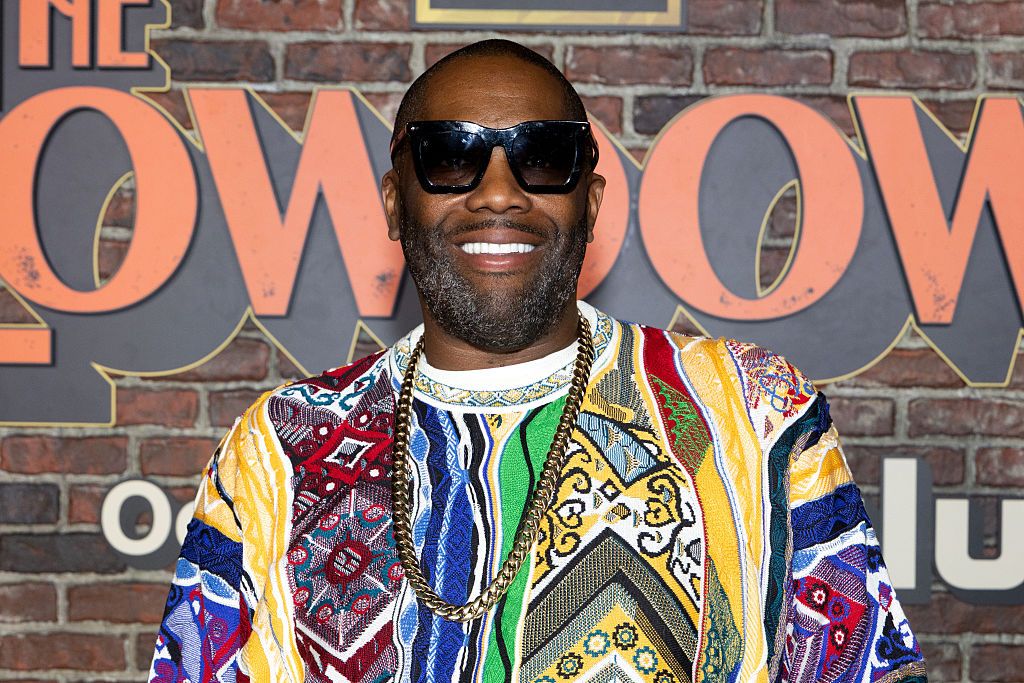
Rapper and activist Killer Mike has long positioned himself as a voice for Black liberation — but a recent interview is reigniting a debate about whether his political alliances undercut that message. The conversation, recorded inside the childhood home of slain Fred Hampton, is drawing fresh scrutiny from critics who say the setting only sharpens the contradiction.
The interview, released October 14 on The Vic Mensa Show, took place in the home where the Black Panther Party chairman grew up before he was killed by police in 1969. Host Vic Mensa and Killer Mike discussed topics including Black liberation, political organizing, Cop City, and Mike’s working relationship with Georgia Governor Brian Kemp. They also addressed the “move like a capitalist” phrase that has made Killer Mike a recurring subject of online criticism and memes.
Mike pushed back during the interview, saying he never claimed to be a capitalist and defending his approach of engaging with political leaders whose views he does not share. His argument, broadly, is that being in the room with powerful people creates opportunities to get things done on behalf of Black Americans.
A Pattern of Conservative Ties
The interview is not the first time Killer Mike’s political choices have attracted criticism. He previously sat for an NRA interview that drew widespread criticism after the organization used his comments to promote its own agenda. Mike later apologized for the timing and how his words were used. He has also conducted interviews with Herschel Walker and Kemp — two Republicans whose political records have faced scrutiny from advocates of Black civil rights.
Kemp, in particular, has been a flashpoint. Critics have long described him as a political magician who made Black votes disappear, pointing to his record on voter suppression in Georgia. Kemp’s 2018 gubernatorial race was against Stacey Abrams, who would have become the first Black female governor in U.S. history had she won.
When critics raise these points, Mike has at times responded in ways that focus on the financial standing of those questioning him — an approach that some have characterized as dismissing dissent rather than engaging with it. The criticism, as observers note, is not rooted in jealousy but in a request for accountability: what, specifically, has been accomplished for Black Americans as a result of these political relationships?
Funding Model and Hampton Home
Separate from the political debate, Killer Mike is currently promoting a grassroots funding model in which one million people would each contribute $10 per month to support movement infrastructure. Initial efforts under this model would focus on preserving Hampton’s childhood home — the same location where the Vic Mensa interview was recorded.
Community-based funding is a recognized organizing strategy, and the preservation of Black historical sites carries broad support across ideological lines. The blending of that initiative with Mike’s broader political positioning, however, is what critics say creates confusion about where he actually stands.
Questions About Credibility and Consistency
Killer Mike built much of his reputation through his work with Run the Jewels, a rap duo whose music consistently challenged institutional power, confronted racism, and encouraged listeners to question those in authority. His solo work and public commentary have often carried similar themes. That history is part of why his current political associations draw such pointed reactions — the gap between the music and the choices feels wide to many observers.
The core tension, as critics frame it, is not whether Killer Mike has the right to engage with conservative politicians or build a business empire. He does. The concern is whether someone who presents himself as a champion of Black liberation can do so credibly while repeatedly lending his platform to figures whose political records conflict with that goal — and whether dismissing critics as financially unqualified is a sufficient response to legitimate questions.
As one line of criticism puts it: being in the room is not the same as changing the room. And proximity to power, as history has repeatedly shown, does not come with a guarantee of protection from the systems that power upholds — regardless of one’s bank account or political access. Trump-era politics only sharpened that reality for many Black Americans watching these alliances form in real time.
The debate over Killer Mike reflects a broader, ongoing question in American public life: when public figures claim to speak for a community while building relationships with that community’s political opponents, what standard of accountability should apply? That question doesn’t have an easy answer — but the Vic Mensa interview suggests it isn’t going away anytime soon.


Comments are closed.