
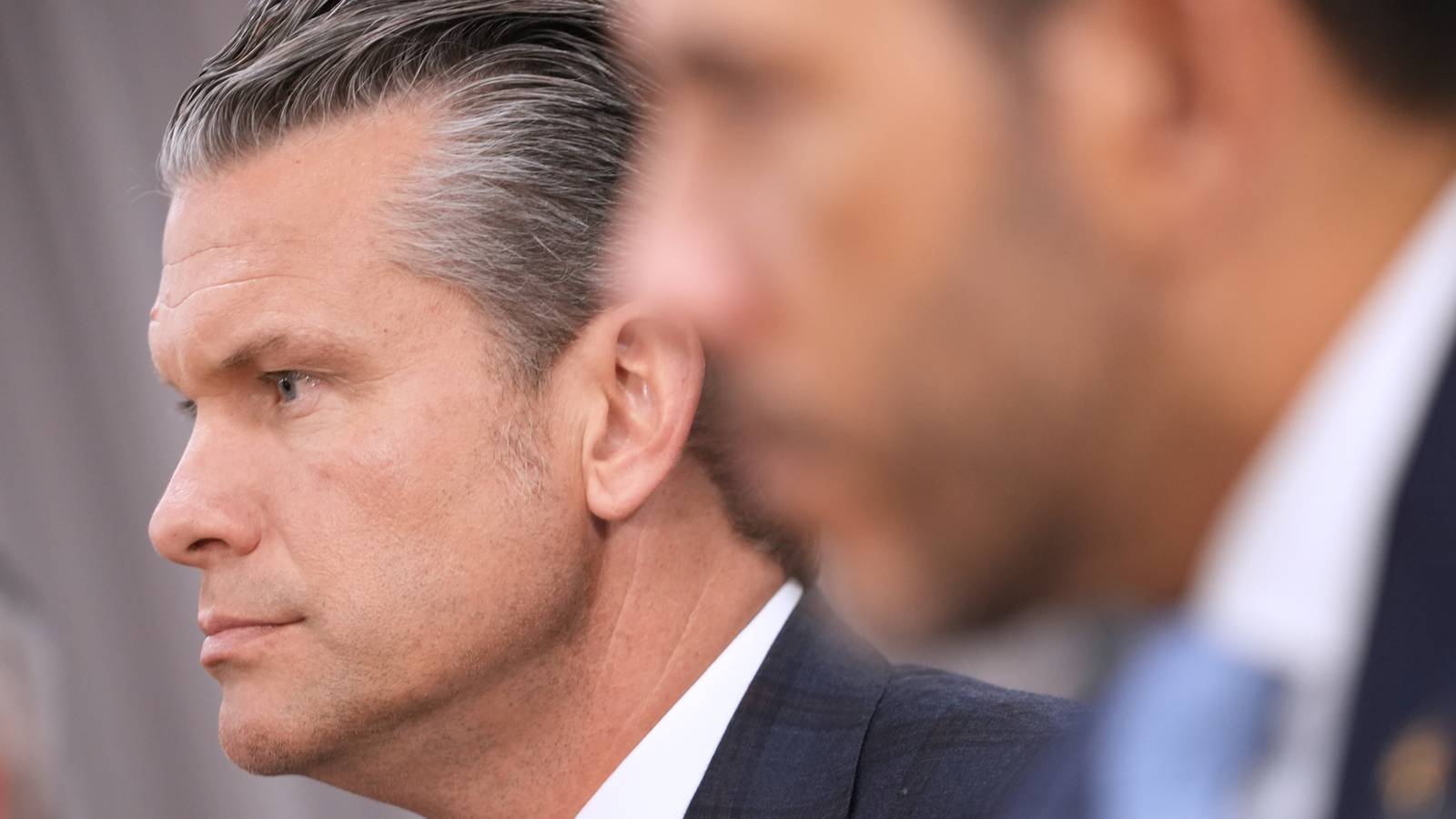
When a Defense Secretary’s own former chief of staff publicly calls for his resignation, it signals a level of internal dysfunction that goes beyond ordinary political friction. That is exactly the situation now surrounding Pete Hegseth, as criticism from within the Pentagon’s own orbit continues to grow.
Joe Kasper, who served as Hegseth’s chief of staff during the first three months of the Trump administration, sat down with Politico for an hourlong interview and delivered a pointed verdict on his former boss.
“Pete’s ability to be effective has been constrained and very soon he’ll have lost any ability to be effective,”
Kasper said.
“For that reason and others it’s time for Pete to call it quits.”
The Pentagon pushed back swiftly. A senior official dismissed Kasper as a
“disgruntled former staffer—someone who could barely survive ninety days in the building—is now peddling made-up gossip to the media.”
The official added that
“Secretary Hegseth is laser focused on restoring lethality to the force and supporting our war fighters, while Mr. Kasper is more focused on rewriting history to cover for his own failed tenure.”
A Record of Controversy
Hegseth has faced a steady drumbeat of criticism since taking office. Among the most contentious issues are lethal strikes on suspected drug boats in Latin America that were carried out without congressional authorization, and the ongoing U.S. conflict with Iran. Hegseth’s communications mishap on the Signal app also drew intense scrutiny earlier this year.
More recently, members of Congress objected to a classified Pentagon memo that restricted routine professional and social contact between U.S. service members and Canadian troops — an unusual move that raised eyebrows on both sides of the aisle.
Hegseth also faced a formal impeachment resolution from Republican Rep. Thomas Massie, which accused him of dismantling civilian-harm mitigation offices at the Pentagon ahead of a deadly bombing at an Iranian elementary school. The resolution ultimately failed after multiple Democrats missed the vote. Despite the criticism, President Donald Trump has continued to express support for his Defense Secretary.
Firings and Fallout
Kasper, an Air Force veteran, took particular issue with Hegseth’s pattern of firing top military leaders. Hegseth removed the Army’s top general, Gen. Randy George, along with two other senior officers nine months ago. Then in October, he fired Maj. Gen. Brett Sylvia, the Pentagon’s top military planner, over alleged leaks about the Iran War and the Russia-Ukraine conflict to the media.
Three additional senior defense officials — Dan Caldwell, a former senior adviser to Hegseth; Darin Selnick, his deputy chief of staff; and Colin Carroll, former chief of staff to Deputy Defense Secretary Stephen Feinberg — were placed on administrative leave and later fired after being accused of leaking classified information. Kasper said there was no evidence any of them leaked to the media.
Kasper described Hegseth’s management of the Iran war as a
“s— show”
and said Hegseth was
“all about Pete rather than the institution and the men and women who support it.”
“There’s quite an emphasis on the showmanship,”
Kasper claimed.
“The virtues of humility and basically service before self and those things have disappeared. I didn’t see those at the start, and see them ever less so now.”
Congressional Relations Under Strain
Beyond the internal firings, Kasper warned that Hegseth’s strained relationship with Congress could have real financial consequences for the military. The Trump administration has proposed a $1.5 trillion defense budget — which would be the highest ever — but Kasper argued that Hegseth’s approach to lawmakers puts that goal at serious risk.
“He’s not just burned bridges up on the Hill,”
Kasper said.
“He’s napalmed them. … He’s going to be suffocated, and it’s not like it’s going to be a slow suffocation. It’s going to be a quick asphyxiation.”



Comments are closed.