
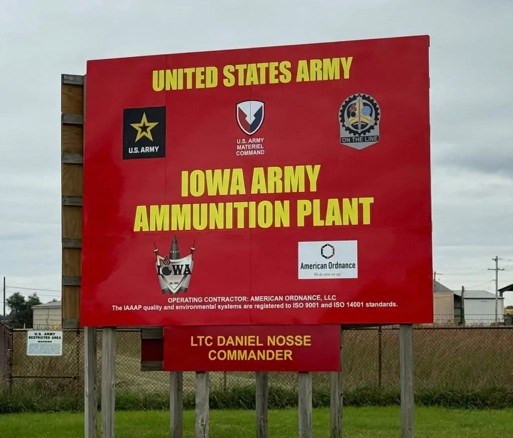
Thousands of pounds of highly unstable explosive material sitting at a U.S. Army facility in Iowa are raising alarm across two states — and now the military has been forced to hit pause on its plan to blow it up. The Army’s acting secretary announced a short delay to the controversial detonation, buying a few extra days after a wave of public outcry and bipartisan pressure from elected officials.
Acting Army Secretary Adam Telle confirmed Thursday that the planned detonation of more than 9,000 pounds of degraded lead azide at the Iowa Army Ammunition Plant near Burlington has been pushed from Friday to Monday. Telle framed the delay as a matter of safety and communication, but stressed that it cannot be postponed much longer.
“This will delay the detonation until the latest possible moment prior to a forecasted temperature drop, which would risk further destabilization of the material,”
Telle said in a statement posted to social media.
Why the Army Says It Has No Choice
Lead azide is an extremely sensitive compound commonly used in blasting caps and detonators. According to the Army, the stockpile stored at the plant has degraded to a point where it is too unstable to move safely — and colder temperatures make the situation even more dangerous. Army spokeswoman Justine Barati explained the urgency to Iowa Public Radio:
“The primary concern that we have right now is that lead azide can become more volatile when it is exposed to lower temperatures, and as the weather in Iowa gets colder, we’re very concerned that there could be uncontrolled detonation.”
The Army’s 41-page environmental assessment explains that chemical neutralization — a possible alternative to detonation — is not a viable option here. The lead azide has crystallized, making it extremely sensitive to any physical contact. The report states:
“The chemical neutralization process requires significantly more ‘hands-on’ time and physical manipulation of the drums by personnel over a prolonged 7- to 22-day period, drastically increasing the probability of accidental, fatal detonation during handling.”
The report added that because of the fluid mixture surrounding the lead azide, complete chemical neutralization was also uncertain.
What the Blast Could Mean for Nearby Communities
Lead is a highly toxic heavy metal with no safe level of exposure in the human bloodstream, according to the National Institute of Environmental Health Sciences. It is especially harmful to young children and pregnant people, affecting brain development and causing lasting health problems. Lead can enter the body through contaminated food, water, or by inhaling dust or fumes.
The Army has acknowledged that its own modeling predicts elevated lead particle levels in the air following the detonation. A map released Wednesday showed lead surface dispersion stretching dozens of miles, with air dispersion patterns moving northward over time — affecting areas in both Iowa and Illinois.
Residents of Middleton, Iowa, have been told to shelter in place between 8 a.m. and 2 p.m. local time on the day of detonation, or to seek shelter at the Armed Forces Reserve Center. The Army is advising everyone in potentially affected areas to stay indoors, keep doors and windows closed, and clean both indoor and outdoor surfaces after the blast.
To reduce contamination, the Army says the lead azide barrels will be detonated inside concrete bunkers covered with earth and surrounded by sand-filled barriers roughly two stories tall. Officials also plan to soak the soil above the bunkers and spray water during the detonations in an effort to limit how far lead-contaminated dust travels.
Public Pushback and Lawmaker Pressure
The announcement of the detonation plan triggered swift and widespread opposition. Protests erupted across Iowa last week, and an online petition demanding the detonation be stopped had gathered more than 14,000 signatures as of Friday. A bipartisan group of federal lawmakers also sent a letter to the Army urging a delay, citing a troubling lack of outreach — communities in Iowa and Illinois only learned about the operation earlier this week.
“Our offices have received reports of poor communication from the Army and EPA about the detonation plans and anticipated monitoring after the detonation,”
the legislators wrote.
“In addition, there are significant concerns about appropriate Army and EPA oversight of this contractor-operated facility, the site of which remains on the Superfund list. We urge you to examine the contractor’s handling of this and other hazardous material to prevent any future issues.”
Regulatory Action and a History of Violations
The U.S. Environmental Protection Agency issued an emergency permit for the detonation, concluding that the degraded state of the lead azide
“presented an imminent and substantial threat to human health and the environment.”
The permit requires pre- and post-blast air and soil sampling, as well as cleanup of any contaminated areas.
The Iowa Army Ammunition Plant, which produces medium- and large-caliber ammunition for the Department of Defense, has a checkered recent history. In 2023, federal inspectors found that workers had incorrectly detonated explosives at the facility. In 2024, the EPA fined both the Army and plant operator American Ordnance for alleged regulatory violations, according to reporting by the War Horse. The Army has since been modernizing the plant and building new facilities in other states to ramp up projectile production by the end of 2027.






Comments are closed.