
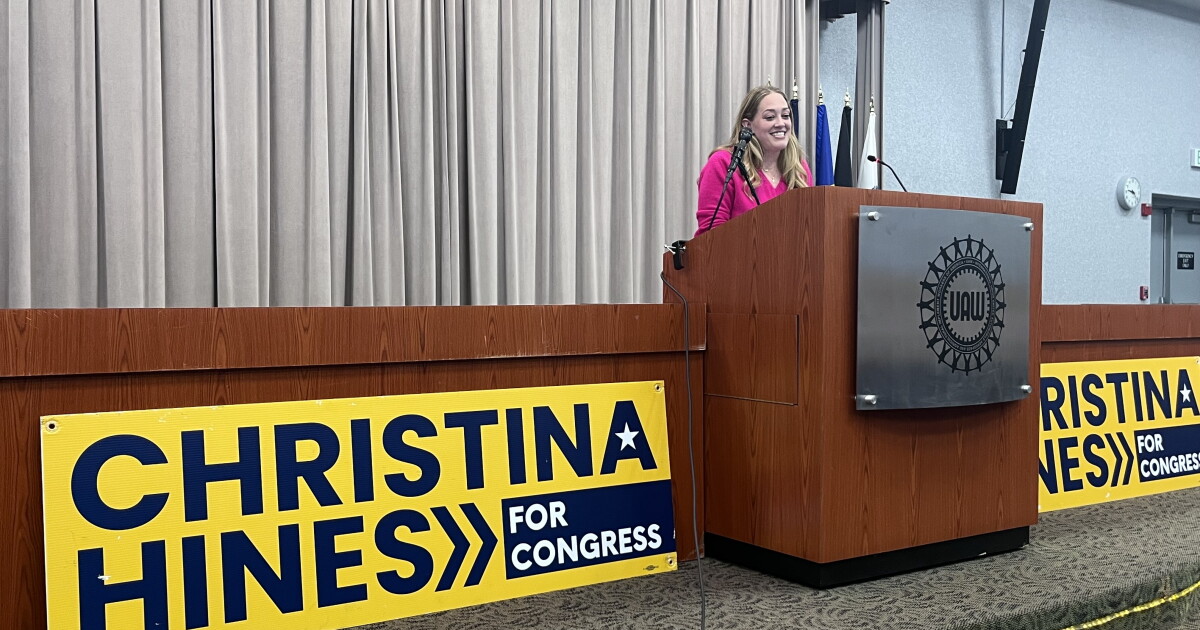
When a new member of Congress arrives in Washington having personally relied on Medicaid, watched a parent battle chronic illness, and seen a spouse lose a job tied to federal trade policy, healthcare stops being an abstract debate — it becomes personal. Christina Hines, the newly elected Democratic representative for Michigan’s 10th Congressional District, brings exactly that kind of lived experience to Capitol Hill as she prepares to take office in January.
Hines, a former special victims prosecutor, beat Republican Mike Bouchard with 52.4% of the vote in a district covering Macomb County and parts of Oakland County in southeast Michigan. The seat was previously held by Republican John James. In an interview with Stateside host April Baer, Hines laid out her priorities — and healthcare sat near the top of that list.
A Broken System, Felt at Home
Hines doesn’t speak about the American healthcare system the way most politicians do. She describes it from the inside — as a patient, a caregiver, and a person who has navigated financial hardship firsthand. She has been on Medicaid. She spent years helping care for her mother, who lived with chronic health conditions throughout her life before passing away. Those experiences, she says, have shaped an urgent conviction.
“When I think about health care and how bad our system is, it makes me kind of come to this conclusion that I will do anything to try to help fix it,”
Hines said.
“And I think that it’s going to be up to us to find those bipartisan solutions, because I don’t want something that only a certain, small percentage of the people here want.”
That push for broad, durable solutions is rooted in what she says she heard consistently while campaigning across her district — from families struggling to pay monthly premiums, to residents rationing prescription medications because they can’t afford refills. The crisis, she argues, doesn’t sort itself by party.
“If you look, there are Republicans and Democrats alike and independents in our district that are struggling to pay their healthcare bills, that are struggling to pay their prescriptions,” Hines said. For her, that shared burden is exactly why a partisan-only approach won’t hold.
Medicaid Cuts and the Threat to Rural Hospitals
One of Hines’ most urgent concerns involves what happens when Medicaid funding gets cut — not just to individual households, but to entire communities. Rural and regional hospitals operating on thin margins depend heavily on Medicaid reimbursements to stay open. When that funding shrinks, so does the hospital itself.
“We are seeing, because of the cuts to Medicaid, rural health systems in this country that are going to completely collapse and close,” Hines warned. For families who live miles from the nearest emergency room, or who rely on a local clinic for prenatal care, mental health services, or cancer screenings, a hospital closure isn’t just an inconvenience — it can be life-altering.
She called for a lasting, bipartisan healthcare solution — one that stabilizes coverage access, keeps hospitals open, and ensures that people across income levels can afford the care they need.
Tariffs, Job Losses, and the Cost of Getting Sick
The connection between economic stability and healthcare access came into sharp focus for Hines during the campaign — and hit close to home. Her husband lost his job at General Motors as a direct result of Trump’s tariff policies. GM laid off more than 1,200 workers tied to those policy decisions, sending shockwaves through Macomb and Oakland Counties.
When a worker loses their job, they often lose their employer-sponsored health insurance along with it. For families already stretched thin, that gap in coverage — even a few months without insurance — can mean skipping a doctor’s visit, going without a prescription, or facing devastating medical debt from an unexpected illness or injury.
Hines also recounted a conversation with a local tow truck business owner whose diesel costs had grown so steep he was operating on roughly 3% profit margins. He’d had to raise prices to stay open, cut workers, and watch business decline — a chain reaction that ripples outward, affecting the financial security of his former employees and their families, including their ability to cover healthcare costs.
“People all over the Southeast Michigan area are really feeling the impacts every day,” she said. “And it’s not just costs, it’s jobs too.”
From the Courtroom to Congress
Before entering this race, Hines served as an assistant prosecuting attorney in Wayne County and later led the Special Victims Unit in Washtenaw County. She ran for Macomb County Prosecutor in 2024, losing to Peter Lucido. That race, she said, sharpened her ability to listen to voters. Her congressional campaign team knocked on nearly 100,000 doors across the district.
“You can have systematic change as a line prosecutor, but most of the time, you’re helping individuals and you’re helping families kind of on a case-by-case basis,”
she said.
“And I think that on the legislative side, we have so many opportunities to really change the system.”
That shift in scale — from individual cases to systemic reform — is what drew her into politics. She’s also committed to what she calls the nuts-and-bolts of representation: making sure every constituent who calls her office gets a real response and real help navigating federal systems, including healthcare programs.
Hines also highlighted the role that political corruption plays in blocking commonsense health policy. She argued that corporate lobbying and special interests keep legislators from delivering meaningful reforms — on healthcare, on gun safety, and on cost-of-living pressures alike. She said she has already signed on to a proposal banning House members from trading stocks, framing it as a first step toward restoring accountability in Congress.
As she prepares to be sworn in on January 3rd, Hines says her goal is straightforward: make sure the families who built communities like Macomb County can still afford to live in them — and to get the medical care they need when they need it.







Comments are closed.