
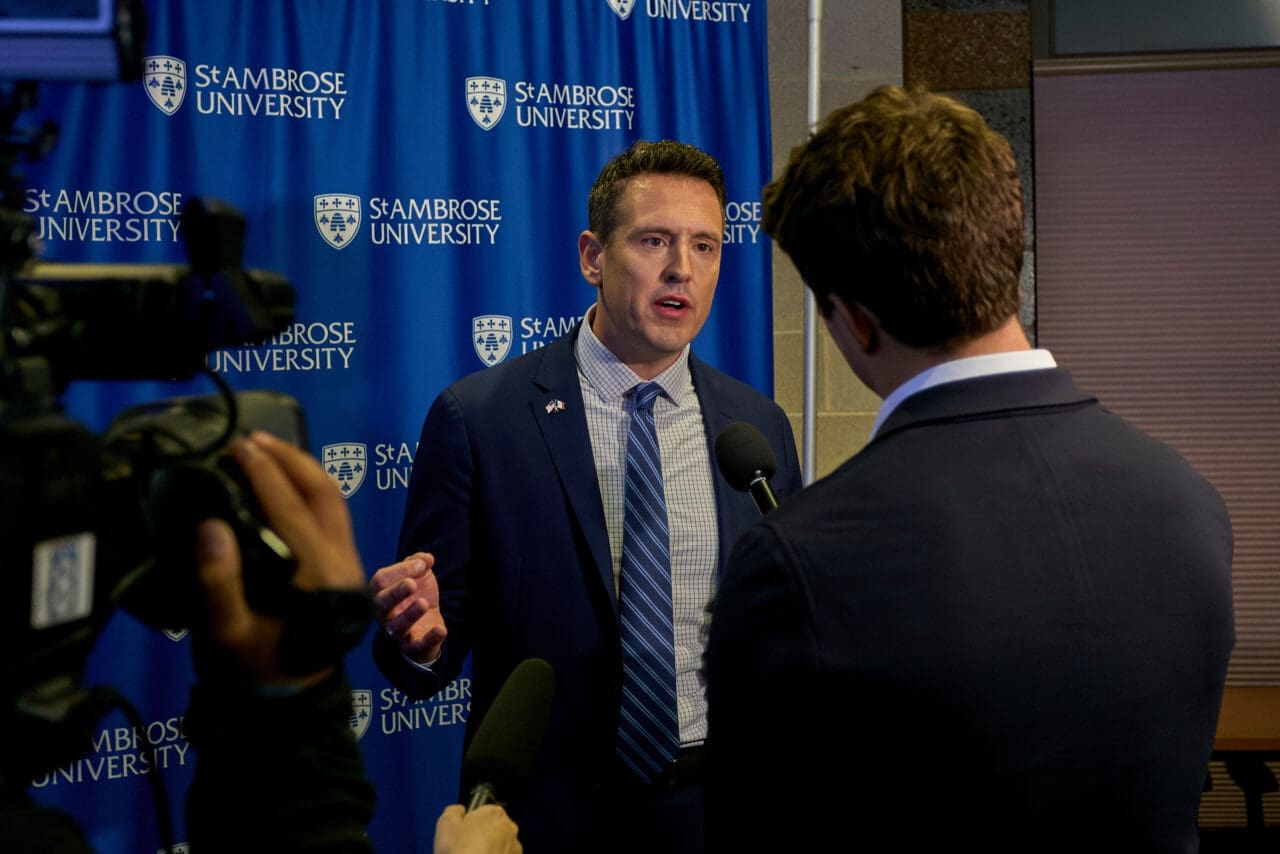
For many Iowa families — especially those in rural communities — seeing a specialist or even a primary care doctor can already feel like a logistical challenge. Now, a proposal from Republican gubernatorial candidate Zach Lahn to ban H-1B visa holders from working in Iowa’s state government and universities is raising serious questions about what that could mean for the state’s hospitals, medical schools, and the patients who depend on them.
H-1B visas are one of the primary pathways that American hospitals, clinics, and university medical programs use to recruit foreign-trained physicians, nurses, researchers, and other specialized health professionals. According to reporting by PBS NewsHour, there is little evidence that H-1B workers take jobs away from Americans — and in healthcare, they often fill critical gaps that domestic training pipelines simply cannot meet fast enough, particularly in rural and underserved areas.
What makes Lahn’s pledge especially notable is his own history with the program he now wants to restrict.
Lahn’s School Used the Program He Now Wants to Ban
In 2018, Lahn and his wife co-founded Wonder, a nontraditional private school in Wichita, Kansas. That same year, the school petitioned the federal government for two H-1B visas — one was approved and one was later withdrawn. The school petitioned for another H-1B visa in 2021, with Lahn listed as the primary point of contact on the application.
Yet today, Lahn’s Iowa gubernatorial campaign prominently features a pledge to cut off exactly that kind of hiring in state institutions. His campaign website states he will “stop issuing H-1B visas for jobs that Iowans can do in state government and in our universities.” In a recent campaign ad, he went further, saying directly to the camera:
“We’ll ban H-1B visa holders from being hired by Iowa government and universities.”
Legal experts note that it is not entirely clear whether a governor could actually enforce such a ban in a legally binding way. But the policy intent — and its potential consequences for Iowa’s healthcare infrastructure — is worth understanding.
What a Ban Could Mean for Iowa Patients and Families
Iowa’s state universities, including the University of Iowa, operate major medical centers, teaching hospitals, and research programs that serve patients across the state. These institutions regularly rely on H-1B visa holders to staff specialized medical roles — from oncologists and cardiologists to psychiatrists and medical researchers — positions that are notoriously difficult to fill with the domestic workforce alone.
Rural Iowa communities face an especially acute shortage of physicians and mental health providers. Foreign-trained doctors on H-1B visas are disproportionately more likely to practice in rural and underserved areas, in part because of visa conditions tied to working in shortage areas. A blanket ban on H-1B hiring at state universities and government entities could shrink the pipeline of doctors willing to serve in these communities — making it harder for families to access primary care, specialty services, or mental health treatment without traveling long distances or waiting months for an appointment.
For a family managing a chronic illness, a child who needs a specialist, or an elderly parent requiring ongoing care, that kind of disruption can translate directly into worse health outcomes and higher out-of-pocket costs when conditions go unmanaged.
Context and Credibility Questions
Lahn has also faced scrutiny over his ties to Kansas. He has been criticized for maintaining a residence and business connections in Kansas while seeking to lead Iowa. His Democratic opponent, state auditor Rob Sand, currently holds a comfortable lead in multiple polls.
The H-1B program itself allows employers to sponsor nonimmigrant workers with specialized skills for positions in the United States. American employers — including school systems, hospitals, and universities — initiate the process by petitioning the federal government. President Trump and some Republicans have argued the program displaces American workers, but as experts have noted, the evidence for that claim is thin — especially in fields like medicine, where shortages are well-documented.
For Iowa families already navigating a strained healthcare system, the stakes of this debate extend well beyond immigration politics. Whether it’s a parent trying to find a psychiatrist for their teenager, a rural resident seeking cancer treatment close to home, or an uninsured worker relying on a university health clinic, the availability of qualified medical professionals shapes the quality and affordability of care that real people receive. Policies that limit the flow of specialized healthcare workers into Iowa’s institutions could quietly but significantly affect who gets care — and who doesn’t — in communities across the state.
Readers can follow ongoing coverage of the 2026 Iowa governor’s race and related policy developments at American Journal News. Reporting by Jesse Valentine. This content is available under a Creative Commons Attribution 4.0 International License.





Comments are closed.