
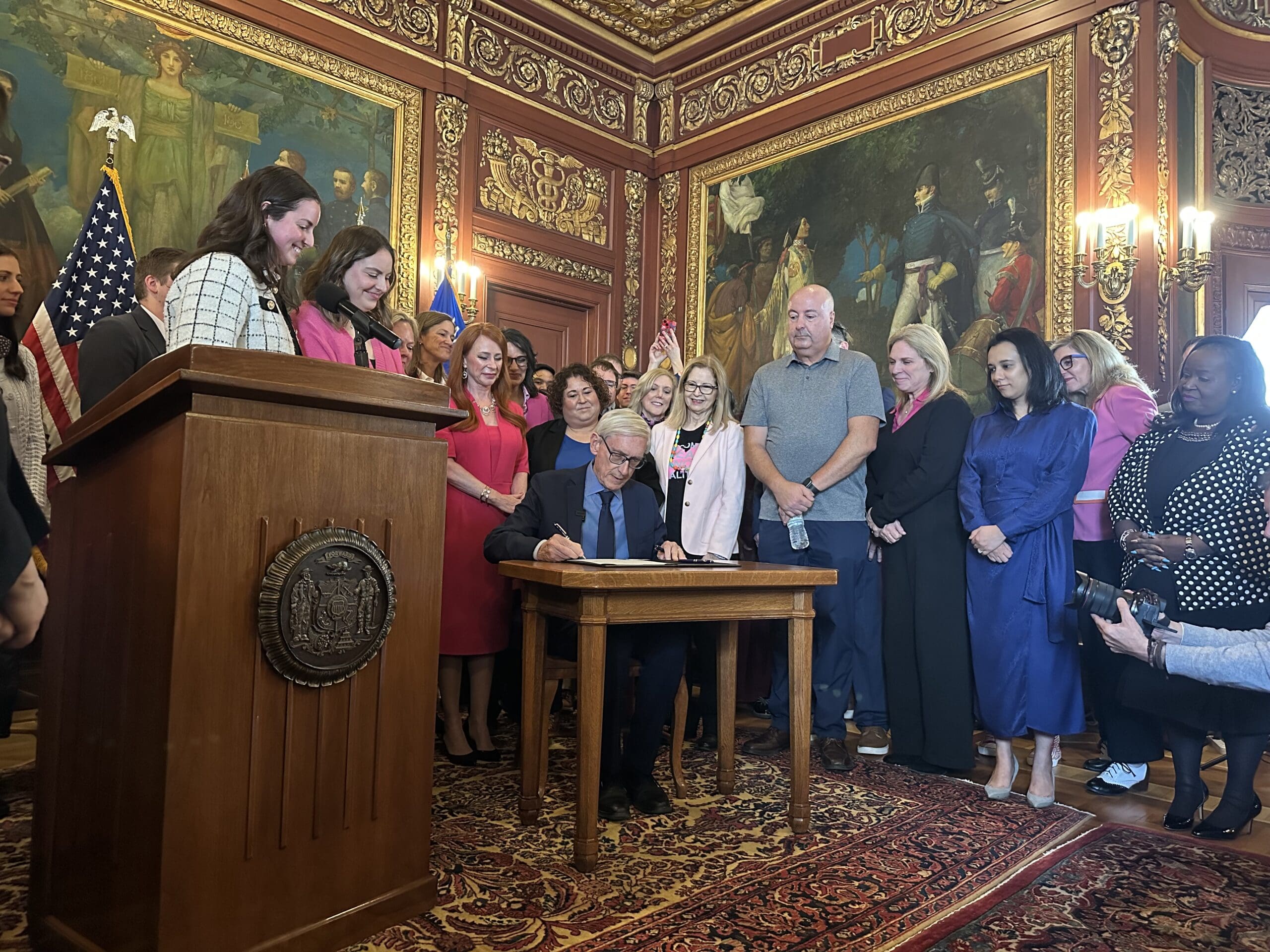
In a significant move to enhance healthcare access, Gov. Tony Evers has enacted a new law aimed at improving breast cancer screening in Wisconsin. The law, named Gail’s Law, mandates insurance coverage for supplemental breast screening exams, particularly benefiting individuals with dense breast tissue who are at a heightened risk of developing cancer.
The governor’s conference room at the state Capitol was a sea of pink as lawmakers, advocates, and the family of Gail Zeamer gathered to witness the signing. Gail Zeamer, in whose honor the law is named, was diagnosed with late-stage breast cancer in 2016. Despite regular mammograms, her dense breast tissue masked the disease, which was only discovered at Stage III. Zeamer passed away in 2024, but her legacy now lives on through this legislative change.
Claudia and Sophie, Gail’s daughters, spoke emotionally about their mother’s enduring impact. “I feel very lucky knowing that my mom is now part of history,” Claudia shared. Sophie expressed gratitude towards supporters, stating, “I know my mom is extremely proud of everyone.”
According to the American Cancer Society, approximately 6,000 women in Wisconsin are expected to be diagnosed with breast cancer in 2026. The CDC highlights that breast cancer has the highest treatment costs among cancers, which underscores the importance of early detection.
The Mayo Clinic explains that dense breast tissue can obscure cancer detection in mammograms, a challenge affecting nearly half of women over 40, according to the Breast Cancer Research Foundation.
The Journey to Legislation
Dawn Anderson, a long-time member of the Wisconsin Breast Cancer Coalition, recalled the arduous path to passing Gail’s Law. Initially introduced in 2021, the bill faced setbacks without a committee hearing. However, persistence from the Early Detection Saves Lives Coalition rekindled legislative interest in 2023.
Despite progress, the removal of MRI coverage from the bill’s protocols led to a withdrawal of support from advocates like Anderson. “That is the one that is most recommended for high-risk women with dense breasts,” she noted. Ultimately, the bill was revised and passed unanimously in the Assembly in 2025.
Anderson emphasized the grassroots effort behind the law, “It’s just us and our voices and sharing stories,” she said. “It really shows the power of people’s voices. You can show a need and just keep using your voices. Good things will happen.”
Through Gail Zeamer’s story and the tireless work of her family and advocates, Gail’s Law stands as a testament to the impact of personal stories in shaping public policy.