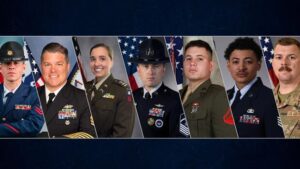
Honorable service requires courage on the battlefield, but it also requires courage in the Situation Room, in the Pentagon, and anywhere military leaders serve our country.
14 April 2026 – A new legal memo from the Former JAGs Working Group offers a sober reminder to America’s senior military leaders: the oath is not a formality. It is a duty.
The memo, Legal Foundations of Honorable Military Service, is not a call for insubordination. In fact, the authors explicitly state that they are not urging disloyalty, mutiny, refusal of duty, or interference with military discipline. Their point is the opposite: lawful discipline depends on lawful orders, and honorable service requires fidelity to the Constitution, the rule of law, and the oath every officer swears.
For those who care about the men and women ordered to carry out military missions, that distinction matters. Political leaders should not place senior officers — or the service members under their command — in the position of executing questionable or unlawful orders rooted in political agendas rather than lawful authority.
The former JAGs’ guidance is aimed especially at senior leaders: combatant commanders, members of the Joint Chiefs of Staff, and officers advising the President and Secretary of Defense. These leaders are not simply expected to salute and move out. They are expected to advise, question, and ensure that military power is used lawfully.
At the heart of the document are nine principles the authors say define honorable military service:
- An officer’s first duty is to the Constitution and the rule of law. Loyalty to the Constitution comes before loyalty to any individual officeholder.
- The Constitution, federal law, and treaties are the supreme law of the land. The president and the military chain of command are bound by them.
- Civilian control is constitutional, but unlawful conduct cannot be required. Orders are presumed lawful, but only lawful orders must be obeyed.
- War powers are legally complex, but not law-free. Senior officers must consider whether armed conflict has a lawful domestic and international basis.
- Domestic military operations also require constitutional restraint. The brief stresses that officers must protect civil rights and refuse patently unlawful orders, including unlawful force against peaceful civilians.
- Senior officers are bound by exemplary conduct, the oath, and military law. The brief links honorable leadership to legal responsibility under the UCMJ and federal statutes.
- Honor and integrity are professional standards, not slogans. The authors argue that moral courage is as central to military competence as operational skill.
- Rationalizing unlawful orders violates the oath. Career risk, political pressure, or the belief that “someone else will do it anyway” are not legitimate excuses.
- Officers facing suspected unlawful orders should follow a clear path: raise concerns, formally object, seek reassignment or retirement, and disobey only as a last resort when convinced an order is patently unlawful
That final point is crucial. The former JAGs are not encouraging chaos in the ranks. They are offering a disciplined legal and ethical framework for senior officers who may face extraordinary pressure. Their recommended path begins with counsel, clarification, and objection.
This is ultimately a brief about honor. It argues that senior military leaders protect both the Constitution and the troops beneath them when they insist that military operations remain grounded in law. The burden of unlawful decision-making should not be pushed down onto service members who trust their leaders to send them only on missions that meet America’s legal and moral standards.
For military families, veterans, and advocates, the message is clear: defending the force means defending the rule of law. Honorable service requires courage on the battlefield, but it also requires courage in the Situation Room, in the Pentagon, and anywhere military leaders serve our country.