
The U.S. Supreme Court is preparing to weigh in on one of the most consequential immigration questions in a generation: Can a president unilaterally shut down the asylum system without an act of Congress? The answer could determine the fate of thousands of people who say their lives depend on it.
Since President Trump returned to office, his administration has moved swiftly to dismantle the asylum process — suspending claims at the southern border, canceling thousands of pending cases, and replacing experienced immigration judges with new hires critics call rubber-stampers. The cumulative effect, according to immigrant advocates, is that a legal protection enshrined in federal law has been effectively switched off.
The Asylum Ban and What’s at Stake
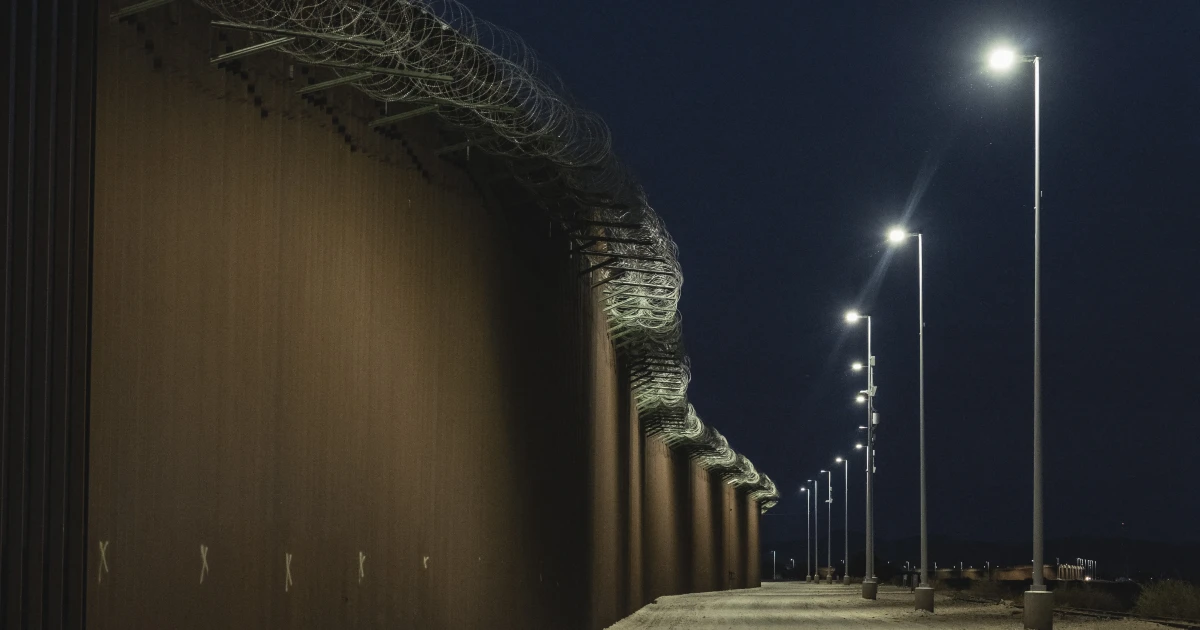
The legal challenge to the president’s asylum ban — which took effect within hours of Trump’s inauguration — is now headed to the Supreme Court. The ban was based on a presidential proclamation that framed the situation at the southern border as an “invasion” requiring emergency action. Two lower federal courts have already rejected the administration’s argument, though the ban has largely remained in place while litigation continues.
The administration defends the policy by pointing to a dramatic drop in border crossings. U.S. Customs and Border Protection data shows Southwest border apprehensions fell below 99,000 in fiscal year 2026 — a 95% decline from the more than 1.8 million recorded annually under President Biden.
Simon Hankinson, a senior research fellow with the Border Security and Immigration Center at the Heritage Foundation, described the contrast this way:
“The difference between an average month under Trump and an average month under Biden is just staggering.”
He warned that if the Supreme Court reverses the ban,
“it would be disastrous.”
Hankinson also argues that most migrants crossing the southern border don’t qualify for asylum in the first place.
“And even if they did, they’ve already passed through Mexico, which is a safe third country where they could claim asylum, especially if they’re coming from Venezuela or Afghanistan. So you have a population that overwhelmingly will not qualify under U.S. law for asylum. They’re here because they want to get a job,”
he said.
Opponents of the ban see it very differently. The American Civil Liberties Union is among the groups challenging it in court. Lee Gelernt, lead counsel and deputy director of the ACLU’s Immigrants’ Rights Project, said the core issue is about the limits of executive power.
“The president does not have the right to unilaterally override the protections Congress has afforded those fleeing danger. The courts are right to reject this unprecedented power grab that would put countless lives in danger. We look forward to making our case before the Supreme Court.”
Asylum denial rates back up those concerns. According to data tracked by TRAC, a research project at Syracuse University, national asylum denials reached 94% in June — nearly double the roughly 50% denial rate in 2024, the last full year of the Biden administration.
A Real Case: One Man’s Fight for Asylum
For immigration attorney Madhavi Narayanan of Human Rights First, the legal battles aren’t abstract. She is currently representing a 30-something Ethiopian man identified only as ZG — a name used at his request out of fear of retribution from the Ethiopian government. ZG arrived in the U.S. through Mexico in February 2025 after what Narayanan describes as extensive torture in his home country.
ZG is a member of an Indigenous group in Ethiopia involved in an ongoing armed conflict. Human rights organizations have warned that this group faces risk of atrocities against civilians. Narayanan said she has spent nine months building a case supported by documents and letters corroborating his torture claims.
“Any other time, it would have been a really straightforward case,”
she said, noting that
“there’s a wide, wide range of human rights reports explaining that folks in this exact position would be at high risk”
of violence and death if returned to Ethiopia.
Instead of an asylum hearing, ZG was issued a deportation order — to Uganda, a country he has never visited and one that does not recognize the military conflict in Ethiopia as a war. The administration argued he could seek asylum there instead.
When Narayanan argued ZG’s case, she said the immigration judge acknowledged her points but indicated he had no room to act on them.
“He was basically like, ‘OK, I hear everything that you said, but I read this case and I’m not allowed to consider this,'”
Narayanan recalled.
In December, the Supreme Court is also set to review the administration’s broader strategy of deporting immigrants to third countries that have agreed to process asylum claims — even when those countries face human rights concerns and cannot guarantee migrants won’t ultimately be sent back to their country of origin. A third legal challenge involves the administration’s effort to hold thousands of people in indefinite detention while deportation proceedings are ongoing.
A Court System Transformed
Beyond the specific policies, critics say the immigration court system itself has been fundamentally remade. The administration has issued nearly 60 policy memorandums during Trump’s second term — compared with 30 total during Biden’s four-year presidency. More than a hundred experienced immigration judges have been fired, and roughly 40% of all immigration judges were either dismissed or resigned during Trump’s first year back in office.
Most have been replaced with what the administration calls “deportation judges.” An essay published in The Yale Law Journal by Geoffrey Heeren, an immigration law professor at the University of Idaho, found that about two-thirds of the new judges come from a homeland security or military legal background, and
“only about eleven of the new [immigration judges] have clear prior immigrant-defense experience, and of those, only one does not also have DHS or military legal experience.”
Trump appointees now make up more than half of the entire immigration bench.
Jennifer Peyton, a former assistant chief immigration judge in Chicago who was fired via email in July 2025 after more than nine years on the bench, said the courts have become unrecognizable.
“Everything is different now,”
she said.
Peyton, who was once part of the Justice Department’s immigration judge hiring and training team, now represents asylum seekers before those same courts. When she appears in front of judges she helped train, she said she feels reassured. When she faces newer hires, she is often troubled by what she sees.
“There is no doubt in my mind, when I have the misfortune to appear before them, that they don’t know the immigration law so much and they don’t care that they lack the training that we so rigorously put them through when I was on that team,”
Peyton said.
She added:
“The vast majority have not been taught the process of evaluating a case, but rather the shortcuts to make sure that these procedural roadblocks come up, to make sure that the noncitizens are stripped of their due process.”
With multiple Supreme Court cases now converging, the rulings expected in the coming months could either cement the administration’s immigration overhaul or force a fundamental course correction — with real consequences for people like ZG who are waiting to find out what comes next.







Comments are closed.