
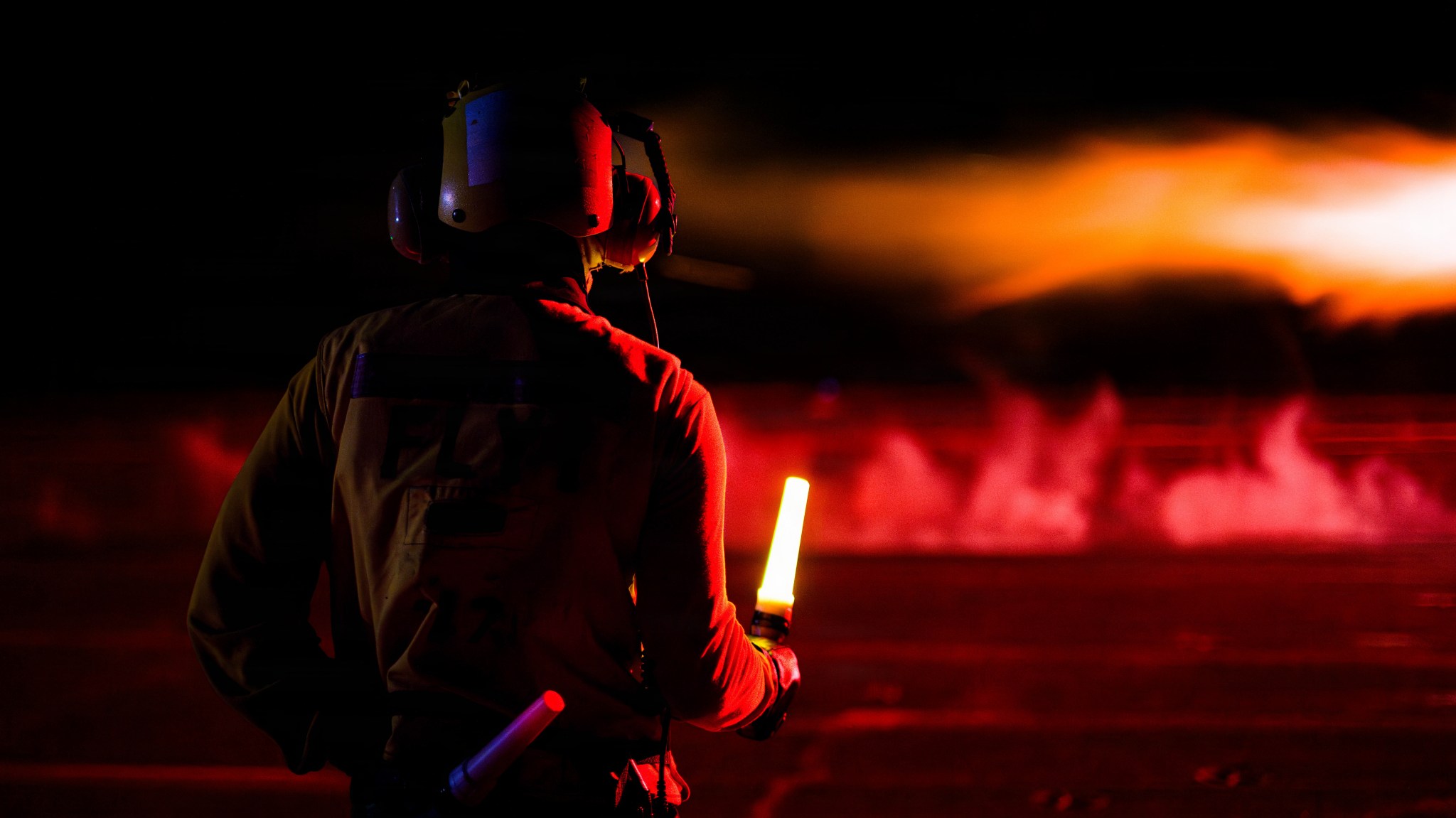
As the U.S. conflict with Iran stretches toward its ninth month, the American military is rotating another massive aircraft carrier into the region — a signal that naval operations in and around the Middle East show no signs of winding down. The USS Theodore Roosevelt has now joined the fight, taking up position in waters where tensions with Tehran remain dangerously high.
The Nimitz-class carrier is officially operating in the Middle East “to support maritime security and stability,” according to the U.S. Navy. The ship departed its homeport in San Diego, California, on September 27, and Navy officials have told families of crew members to expect at least a seven-month-long deployment.
The Roosevelt’s arrival coincides with a fresh round of Iran-related financial sanctions imposed by the U.S. on Monday, targeting networks linked to Iran’s shadow banking system. Iran’s Foreign Ministry responded sharply, warning that it would use all of its tools to confront the U.S. naval blockade in the Strait of Hormuz — a critical chokepoint through which a significant share of the world’s oil supply flows.
Carrier Rotation in a Prolonged Conflict
The Theodore Roosevelt replaced the USS George Washington, which had been operating in the region for approximately three months. The Washington had itself arrived in the Middle East on August 19 to relieve the USS Abraham Lincoln — a carrier that completed a historic 10-month deployment, going 286 days without a single port call.
The Washington had deployed from its Yokosuka, Japan, base in May and is now operating in the U.S. 7th Fleet area of operations, as confirmed by a Navy release. Its stint in the U.S. Central Command area of responsibility was notably shorter than the Lincoln’s roughly seven-month tour.
Not all carrier deployments to the region have followed the same pattern. The USS Gerald R. Ford was sent to the Middle East in February and left in April — a comparatively brief deployment. But the Ford’s nearly eleven-month overall deployment was plagued by significant plumbing problems and an onboard laundry room fire that forced more than 600 sailors out of their sleeping quarters.
Year-Long Deployments Becoming the New Normal
Perhaps the starkest picture of what military families are now facing comes from the USS George H.W. Bush. The carrier left Naval Station Norfolk, Virginia, on March 31 and arrived in the Middle East in April. At a November town hall meeting with Acting Navy Secretary Hung Cao, families of sailors aboard the Bush were told to prepare for a year-long deployment — a timeline that underscores just how demanding this ongoing conflict has become for the men and women serving at sea and the loved ones they leave behind.





Comments are closed.